
Senior Living Roofing in Cambridge, MA
Plan Cambridge senior living roof repairs around resident safety, care operations, drainage, and documented access through each work phase.
A split at the roof-hatch curb can set the work boundary above a senior living property in Cambridge. We trace the seam, check the flashing height, and follow the drain route before setting barriers or carrying material across a resident area. City guidance describes more thaw-freeze swings, heavier precipitation, and more frequent flooding in Cambridge winters. We record the actual roof condition against those stresses, then coordinate access with the facility contact. Cambridgeport and Wellington-Harrington include different residential and commercial settings; neither tells us how a particular care building is assembled. Our field sheet identifies the roof section, reported condition, and operating limits that shape the inspection.
Which details sit above resident rooms and care areas?
A ceiling mark near a resident room is one part of the inspection record. We compare its location with the roof plan, then check the nearest seams, wall transitions, plumbing vents, equipment curbs, and drain bowls. Water can track along a deck or insulation joint before appearing indoors, so the visible stain does not set the repair boundary by itself. We label confirmed openings separately from suspected paths and note where a moisture survey or test opening would answer the next question. The report also distinguishes roof findings from interior conditions that require review by facility maintenance.
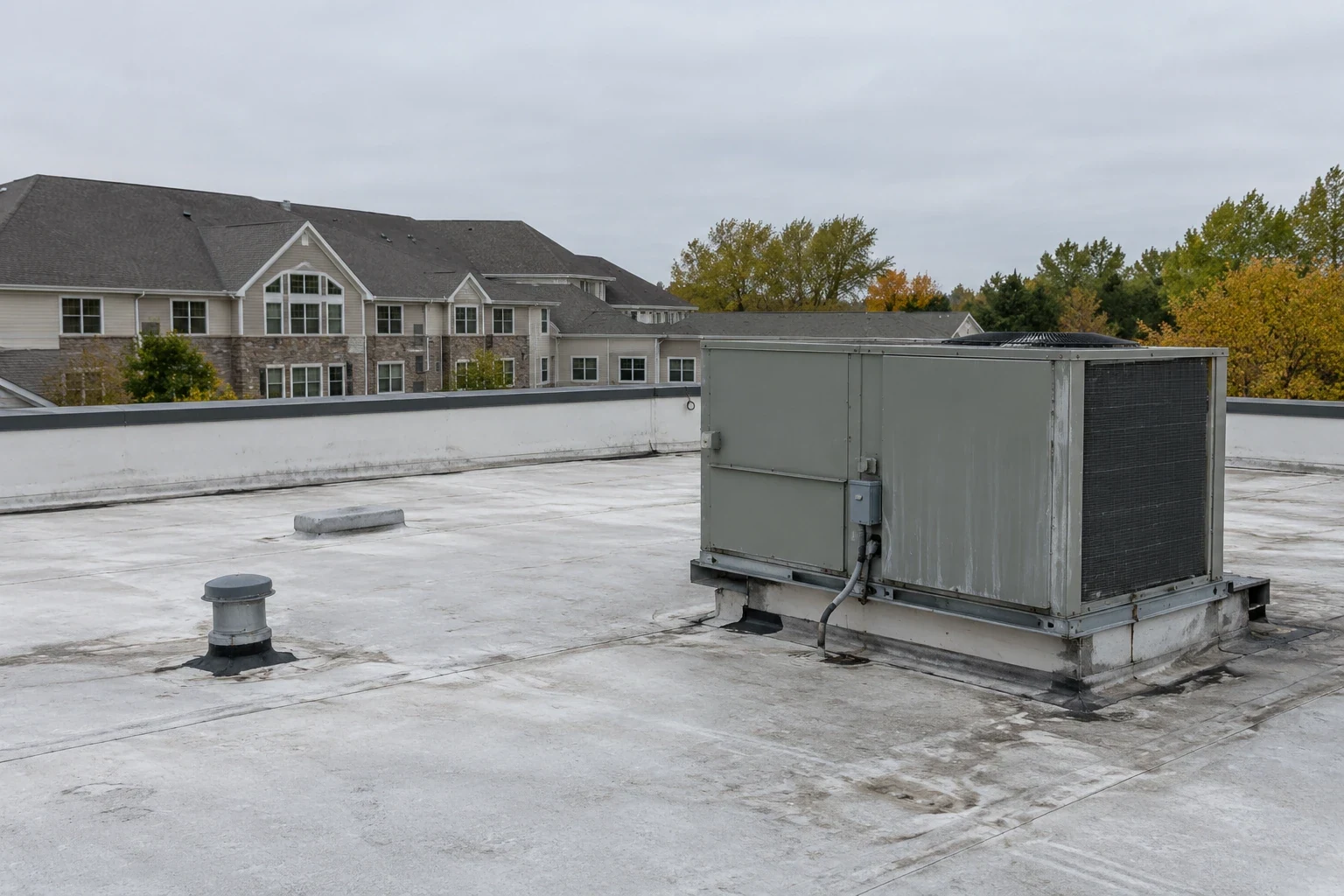
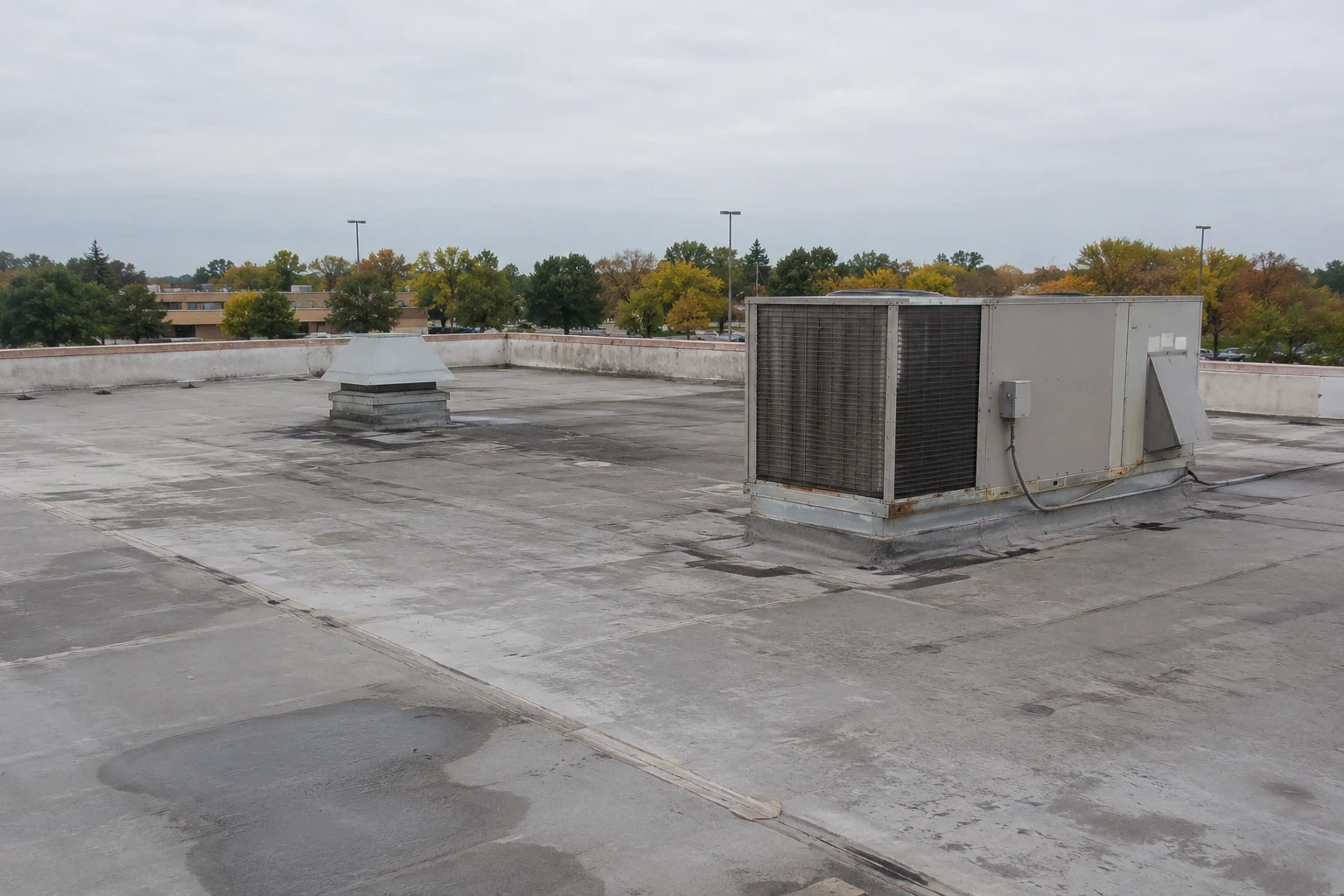
At parapets, we inspect coping joints and flashing terminations; around rooftop equipment, we check curb height, attachment, and membrane transitions. A roof condition inspection can tie photos to a named section. If the issue follows a penetration, a penetration flashing review records the detail and adjacent membrane. We also map the primary drain and overflow path through a drainage assessment, since a clear outlet matters when winter precipitation increases. Findings stay tied to the actual building, not a general care-facility checklist.
How do we separate a roof leak from building services?
A report from a resident wing may point us toward a roof zone, but supply lines, exhausts, and condensate routes can also affect ceilings. We compare the reported time and location with roof seams, curb flashings, drains, and equipment supports above. If moisture testing is appropriate, we mark the test area and explain what it can establish. A selected opening may be needed to see whether insulation or deck is wet. The written finding states what we observed, what remains concealed, and which repair or further test the evidence supports.
Cambridge’s care and research buildings operate alongside residential neighborhoods, including areas near CHA Cambridge Hospital and Cambridgeport. Those local settings make access coordination relevant, but they do not establish a condition at another property. An active leak after hours can be routed to our emergency crew, which responds through nights, weekends, and holidays. We trace the wet path and use a temporary closure if conditions allow, then schedule the inspection needed to confirm permanent repair. A temporary dry-in is recorded as temporary. Permanent work follows once the assembly, moisture extent, and compatible repair detail have been checked.
How can roof work protect residents and staff?
Before mobilization, we ask the facility contact to identify occupied rooms, care entrances, ambulance or service routes, roof access, and quiet periods. We mark the work zone below, set material and debris paths, and agree on how the section will be closed at the end of each shift. Odor, noise, and hot work depend on the selected system and site conditions, so those controls belong in the work sequence. If concealed damage expands the opening, we record the change and confirm the revised boundary before proceeding.
The facility’s staff sets resident notifications and any clinical restrictions. Our crew ties those directions to a roof map so the affected entrance or area is clear. An occupied-building sequence can define daily dry-in limits and access windows. For a Cambridge property near Cambridgeport, we still confirm the building’s service entrance and lift location with management. Cambridge winters bring more reported flooding and heavier precipitation, so we plan the temporary closure with the day’s forecast and the roof’s real drainage path.
Is a localized repair enough for the care building?
A repair can suit an isolated seam, curb, or edge defect when nearby membrane and substrate remain sound. Broader wet areas or repeated failures may call for more testing before the facility commits to a larger scope. A recover depends on attachment, existing layers, moisture, drainage, and available curb height. Replacement exposes concealed construction, but it also adds removal, debris handling, temporary protection, and resident coordination. We compare these options using test results and the condition of the specific roof section, not the building’s use alone.
A hospital roof may share strict access needs, while a medical-office property may operate on a different schedule. Neither use determines which roof system belongs at a senior residence. We identify the installed assembly and its condition first. A recover evaluation documents retained layers and test findings; a replacement scope separates tear-off, substrate repair, and new flashing work. The facility can then weigh disruption, timing, and the evidence behind each option.
What belongs in the roof handoff for facility staff?
A useful handoff identifies the roof section, repaired transitions, materials confirmed, test locations, and any areas left inaccessible. Photos need a reference point that maintenance staff can find without relying on a resident’s name or room number. We mark temporary stabilization separately from completed permanent work and list follow-up items with their access needs. If the inspection found a clear drain bowl but a blocked downstream line was outside the roofing scope, the record says so. That distinction helps the next service visit begin with the open question rather than repeat the first walk.
A dated condition report can sit with the facility’s maintenance records and show which roof details changed. The climate trend reported by Cambridge makes drain and overflow notes useful during later checks, but those notes do not predict a future leak. Staff can compare the next inspection with the same section labels, review repair photos, and schedule an appropriate maintenance visit. A roof condition record can preserve the findings in a format that follows the asset instead of the individual service call.
The handoff should identify the roof section above the affected wing, the safe access route, the room or service area protected below, and any temporary measure that remains. We keep resident names and health information out of roofing notes while preserving enough location detail for facilities staff to find the area. If a lift, barrier, or material route changes an accessible entrance, the approved alternative is recorded with its release time. A roof test that could not be completed during care operations stays open with a return window. These details help the next manager coordinate inspection without treating a temporary dry-in as a permanent solution or a partial walk as a full-building review.
Commercial Roofing Questions
Can residents remain in the building during roof repairs?
Yes, when the work boundary, access controls, weather, and facility rules allow it. We coordinate with management on resident routes, protected areas, and daily dry-in. A changed concealed condition can require a revised work area.
What should staff send after a resident reports a ceiling stain?
Share the building address, roof plan if available, affected area, when the condition appeared, and a facility contact. We compare that report with roof details above it and identify whether testing is needed.
Will an emergency visit complete the permanent repair?
The first response locates the active opening and protects the area when conditions allow. We document any temporary closure, then define permanent work after checking the roof assembly and concealed moisture.
How do you schedule work near care entrances?
The facility identifies required access and quiet windows before mobilization. We map deliveries, barriers, roof access, and daily closure points, then confirm the route with the on-site contact.
Which records help compare repair and replacement?
Roof plans, previous service records, reported leak locations, access rules, and any assembly documents help frame the review. Field inspection and testing establish which layers and conditions are actually present.
Related Roofing Work
More Property Types We Roof
Browse every page in Property Types We Roof, or request a roof assessment and we will walk the roof with you.
Set a roof inspection around care operations
Send the Cambridge address, roof plan or system records, reported condition, access contact, resident-area restrictions, and preferred work window. We will document the affected section and the supported next step.