
Commercial Roof Leak Repair in Cambridge, MA
Trace commercial roof leaks in Cambridge from the interior report to seams, curbs, drains, and flashing, then repair and document the confirmed source.
A ceiling mark beneath a Cambridge roof section is a location clue, not a repair boundary. For leak repair in Cambridge, MA, we compare the interior report with seams, curbs, walls, drains, and penetrations above it, then document which path the evidence supports. Heavy precipitation and more frequent winter flooding are among the conditions the City tracks, so we check how water reaches the primary drain and overflow as well as the reported stain. At a medical office near Mount Auburn Hospital or a research building near Kendall Square, the response also has to account for occupied rooms, equipment, and roof access. We locate the source we can verify, make the authorized repair, and mark any area that needs further testing.
What does the water path show?
We begin with the time and pattern of the leak, recent weather, interior photographs, and any maintenance notes. A drip during heavy rain may point toward a different exposure than a mark that appears after thawing or around a rooftop unit. On the roof, we inspect the membrane above and upslope from the interior location, then follow likely paths across seams, flashing, walls, and drains. We note whether water is standing, whether the surface is open, and whether a curb or penetration interrupts the flow.
Water can travel under a membrane or across a deck before reaching the ceiling, so the nearest visible defect may not be the entry. We check the membrane transition around pipe boots and equipment curbs, the termination lap at walls, and any split or open seam along the route. If the assembly may contain moisture, we identify the test opening or survey needed to confirm its extent. Our commercial inspection process records the evidence by roof section and separates a confirmed defect from a suspected path.
Which details deserve a closer check?
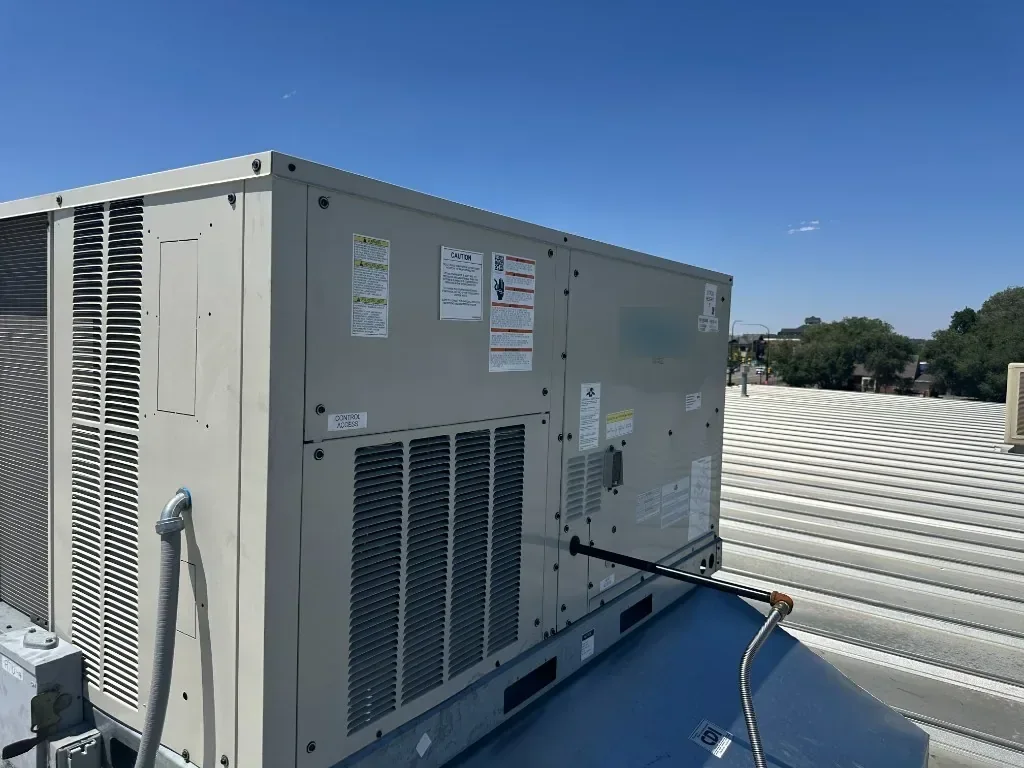
At a drain, we look for debris, standing water, loose membrane, a compromised bowl transition, and a blocked overflow route. At a wall, we inspect counterflashing, termination height, coping joints, and movement at the edge. Around rooftop equipment, we check the curb flashing, support points, conduit entries, and any change in membrane height. A leak report near one of these features is a reason to inspect the related details, not proof that the component has failed.
Cambridge's winter guidance notes more thaw-freeze swings and heavier precipitation. That can make seasonal movement and drainage conditions relevant when reviewing a leak, but we tie the finding to the roof itself. The City also identifies Alewife as an area with relatively greater flood risk in future scenarios. For a facility in that part of Cambridge, we pay close attention to discharge routes, low areas, and safe access after wet weather. If an outlet or overflow is involved, we can scope roof drain and scupper repair with the membrane work instead of closing only the nearest seam. A split at a wall or curb may also call for a focused flashing failure assessment that checks how the water crosses each transition.
What repair matches the confirmed source?
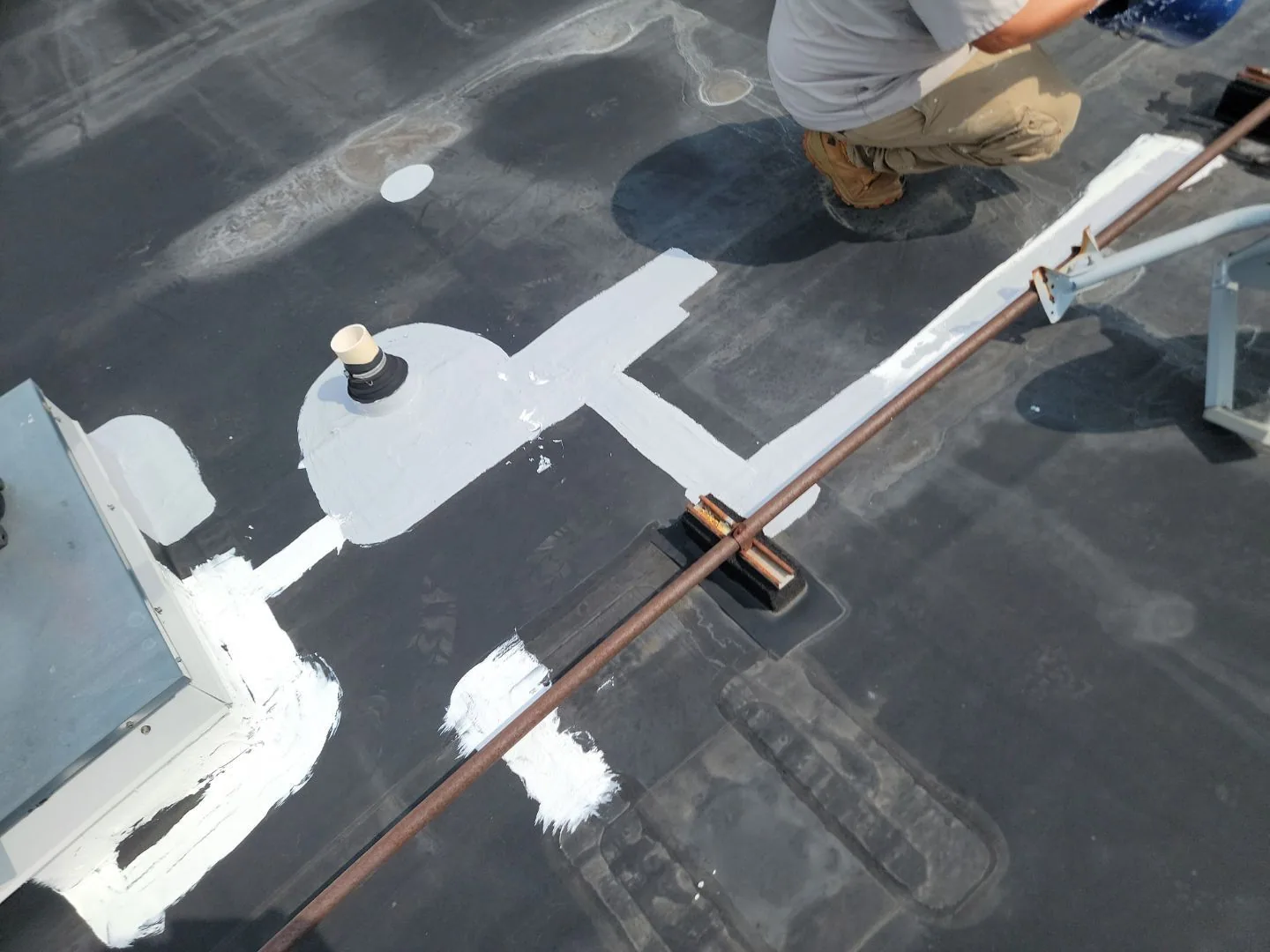
A split seam, puncture, loose flashing lap, and failed drain transition call for different preparation. We identify the membrane where possible and use a compatible repair method, including surface cleaning, seam preparation, patch size, and secure edges. If wet insulation is found, the scope should say whether it will be removed and replaced or whether the owner needs a wider investigation. Applying a patch over a soft or contaminated area can hide a defect without restoring the assembly.
For a leak at a penetration, we inspect the boot or flashing and the membrane around it before deciding whether to reset, replace, or reinforce the detail. If water has tracked beneath a curb, that may require opening a larger area than the visible split suggests. The work record includes before and after photographs, the materials used, and the adjacent details checked. A defined commercial roof repair can address the confirmed point while preserving a separate recommendation for concealed damage or broader deterioration.
How do you protect the building during a leak visit?
Active water inside a building can require temporary protection before a permanent roof repair is possible. We coordinate with the property contact to identify the room, protect contents, and establish a safe route to the roof. If weather or wet surfaces prevent proper installation, we describe the temporary measure and return for the permanent repair when conditions permit. We do not leave an opened roof area without a dry-in plan.
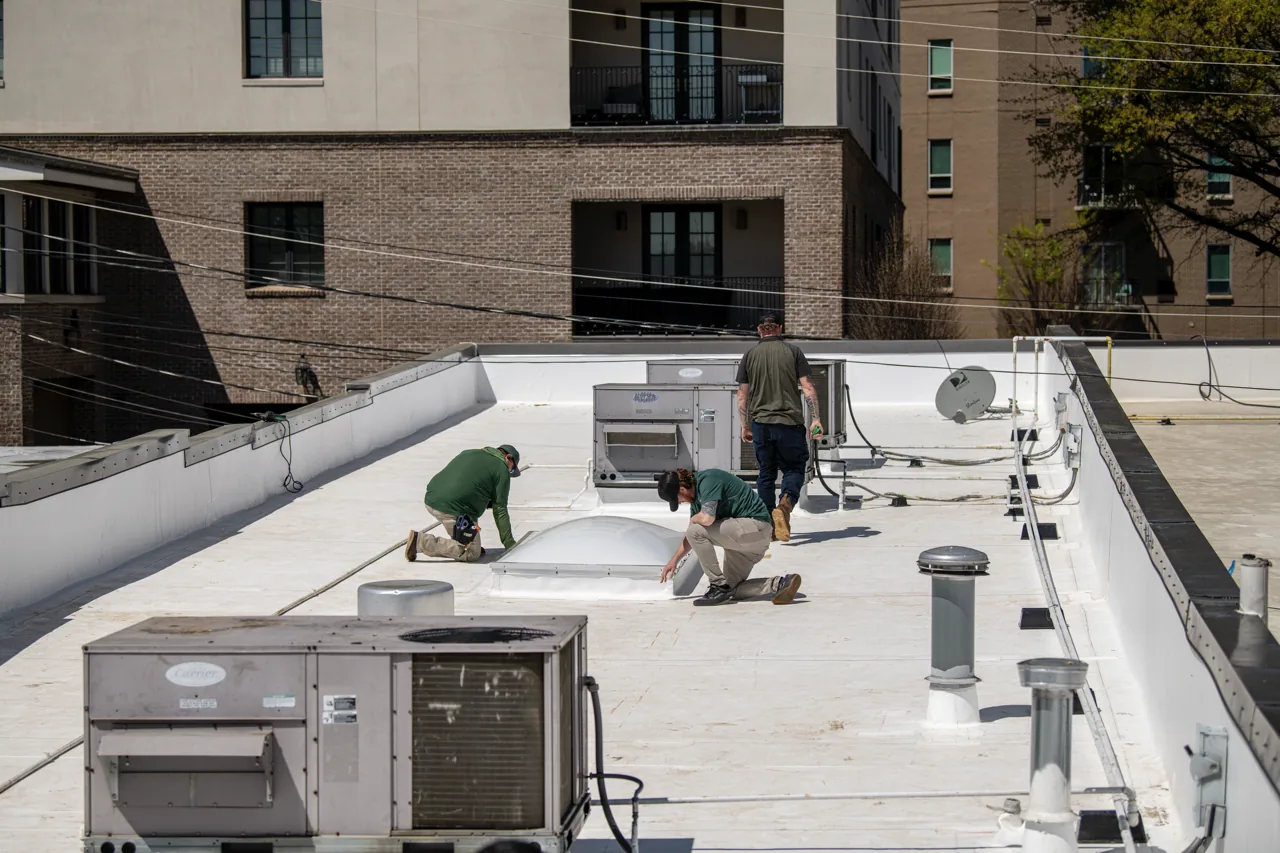
Harvard Square includes university, retail, arts, and entertainment uses, while Mount Auburn Hospital provides inpatient medical services in Cambridge. Those uses are a reminder to identify the affected room and operating restrictions before staging tools or materials, not an assumption that we know the tenant's equipment. We confirm roof hatch access, escorts where required, air-intake locations, and any schedule limits with the building contact. For urgent water entry, the emergency response can begin with containment and temporary dry-in, followed by a permanent detail repair after the roof is safe to work.
What will the leak report establish?
The closeout should show the interior point reported, the roof-section location investigated, the defect confirmed, and the repair completed. We add photographs of the repaired feature and surrounding context, then note any test result, wet material, or limit that remains. If no roof opening confirms the suspected source, the record says so and identifies what investigation could narrow it. That keeps a likely path from being recorded as a proven cause.
Follow-up can focus on the repaired section after the next period of rain or freeze-thaw movement. We can add the issue to a preventive maintenance visit and preserve the location in the property's condition record. A building manager responsible for a Cambridge Crossing property can then compare a new report with the exact curb, seam, or drain photographed during the repair. Clear records also help separate a repeat leak at the same detail from a different water path nearby.
Commercial Roofing Questions
Why does a leak continue after a patch?
The original repair may not have reached the water entry, or moisture may have traveled to the interior from another point. We compare the patch with the full seam, curb, and drainage route, then decide whether more testing is needed before enlarging the repair.
Can you find a leak while it is raining?
Rain can reveal active paths, but roof access may be unsafe or the surface unsuitable for permanent adhesion. We coordinate interior protection and inspect when conditions allow. If a temporary dry-in is needed first, we explain what it addresses and what remains to be checked.
Does a leak always mean the insulation is wet?
No. Water can enter through a detail and reach the interior without soaking a broad area, while concealed moisture can extend beyond the visible stain. Test openings or an appropriate survey help determine what is beneath the membrane.
What should staff record when water appears inside?
Record the room and ceiling location, time, weather, photographs, and any equipment or contents at risk. Avoid opening the roof or moving rooftop equipment. We use that information to select an access route and focus the first inspection.
When is temporary dry-in enough for the first visit?
A temporary measure can limit active entry when rain, unsafe access, or wet materials prevent a lasting repair. We identify it as temporary, document the area protected, and schedule the permanent repair or additional investigation under workable conditions.
Related Roofing Work
More Commercial Roofing Services
Browse every page in Commercial Roofing Services, or request a roof assessment and we will walk the roof with you.
Trace the leak to the roof section
Share the Cambridge address, reported room and leak timing, roof access contact, and any roof plans or repair history. We will investigate the likely water path, document the confirmed source, and outline any follow-up testing.