
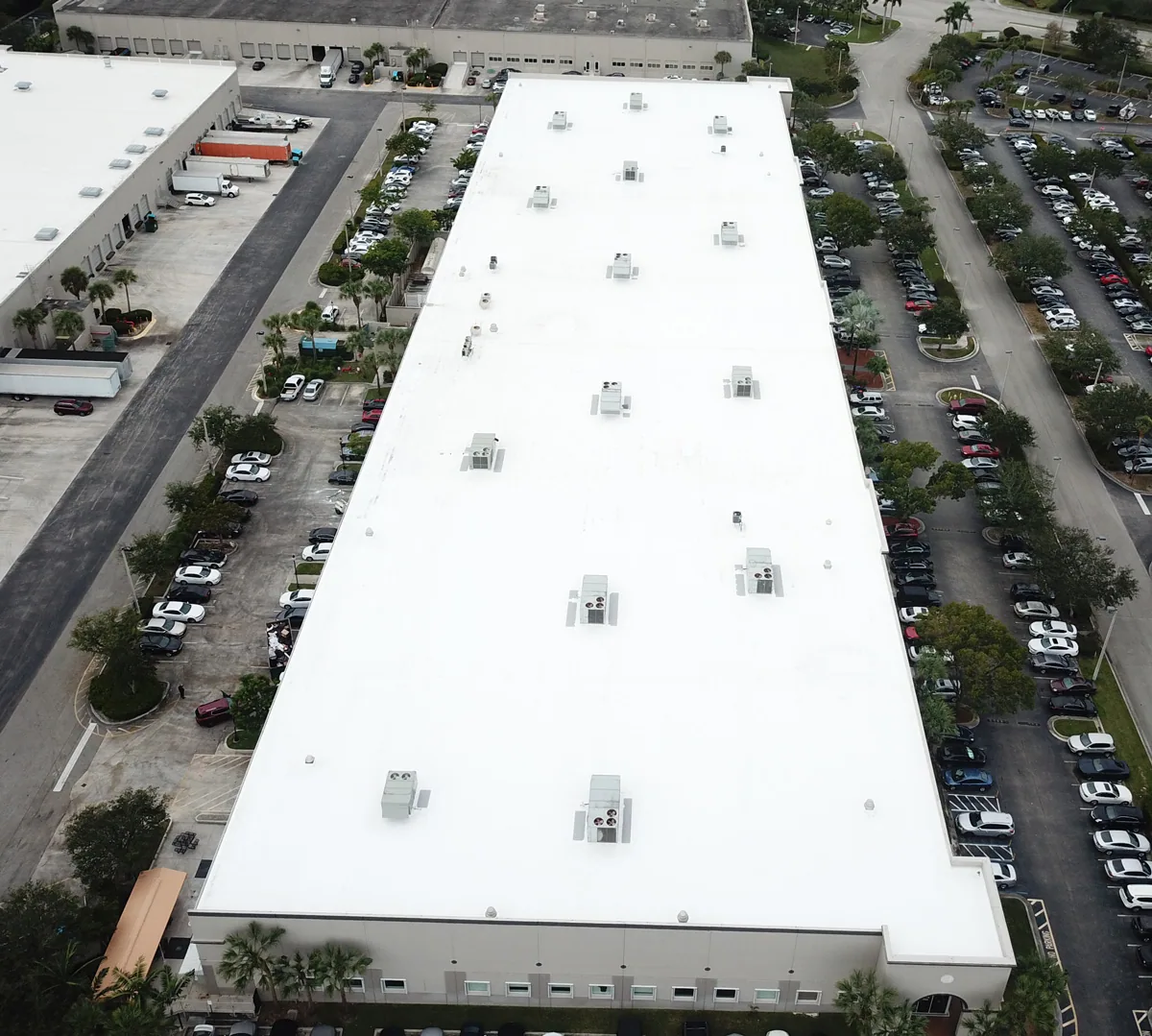
TPO Roofing in Cambridge, MA
Install, inspect, or repair commercial TPO roofing in Cambridge with review of heat-welded seams, flashing, attachment, drainage, and roof access.
Heat-welded TPO seams need a clean surface, consistent weld, and sound termination at each curb. We install, repair, and inspect commercial TPO roofing in Cambridge, MA by tracing those details across each roof section. Cambridge guidance reports more winter flooding and heavier precipitation, so we include drain bowls and overflow paths in the field review. Research and life-science facilities near Kendall Square and Cambridge Crossing have different access routes and operating schedules, but those uses do not identify a building's membrane. We confirm the existing assembly, deck, insulation, and edge conditions before recommending TPO work, then document the completed seams and transitions in a closeout record.
What should a TPO seam inspection show?
We check welds for separation, fishmouths, contamination, voids, and changes at T-joints. A visual walk can locate surface issues, while probing a seam can reveal an opening that is not obvious in the field. At a curb or wall, we follow the membrane up to the flashing termination and check that the weld continues through the corner. The report labels each observation by roof section and identifies whether the concern is a seam, flashing, puncture, or attachment issue.
TPO surfaces can show scuffs, dirt, or weathering that do not by themselves establish membrane failure. We compare the condition with seam integrity, patches, penetrations, and evidence of water below. If moisture is suspected, an infrared moisture survey or test opening can help confirm the assembly at selected points. The City's resilience assessment also tracks rising temperatures and coastal-surge exposure in Cambridge. We use that context to check the drain bowl, overflow path, and perimeter details, while the repair limit still follows what this roof section shows.
Which TPO assembly fits the building?
TPO roofing can be mechanically attached, adhered, or installed in a ballasted configuration when the design and substrate support that approach. Selection depends on deck type, insulation, wind design, building use, existing assembly, and project requirements. We review those factors with the owner and design team rather than choosing a system from roof color alone. The written proposal identifies membrane thickness and attachment method when specified, insulation and cover board, perimeter enhancement, flashings, and required testing.
Before a recover or replacement, test openings can show what layers are present and whether wet insulation or deck damage is hidden below the membrane. If the existing roof is not suitable for overlay, tear-off may allow the substrate to be inspected and corrected. A replacement scope can define that work, while a recover evaluation checks whether an added layer is acceptable. TPO seams are heat-welded, while PVC roofing has its own formulation and detail requirements. EPDM assemblies use a different seam approach, so material compatibility and repair preparation should follow the installed system. We record the basis for either option so the owner can compare assembly condition, access, and sequencing.
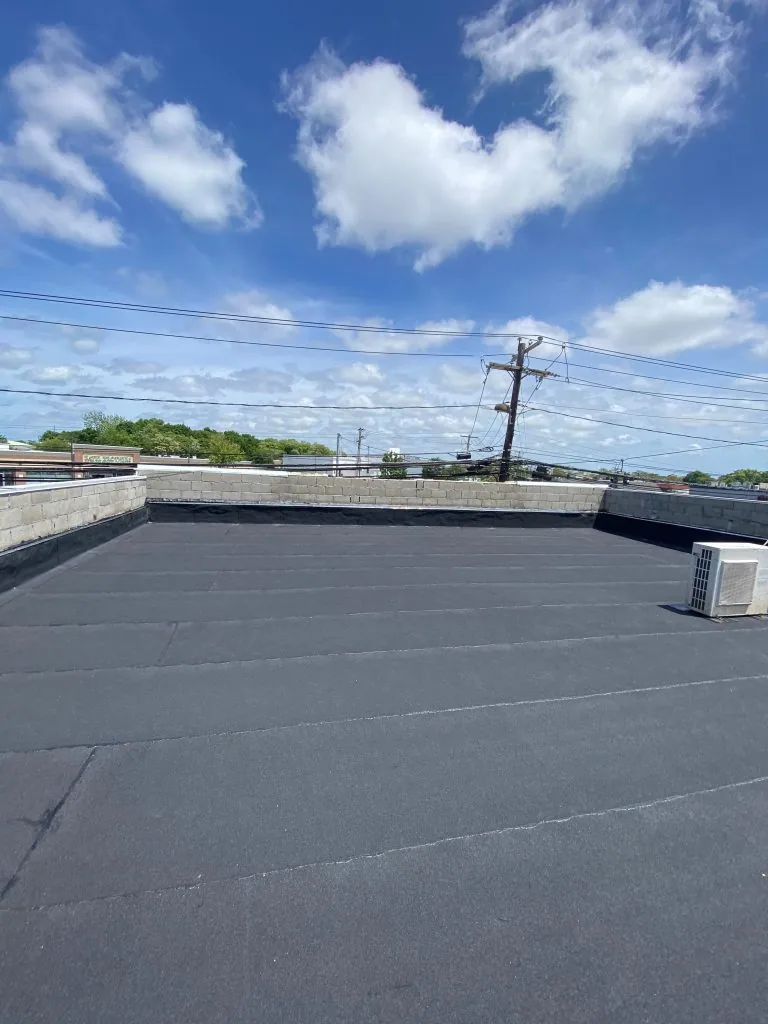
How does TPO connect at curbs and edges?
Field membrane performance depends on the perimeter and penetration details. We inspect curb flashing height, welded corners, termination bars, parapet metal, pipe boots, and transitions to dissimilar materials. At a drain, we check the membrane connection to the bowl and verify that the strainer and overflow remain clear. Added roof thickness can change those heights, so the field sheet records curb, drain, and coping relationships before the new system is finalized.
Central Square and Harvard Square include commercial and institutional properties alongside transit and retail uses; the actual roof configuration varies by building. For a property in Kendall Square, our scope names the building and affected section rather than assuming a uniform district assembly. If repeated ponding or outlet failure affects the roof, a drainage correction may need to be coordinated with the membrane work. TPO patching should tie into compatible, properly prepared material instead of bridging an unresolved curb or edge defect.
What happens during TPO installation?
Installation begins with substrate acceptance, dry-in boundaries, material staging, and a plan for roof access. We prepare the deck or existing approved substrate, install insulation and cover board as specified, set membrane sheets, and weld seams with equipment and settings suited to the material and conditions. The crew checks welds during installation and records representative seams, penetrations, and terminations. If the deck differs from the approved condition, we document it and wait for direction before covering the area.
Cambridge Crossing combines commercial and residential space with dining and retail. Material lifts, pedestrian routes, air intakes, and tenant schedules can affect the daily sequence at a mixed-use property. We confirm the actual service route and access window with the building contact. A phased occupied-building plan can set each day's tear-off limit, temporary tie-in, and closeout photo so the building has a defined weather-tight boundary at the end of work.
What should the TPO record include?
The closeout file records membrane and insulation layers installed, attachment details, representative welds, curb and pipe flashing, edge transitions, and drain connections. It also notes the installation date, observed weather conditions, and the roof sections withheld from work because access or substrate readiness was not confirmed. Photographs identify the roof section and show the completed tie-in with enough surrounding context to locate it later. We note any test opening, deck repair, excluded area, or field change that affected the installation. If a manufacturer requires particular inspection steps, the project record should show the applicable documents and results.
For a Cambridge Crossing property, a building-specific map keeps the record tied to one roof even when several facilities sit in the same development. A roof condition report can preserve the closeout photos for future inspection and maintenance. Later walks can compare seams, drains, curbs, and edge transitions with the installation record rather than rely on an undated surface image.
Before a roof record is finalized, we distinguish membrane repairs from changes to insulation, cover board, attachment, and perimeter details. The closeout identifies the material and method used at each repair, the seam checks completed, and any part of the roof that remained outside the scope. If a test opening changed the expected assembly, that field condition and the owner's direction are documented before work continues. The record also notes where a future equipment or curb change could affect the membrane. This gives maintenance staff a reference for compatible repairs and avoids treating an invoice with a TPO label as proof that every roof section uses the same sheet and attachment.
Commercial Roofing Questions
Can a TPO seam be repaired without replacing the field?
A localized seam opening can often be repaired when the surrounding membrane is clean, compatible, and secure. We inspect the weld and nearby details, prepare the surface, and confirm the repair tie-in. Repeated seam separation or concealed moisture may require a broader scope.
Does a white TPO roof solve ponding?
No. The surface color does not change roof slope or clear an obstructed drain. We map the low area and outlet path, then identify whether maintenance, a drain repair, or a tapered assembly is needed.
Can TPO go over an existing roof?
The current assembly has to be dry enough, securely attached, compatible, and acceptable for the added layers. We inspect and test where needed before recommending a recover. If moisture or deck concerns are present, tear-off may be needed to correct them.
How do you check that field welds are sound?
We review the weld appearance and probe seams where appropriate, including corners and T-joints. The installation record identifies the sections checked and any seam rework completed before closeout.
What can delay TPO installation?
Wet substrates, unsuitable temperatures, wind, precipitation, access restrictions, or concealed deck conditions can change the schedule. We define daily stop points and protect the exposed roof until the next work window.
Related Roofing Work
More Roof Systems
Browse every page in Roof Systems, or request a roof assessment and we will walk the roof with you.
Review the TPO assembly by roof section
Send the Cambridge property address, roof plans or system records, reported condition, access contact, and work window. We will inspect the membrane and details and document TPO repair, recover, or replacement options.