
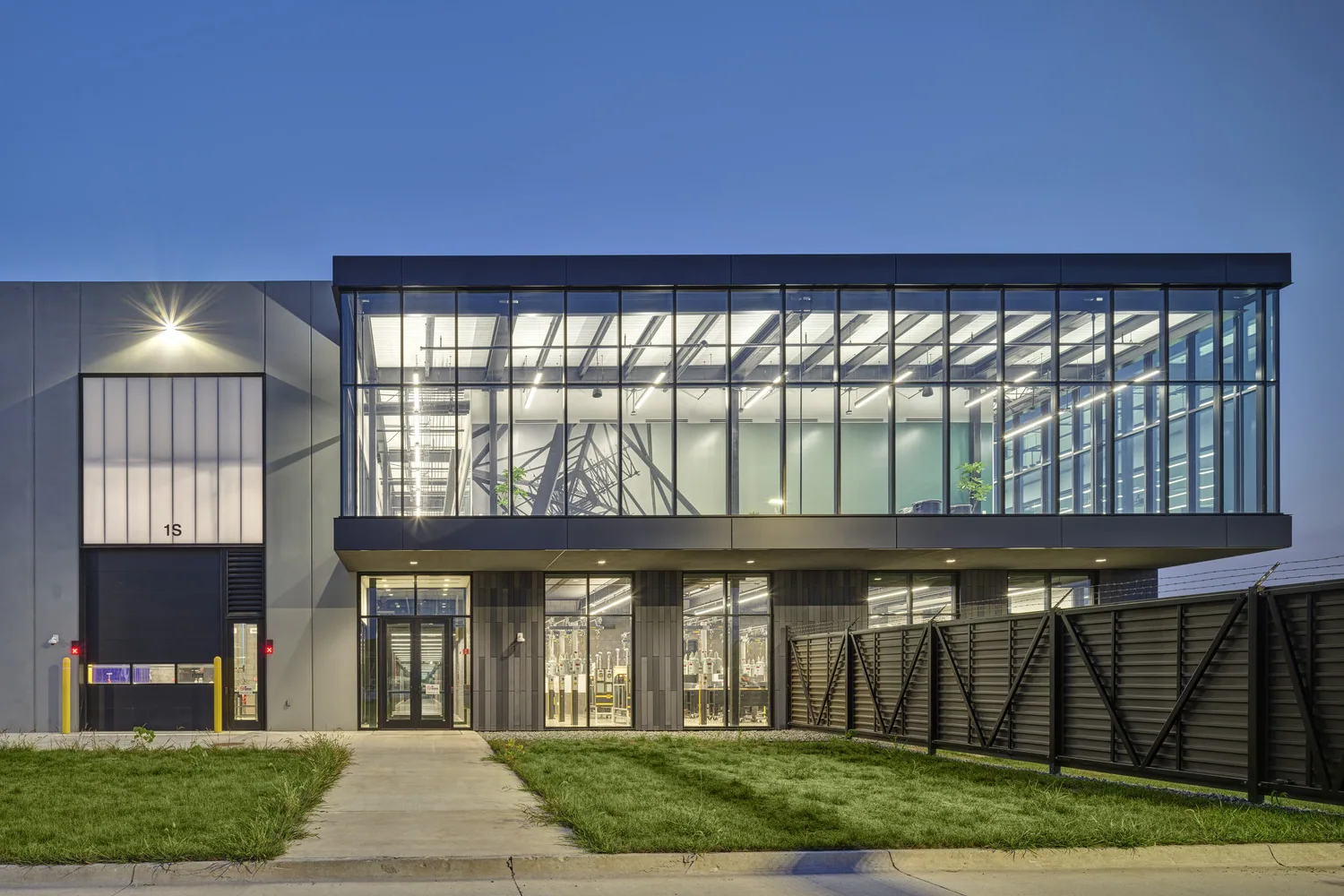
Commercial Roofing for Cambridge Manufacturers
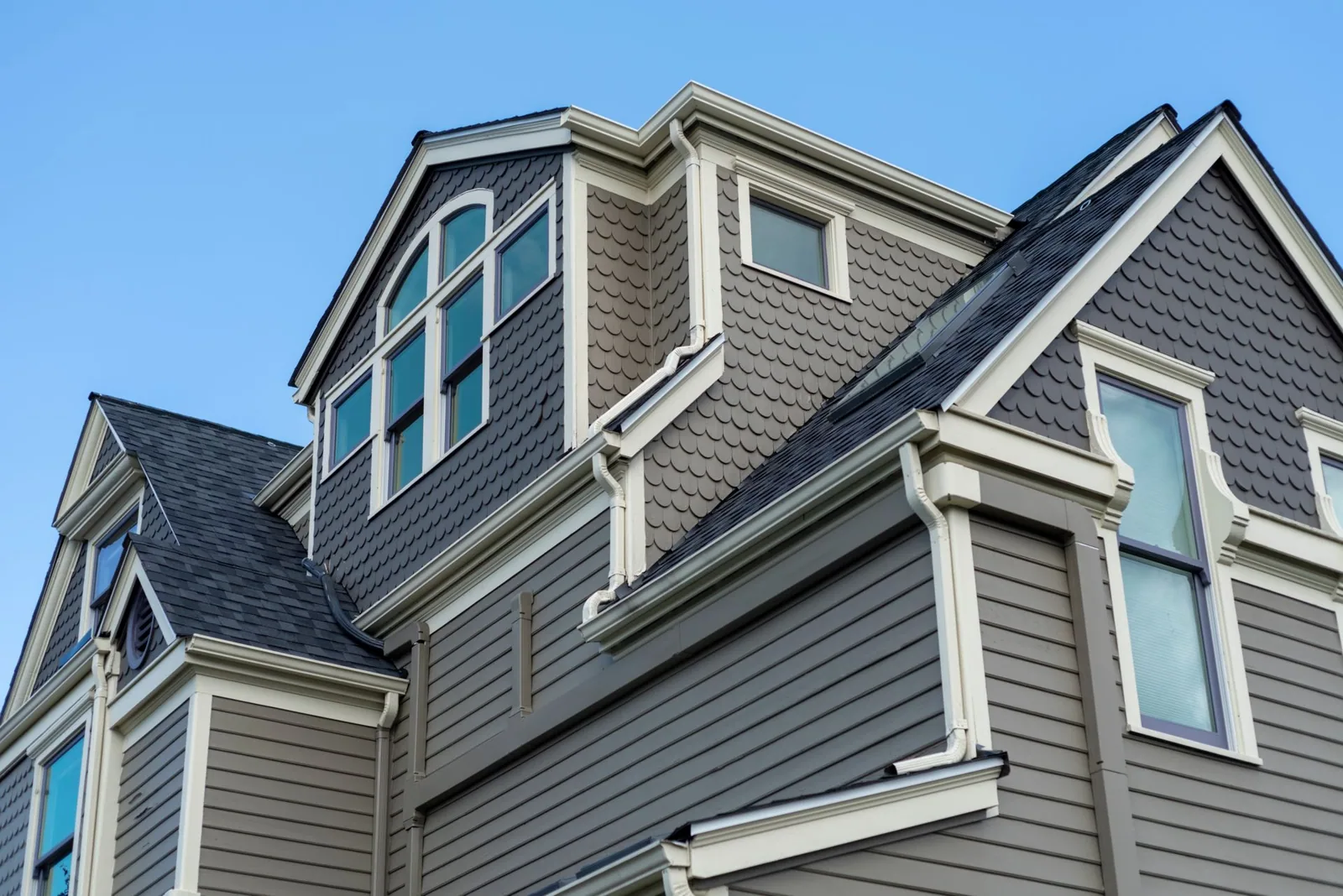
Inspect Cambridge manufacturing roofs around exhausts, process equipment, drainage, and production windows, with repairs documented by building section.
An exhaust curb with a lifted flashing edge can admit water into the roof while production continues below. For Cambridge manufacturers, we inspect the equipment transition, adjacent seam, and drainage route before establishing a repair area. The City identifies manufacturing and light industrial uses in Alewife and lists life-science and technology facilities among Cambridge’s commercial development. Those industry facts help describe the market, but they do not establish the process, roof system, or emissions at a particular building. We review the actual equipment, records, and operating restrictions with the facility contact before specifying work.
Which roof conditions can affect a production line?
We map the reported interior condition to the roof plan and check curbs, pipes, vents, supports, seams, drains, and wall transitions above. Water can travel under insulation before appearing in a production or storage area. The report distinguishes observed membrane or flashing damage from suspected moisture and identifies where testing could answer the next question. We also note air intakes and equipment below the work area when the facility contact identifies them as operational controls.
Alewife includes light manufacturing alongside offices, apartments, shopping, hotels, and auto-related businesses. Cambridge Crossing combines commercial, research, residential, and retail uses. Neither district determines what production occurs at a named property. A roof inspection records the building’s actual assembly and conditions. A equipment-curb review identifies flashing height and attachment. If a production line relies on stable indoor conditions, a roof insulation assessment can document the insulation and cover board where access and testing confirm them.
How can work fit around a production window?
The facility contact identifies shift changes, air intakes, sensitive equipment, truck movement, roof access, hot-work restrictions, and any shutdown required for the affected zone. We translate those limits into a roof map and sequence that names the daily opening and closure points. Material lifts and debris routes are planned around the plant’s operating areas. If a test reveals wet insulation or damaged deck beyond the approved area, the crew documents the finding and waits for direction before extending the work.
Cambridge’s recognized commercial districts include Alewife and East Cambridge, and Cambridgepark Drive has office and industrial uses near North Cambridge. Those facts may help orient a service route; the property manager confirms the gate and loading area. An occupied-facility work plan can set access and dry-in limits. At a property in Alewife, the route still follows the site’s delivery instructions and equipment controls.
When a plant adds a rooftop unit or changes a discharge point, the roof plan should be updated before the next service call. We document the new curb and any abandoned penetration, verify the membrane tie-in, and identify whether the support needs separate review. The facility can then coordinate its mechanical work with the roofing sequence instead of discovering a new interface after a leak appears.
What is the first step when production reports a leak?
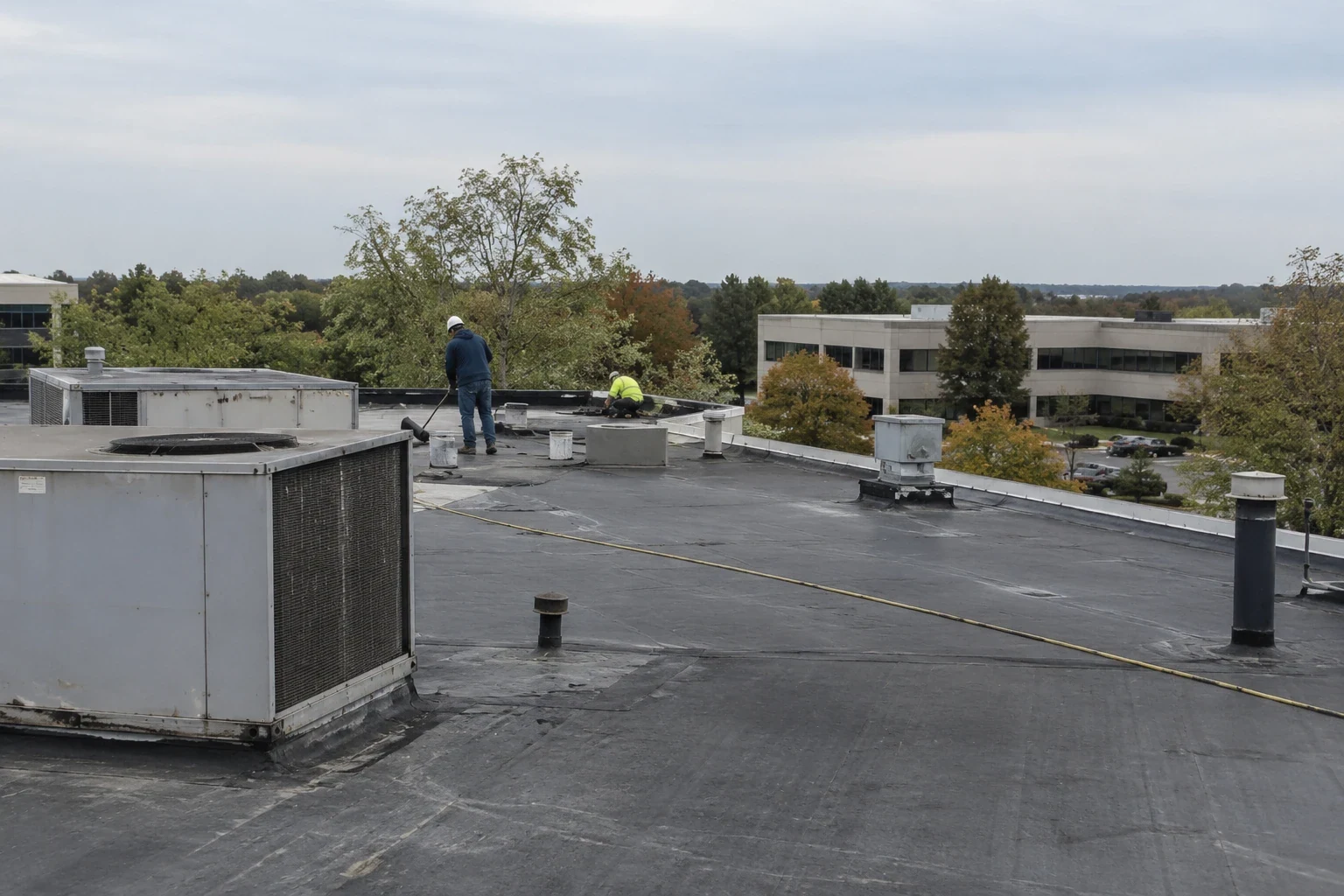
We document where the water appeared, the time and conditions reported, and the roof section above. The inspection checks seams, penetrations, drain bowls, overflows, and wall details before assigning a cause. If active water threatens equipment or materials, our emergency crew can arrange a response at any hour, including holidays, after the facility approves access. We locate the opening and use temporary protection when safe, then record what remains for permanent work.
Cambridge winters are bringing more freeze-thaw variation, heavier precipitation, and more frequent flooding according to city guidance. We check outlets and overflow paths with that weather context in mind, but the report ties any repair to what the roof shows. If a mechanical line or process source may be involved, the finding stays separate until the evidence establishes a roof issue. Moisture testing can help confirm concealed conditions before a wider assembly is opened.
Should the plant repair, recover, or replace?
An isolated curb, seam, or fastener defect may allow a focused repair when nearby materials remain sound. Recover work depends on existing layer count, attachment, moisture, drainage, structural design, and height at equipment and drains. Replacement exposes concealed construction but adds tear-off, substrate review, debris management, and a larger temporary closure plan. We document each option and the evidence behind it, including assumptions about equipment movement and access that the facility must confirm.
A logistics operator may prioritize dock and truck access, while a healthcare system may need patient-route controls. Manufacturing work has its own process and shift constraints. A recover study lists retained layers and testing; a replacement scope identifies removal, deck repairs, and new flashing at each penetration.
What should the maintenance team receive?
The closeout record names the plant building and roof section, system where confirmed, equipment transitions, repair details, test points, photos, and areas not accessed. We identify temporary stabilization separately from completed work and list any mechanical or structural question that remains open. Photos should show enough context for maintenance staff to return to the same curb or seam. That gives a facility contact a reliable reference before equipment is relocated or another shift changes the access route.
Cambridge’s manufacturing and research economy includes varied building uses, but a roof report remains specific to the facility under review. A dated condition record can support maintenance scheduling and help staff compare later changes. A new survey confirms present condition; a prior finding is not treated as evidence that another section has the same issue. The next work plan can therefore start from a documented location, condition, and operating window.
For a multi-building manufacturer, the report should preserve different system types and equipment layouts rather than merge them into one asset note. We mark each building, section, and test area, then state which conditions require a return. This helps maintenance teams pass an accurate roof record between shifts and keeps a production constraint attached to the correct work area.
The plant maintenance handoff should name any roof penetration, duct, curb, or support connected to production equipment and show whether that interface was altered. We record equipment that could not be shut down, any air intake near the work, and the point where the roof was closed before production resumed. A leak reported near a process line needs a roof inspection and may also require the plant's mechanical team to check condensate, piping, or exhaust. The report keeps those possibilities separate until evidence resolves them. If a future equipment change is planned, the roof detail and access requirements should be reviewed before a new curb is cut into the membrane.
Commercial Roofing Questions
Can roof work happen while production continues?
The facility contact sets shift windows, equipment restrictions, and areas that must remain available. We phase the active roof section and temporary protection around those controls when weather and field conditions allow.
Do you identify process conditions from the roof inspection?
We record roof details, equipment interfaces, and any access restrictions provided by the facility. We do not infer a process or exposure from the building’s industrial use.
What if an exhaust or support has changed since the last roof visit?
We compare the current equipment layout with the roof record, inspect the new curb or support, and document flashing and attachment. The updated plan helps define any repair needed at that interface.
Can an emergency repair be completed outside the production window?
We can coordinate an after-hours response, including holidays, after the facility approves entry. The visit locates and protects the opening, then documents the permanent repair scope.
Which records help plan a plant roof project?
Send the roof plan, equipment layout, system and repair history, reported condition, production window, access contact, and any air-intake or hot-work restrictions. The field inspection confirms the assembly.
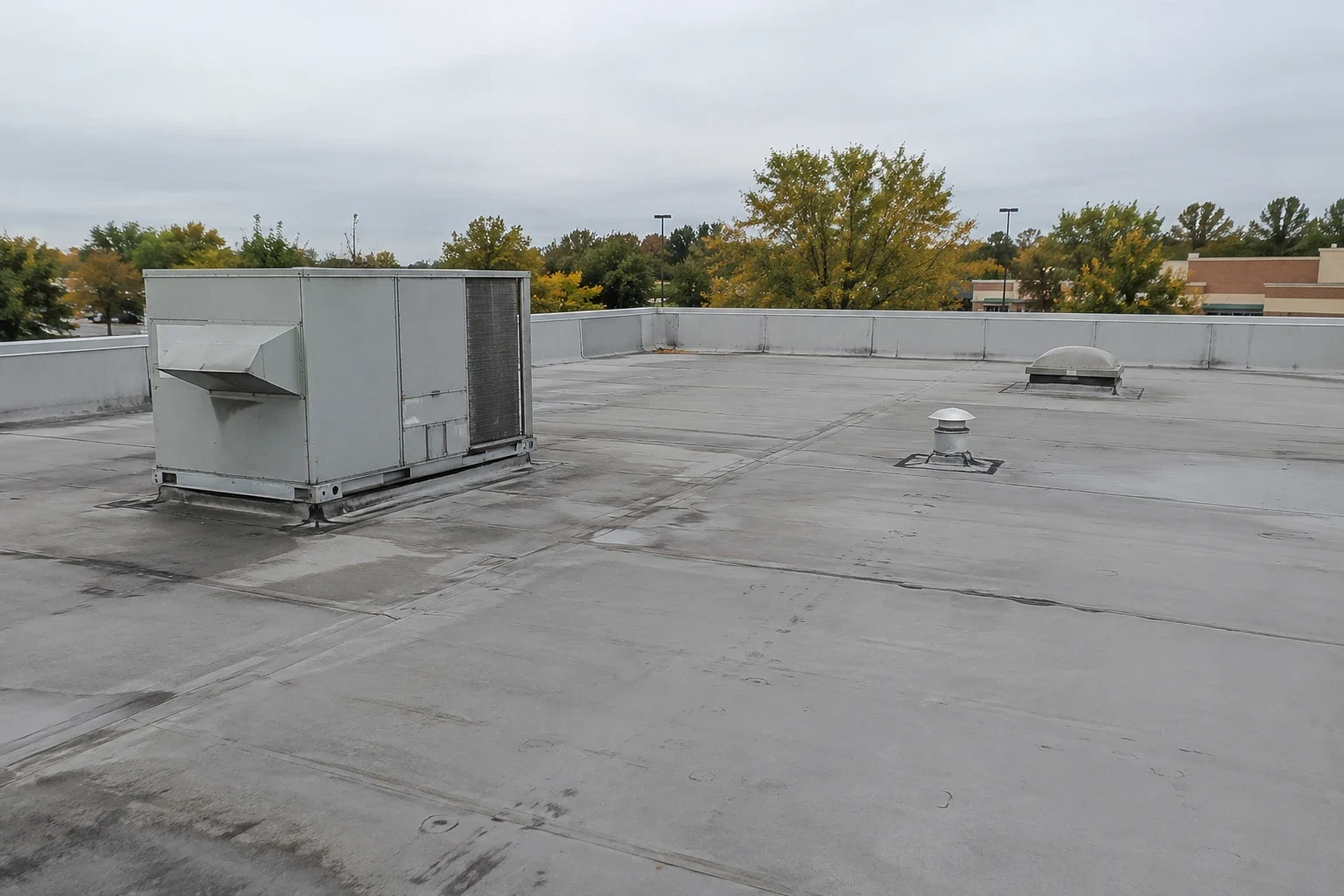
Related Roofing Work
More Industries We Serve
Browse every page in Industries We Serve, or request a roof assessment and we will walk the roof with you.
Map roof repairs to production operations
Send the Cambridge facility address, roof and equipment plans, system records, reported condition, production window, access contact, and operational restrictions. We will document the affected section and work sequence.