Commercial Roof Repair in Cambridge, MA
Repair commercial roof seams, flashing, membrane, and drainage in Cambridge. We trace the defect, define a practical repair boundary, and document the work.
A lifted termination lap at a wall can let water travel well beyond the visible split. For commercial roof repair in Cambridge, MA, we follow the condition through the membrane, flashing, curb, and drainage path before marking the repair limit. The City reports more thaw-freeze swings, heavier precipitation, and more frequent flooding, conditions that put attention on seams and outlets when the roof is wet or cold. Kendall Square mixes research facilities with housing, hotels, and shops, while Harvard Square carries institutional and commercial uses. We plan around the actual roof section and building activity, then record what failed, what we repaired, and what should remain on the next field sheet.
Where does the defect continue?
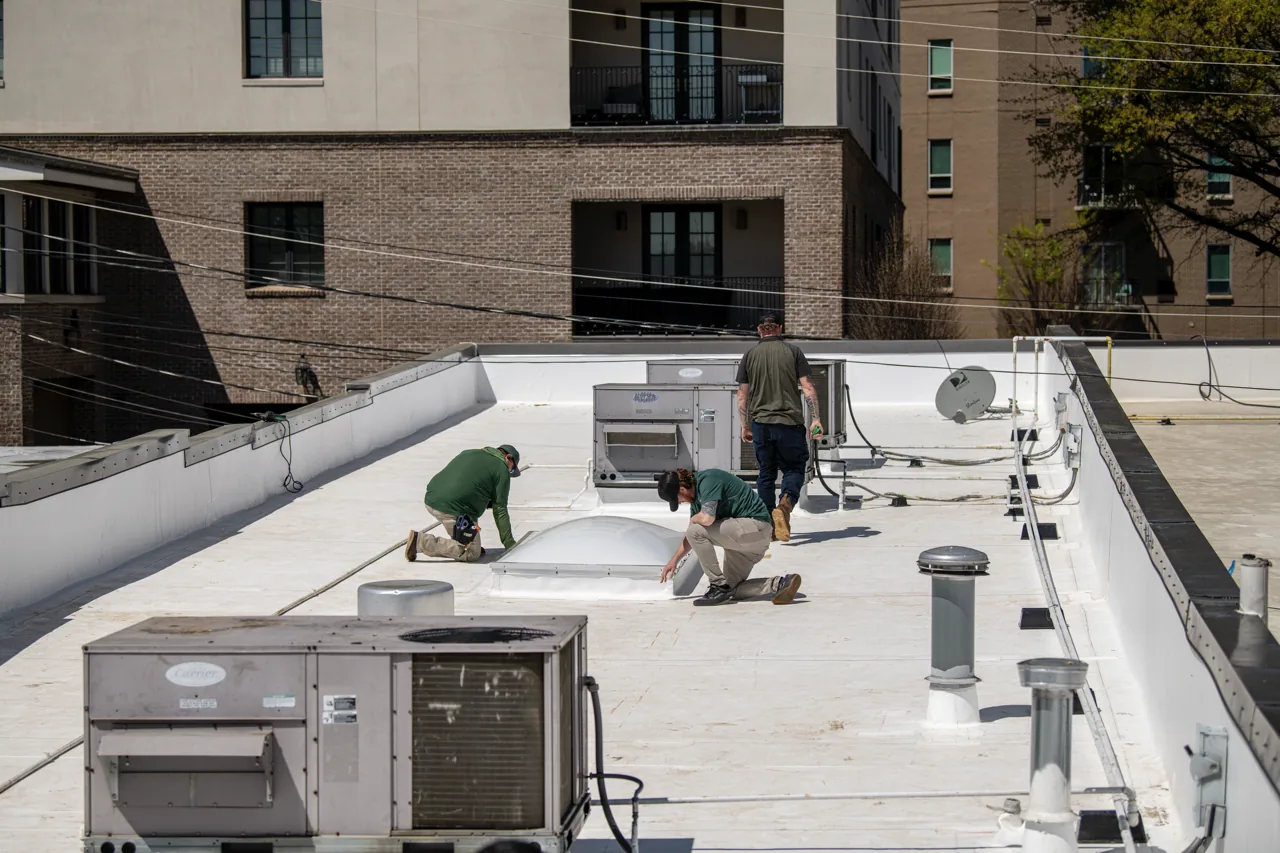
A repair begins by separating the visible symptom from the path that feeds it. We check the membrane around the reported area, probe suspect seams where appropriate, inspect flashing at walls and penetrations, and look for trapped debris or standing water. Inside, a ceiling mark can guide the search, but it does not define the roof opening. We compare the report with roof elevations, prior repair notes, and the nearest drain or overflow before choosing a repair boundary.
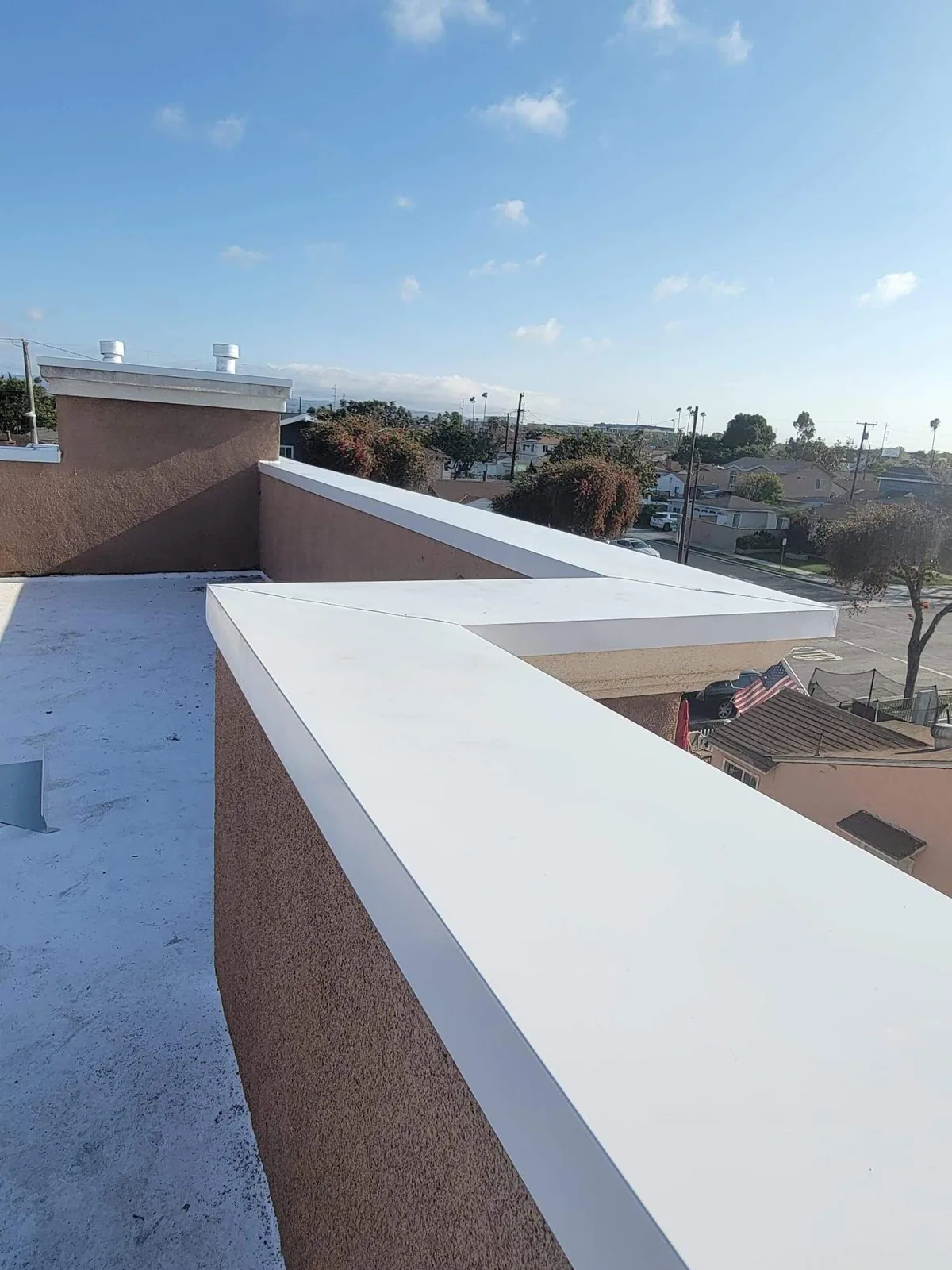
At a curb, we examine the membrane rise, termination, metal, fasteners, and equipment support. At a seam, we check whether the failure is local or repeated along the weld or adhesive line. If water may have entered the insulation, we identify whether a small opening or moisture survey can clarify the extent. A commercial leak investigation is appropriate when the source is still uncertain. Repair work should address the failed detail and any confirmed wet material without claiming that one patch resolves concealed conditions that have not been checked.
What does the field sheet need to capture?
Useful repair notes identify the roof section, material, condition, and nearby details. We photograph the defect with enough context to locate it again, mark the surrounding seams and penetrations, and note recent weather or maintenance observations supplied by the property team. The record distinguishes a split membrane, open flashing lap, loose termination, puncture, failed sealant, and drainage obstruction because each calls for a different preparation and repair material. If the existing system is uncertain, we describe what we can see and identify what needs testing.
Cambridge's climate assessment points to stronger storms and heavier precipitation as local risks. That supports checking adjacent edges and overflow routes after damage is found, especially where water could move toward an air intake or an interior partition. The roof's actual exposure still governs the repair. At a Harvard Square property, our report should refer to the exact building and roof area, not treat the district's campus and retail uses as proof of the assembly above a particular space. We retain repair photographs by section so later inspections can distinguish new movement from an old patch.
Which repair method fits the material?
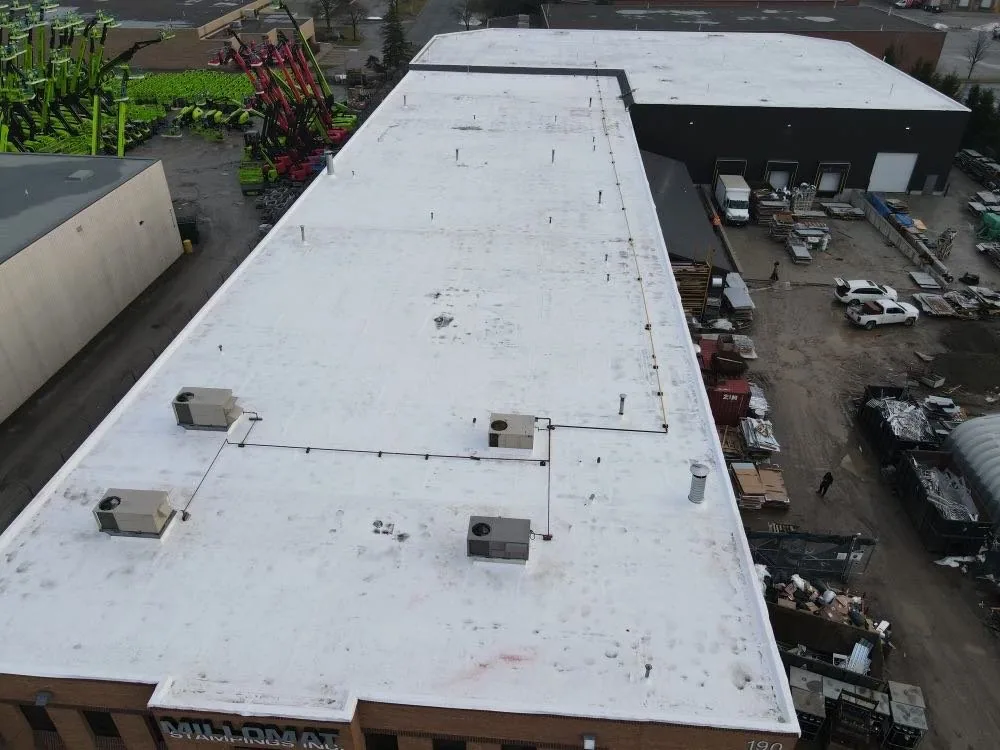
Membrane repairs depend on the system and condition at the defect. A TPO or PVC patch is heat-welded after compatible surfaces are prepared; EPDM needs repair materials and seam treatment suited to that membrane. Modified bitumen and built-up roofs call for their own surface preparation, flashing, and tie-in methods. We do not place one material over another because the color looks close. The scope identifies the existing material when known and describes the repair detail, including how the perimeter of the repair will be secured and sealed.
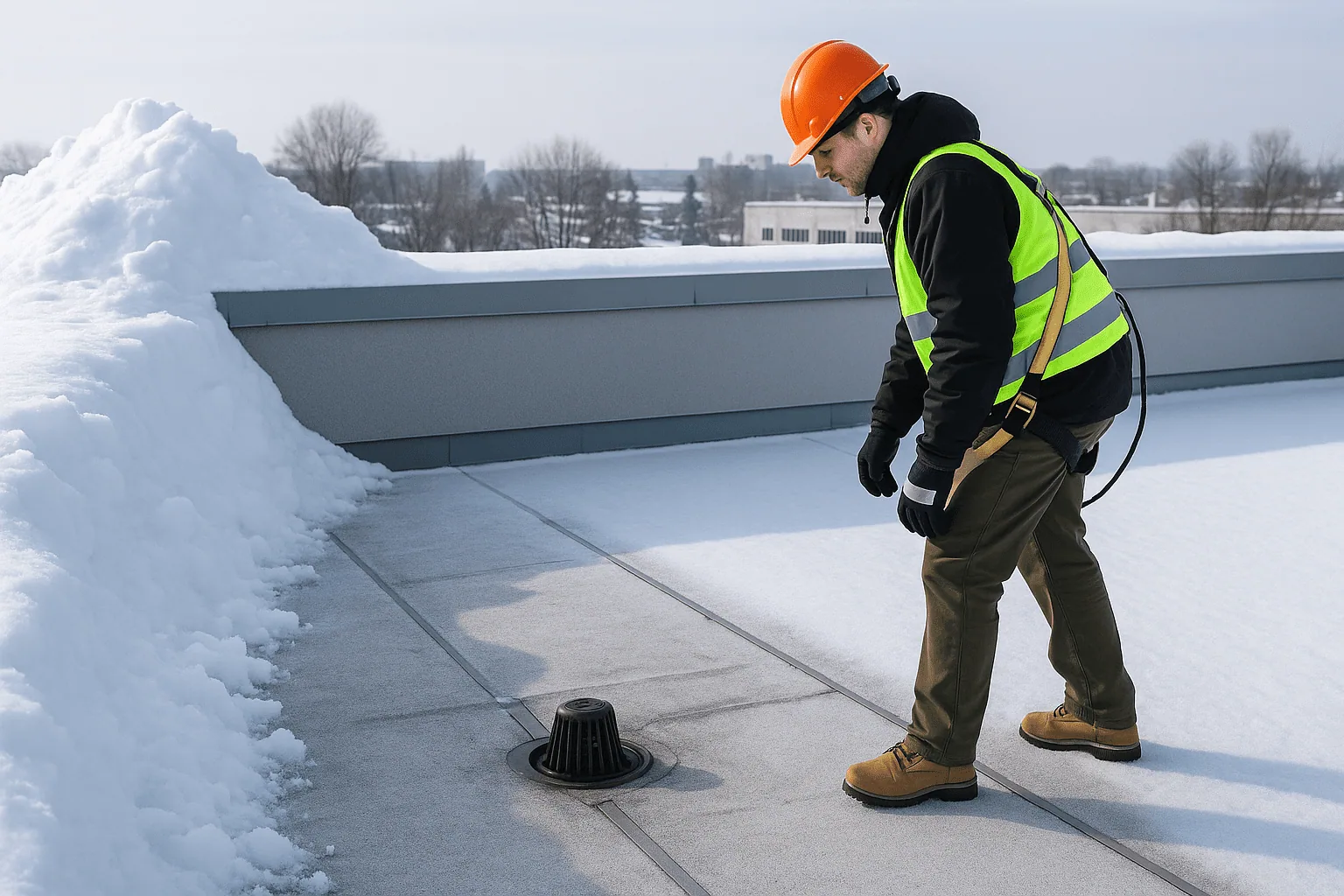
Flashing failures may require more than sealant. We look at the termination lap, curb height, counterflashing, metal edge, and water path, then determine whether removal and replacement of a small detail is needed. At drains and scuppers, we clear the immediate obstruction if included, inspect the bowl and clamping or transition detail, and note any condition beyond the repair scope. A TPO roof repair must restore the weld without burning or thinning surrounding membrane. For persistent edge movement, a separate edge-metal repair can address the metal transition rather than leave the membrane patch carrying that load.
How will repair work fit building operations?
Repair work can often stay within a defined roof section, but access and protection still need coordination. We confirm roof hatch or ladder access, equipment clearances, air intakes, escort requirements when applicable, and the property contact for the day. On an occupied office or research building, we agree on material staging and work periods before setting tools on the roof. A small repair may need a larger protected work zone if hot work, adhesives, or equipment shutdowns are involved.
Cambridge Crossing includes laboratory, residential, retail, and dining uses, so a property-specific service route helps separate crew movement from public entries. We identify the work area, protect materials from weather, and complete temporary tie-ins before leaving. If rain interrupts preparation, we secure the opening and return when conditions allow proper adhesion or welding. The owner receives a note if the observed defect extends beyond the authorized scope. A broader maintenance visit can then address nearby seams and outlets before they become separate service calls.
What shows that the repair is complete?
At closeout, we photograph the repaired seam, patch, flashing, or drain detail and capture enough surrounding roof to identify the location. We note the material and preparation used, any moisture or deck condition discovered, and which adjacent features were reviewed. If follow-up testing or a larger scope is recommended, the record states why and locates the area. The property manager can compare the work with the original condition report rather than rely on a verbal description.
Repair records help establish whether a detail remains stable through later weather and maintenance cycles. Cambridge's winter guidance describes increased freeze-thaw swings and heavier precipitation, so the next inspection can revisit repaired terminations and drain paths after seasonal stress. We can organize the findings in a roof condition report and relate them to a longer roof asset record. For a property portfolio spanning Central Square and Kendall Square, consistent roof-section labels make it easier to compare priorities without treating separate buildings as one assembly.
Commercial Roofing Questions
Can you repair one seam without replacing the roof?
A localized, accessible seam failure can often be repaired when surrounding membrane remains sound and the assembly is dry enough for the repair method. We inspect along the seam and its terminations, then mark the repair boundary. Repeated failure or confirmed moisture may call for broader work.
Why does a roof leak show up away from the repair area?
Water can move beneath a membrane or along a deck before it appears inside. We use the ceiling report as a starting point and trace toward seams, penetrations, walls, and drains. If the source remains uncertain, we explain what test or opening would provide the next useful evidence.
Can an old patch be covered with a new one?
The old repair has to be checked for adhesion, compatibility, and trapped moisture. Covering a loose or contaminated patch can leave the failure in place. We remove unstable material where needed and document whether the repair ties into a sound surface.
What if the same drain area keeps leaking?
Repeated water at a drain can involve the bowl, clamping ring, membrane transition, drain line, or surrounding roof slope. We inspect those parts together and note whether the repair needs plumbing or design coordination beyond roofing work.
What information should go into a repair record?
The record should identify the roof section, defect, repair materials, preparation, photographs, and nearby details checked. We also note concealed conditions and any follow-up recommendation so the next inspection can tell whether movement occurred at the same location.
Related Roofing Work
More Commercial Roofing Services
Browse every page in Commercial Roofing Services, or request a roof assessment and we will walk the roof with you.
Locate the repair area
Send the Cambridge address, roof plan or system records, leak or damage location, access contact, and preferred work window. We will inspect the affected section, identify the repair boundary, and document any follow-up testing.