
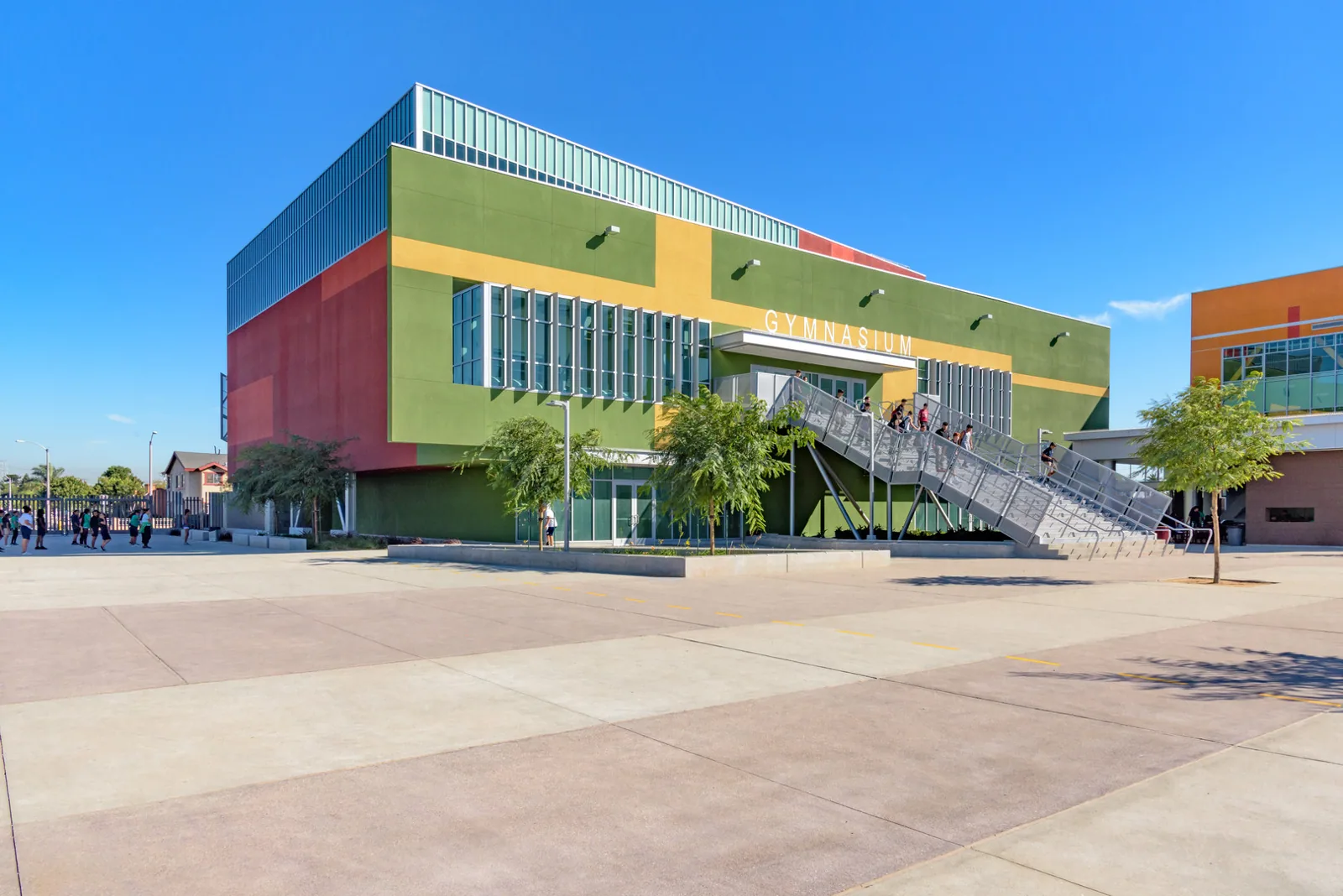
Commercial Roofing for Cambridge School Districts
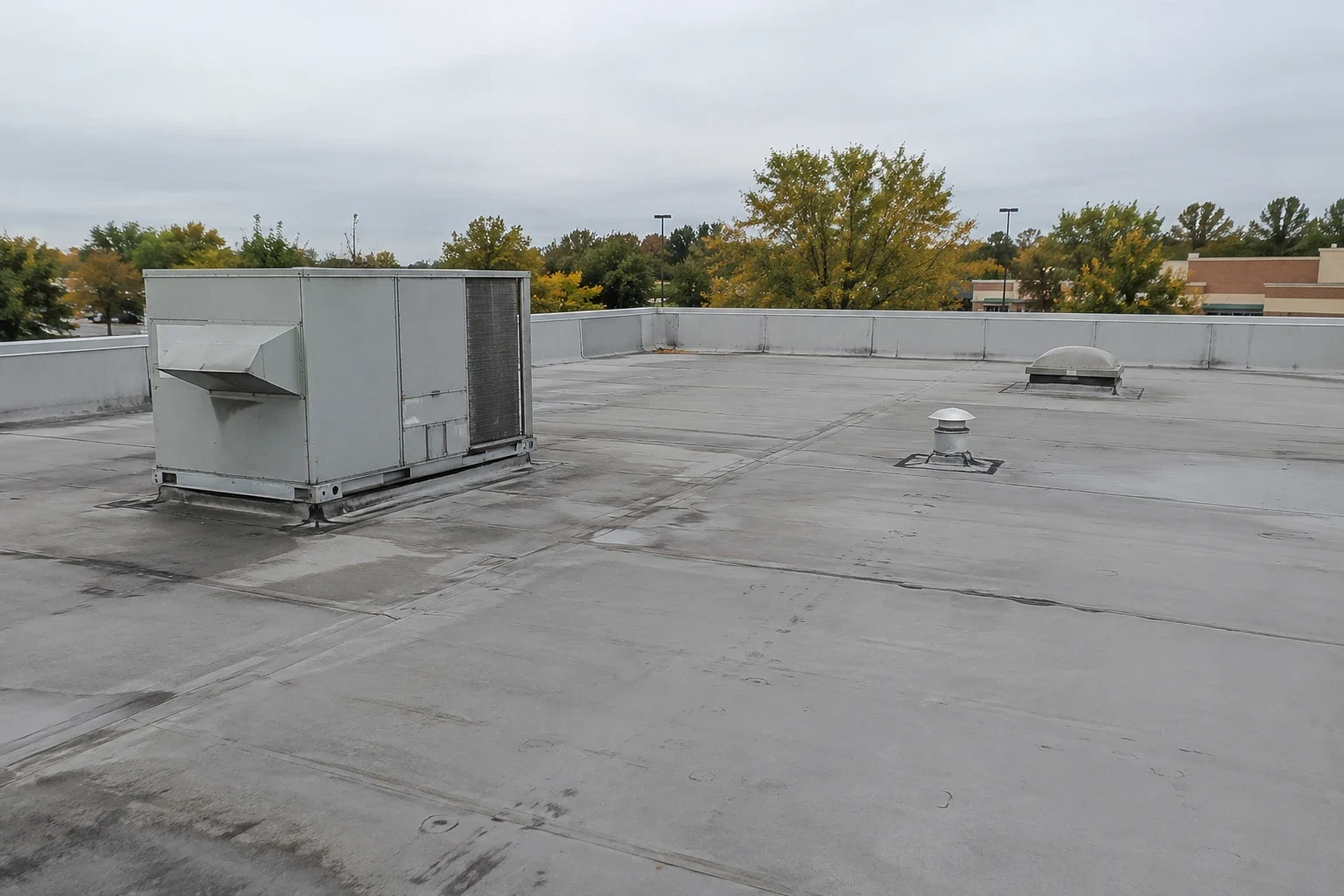
Plan Cambridge school roof inspections and repairs around student access, building schedules, drainage, and section-level records for facilities teams.
A scupper that spills beside a classroom wing can push water back toward a wall before it reaches a ceiling tile. For Cambridge school facilities, we inspect the outlet, parapet, and roof section above the report, then coordinate the walk around the school’s calendar and access rules. The City identifies education as a leading employment sector, with higher education employing more than 21,500 people in its 2024 report. Harvard and Lesley bring academic activity to several Cambridge districts. Those facts describe the city’s education setting, not the number, age, or roof condition of public school buildings. Each school needs its own roof survey.
What should the facilities team map before a roof walk?
We use the roof plan and reported interior area to locate seams, parapets, drains, curbs, penetrations, and transitions above classrooms, gyms, kitchens, or administration space. Water can move within the assembly, so an interior mark does not identify the exact opening. We note what is visible, which area needs testing, and any roof section that could not be reached. Photos are labeled by building and section so maintenance staff can return to the same detail after a school contact changes.
Mid-Cambridge has institutional uses along Massachusetts Avenue, including Cambridge Public Library and City Hall, while Porter Square connects retail with Lesley University activity. Those city settings can affect traffic and access planning, but they do not describe a school’s assembly. A school roof survey records actual conditions. A drain inspection follows the bowl and overflow. If a classroom leak aligns with a curb or skylight, a penetration review checks that interface before the scope expands.
How do we use summer, break, and after-hours windows?
The district provides the academic calendar, event schedule, summer program hours, deliveries, roof access, and areas that must remain available. We set the work boundary and the daily weather-tight point against those dates. Noise, odors, adhesives, and hot work depend on the chosen system and conditions, so the sequence lists controls and notice requirements. If testing reveals wet insulation or damaged deck beyond the planned section, the crew documents the change and waits for authorization before opening another area.
Harvard Square is a pedestrian-oriented district with university, retail, arts, and transit activity. That setting can influence material delivery, but the school contact confirms the actual gate and staging plan. An occupied-school work sequence can phase work around students, staff, and summer programs. At a Porter Square property, the building’s own access route still governs the roof visit.
What happens when a leak is reported during term?
We record the room or corridor, date, reported weather, and roof area that may be above it. The field walk checks drains, seams, penetrations, and wall transitions rather than assuming the leak is directly overhead. If water is active, an emergency response can be coordinated any hour, including weekends and holidays, once the district approves access. We locate the opening, protect the interior when safe, and identify whether the work is temporary or permanent.
Cambridge winter guidance reports heavier precipitation, more frequent flooding, and increased freeze-thaw changes. We include outlets and overflows in the inspection because those details carry runoff, but those trends do not prove a school roof has failed. A moisture survey or test opening may be needed to determine whether insulation is affected. The written finding labels tested areas and states what remains unverified before a district commits to a larger scope.
When a leak reaches a classroom during the school day, staff may need to relocate a class or protect equipment before the roof crew arrives. The facilities contact can share the affected room, ceiling area, and safe access point without sending student records. We note the interior protection separately from roof work and identify whether the opening can be reached during the approved visit.
Can the district repair now and plan replacement later?
A repair can address an isolated seam, curb, or edge detail when the surrounding system remains sound. A recover depends on attachment, layer count, moisture, drainage, deck, and clearances. Replacement exposes concealed construction but requires removal, debris movement, and daily protection around occupied classrooms. We separate urgent repair from long-range capital options and state what supports each. If the project is planned for summer, current inspection can identify whether more testing is needed before bid documents are finalized.
A public agency may need a procurement record, while a health system has patient-access controls. District projects have their own calendar and student safeguards. A recover assessment can record test results and retained layers. A replacement scope lists the work area, tear-off, substrate assumptions, and transitions for competitive review.
What should the school roof file include?
The report identifies the school, building, roof section, observed system, repair details, test points, photos, access restrictions, and follow-up date. We record areas not inspected and distinguish temporary protection from completed repair. Photos should reference the roof plan rather than a student or classroom roster. That leaves facilities staff with a record they can use between semesters and gives a new custodian or manager an identifiable point from which to continue maintenance.
A future school walk can revisit each outlet, perimeter, and seam under its roof-section ID and record a fresh condition beside the prior finding. Cambridge’s precipitation trend supports maintaining those drainage notes in the seasonal work plan, while current inspection establishes actual condition. The file can also preserve warranty or product documents supplied by the district, without treating them as proof that every roof section has the same coverage. A current walk confirms which details remain serviceable.
A district can also keep inspection findings with the roof plan used for a summer project. We record any mismatch between drawing and field condition so bid quantities and construction limits can be checked before work starts. If the same detail is reviewed after a later storm, dated photos show whether a seam or drain changed and whether another repair is justified.
A campus record should map the roof section to the building wing, room use, and access route without treating one school's assembly as the district standard. We note when classrooms, kitchens, mechanical rooms, or event spaces sit below the active work area and how those areas were protected. Photographs show the repair and a location reference that maintenance staff can find after summer contractors leave. If testing was limited by weather, locked access, or an occupied room, the report identifies that boundary and a return step. District staff can carry forward the open item with the correct building and work window instead of repeating a broad inspection request.
Commercial Roofing Questions
Can roof work be finished while students are away?
The district calendar helps define the work window, but roof condition, weather, materials, and access determine the sequence. We document daily boundaries and any follow-up that must occur after school resumes.
What does a leak report from a classroom tell you?
It helps locate the inspection area, but water may travel through the roof assembly. We compare the room location with nearby seams, drains, and penetrations, then test where needed.
How do you protect school entrances during repairs?
School administrators identify student, staff, delivery, and emergency routes. We map barriers and material handling around those routes and confirm the daily closure with the site contact.
Can an emergency call be handled on a weekend?
We can coordinate an after-hours response, including weekends and holidays, once district access is approved. The crew locates and protects the opening, then records the permanent repair needed.
Which records should a district provide before bidding?
Send roof plans, prior inspections, repair history, reported locations, academic and event calendar, access contact, and procurement timing. Field review confirms conditions and scope limits.

Related Roofing Work
More Industries We Serve
Browse every page in Industries We Serve, or request a roof assessment and we will walk the roof with you.
Plan school roof work around the district calendar
Send the school address, roof plan and service records, reported condition, calendar and access limits, district contact, and preferred work window. We will document the roof by building and section.