
Commercial Roofing for Cambridge Property Managers
Build a Cambridge roof record across properties, with section-level inspections, repair priorities, access notes, and maintenance follow-up managers can use.
A portfolio spreadsheet can show the address, but not which drain or curb is tied to a tenant’s leak call. For Cambridge property managers, we build the field record around each roof section, reported condition, system, and access contact. Cambridge Crossing includes commercial, residential, retail, and dining uses, while Alewife combines offices, manufacturing, apartments, retail, and auto-related businesses. A portfolio that spans those districts needs building-specific findings; district labels do not tell us which roof assembly is installed. We inspect each asset, note the operating limits, and give the manager a clear next step for repair, testing, maintenance, or capital planning.
What should each property record capture?
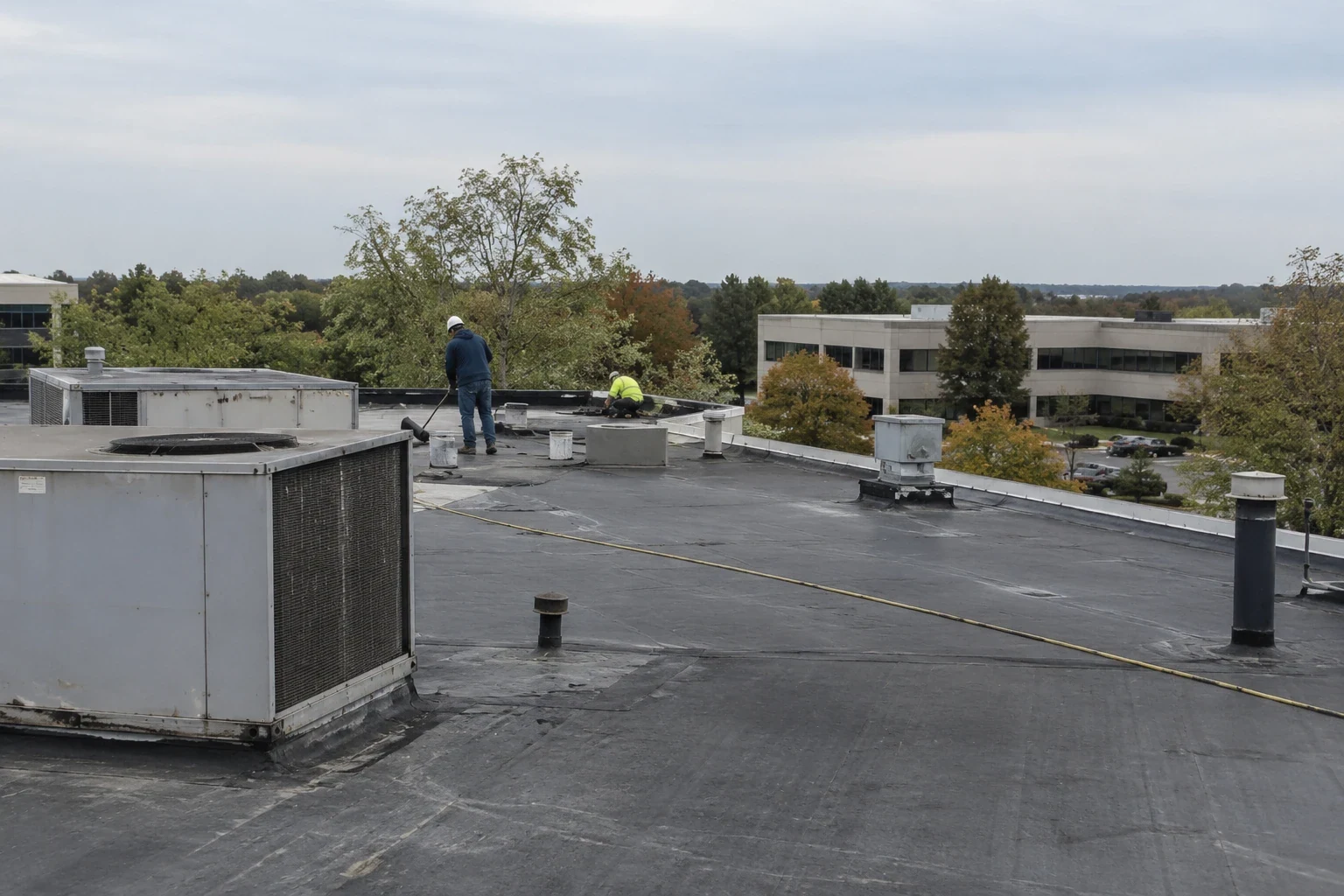
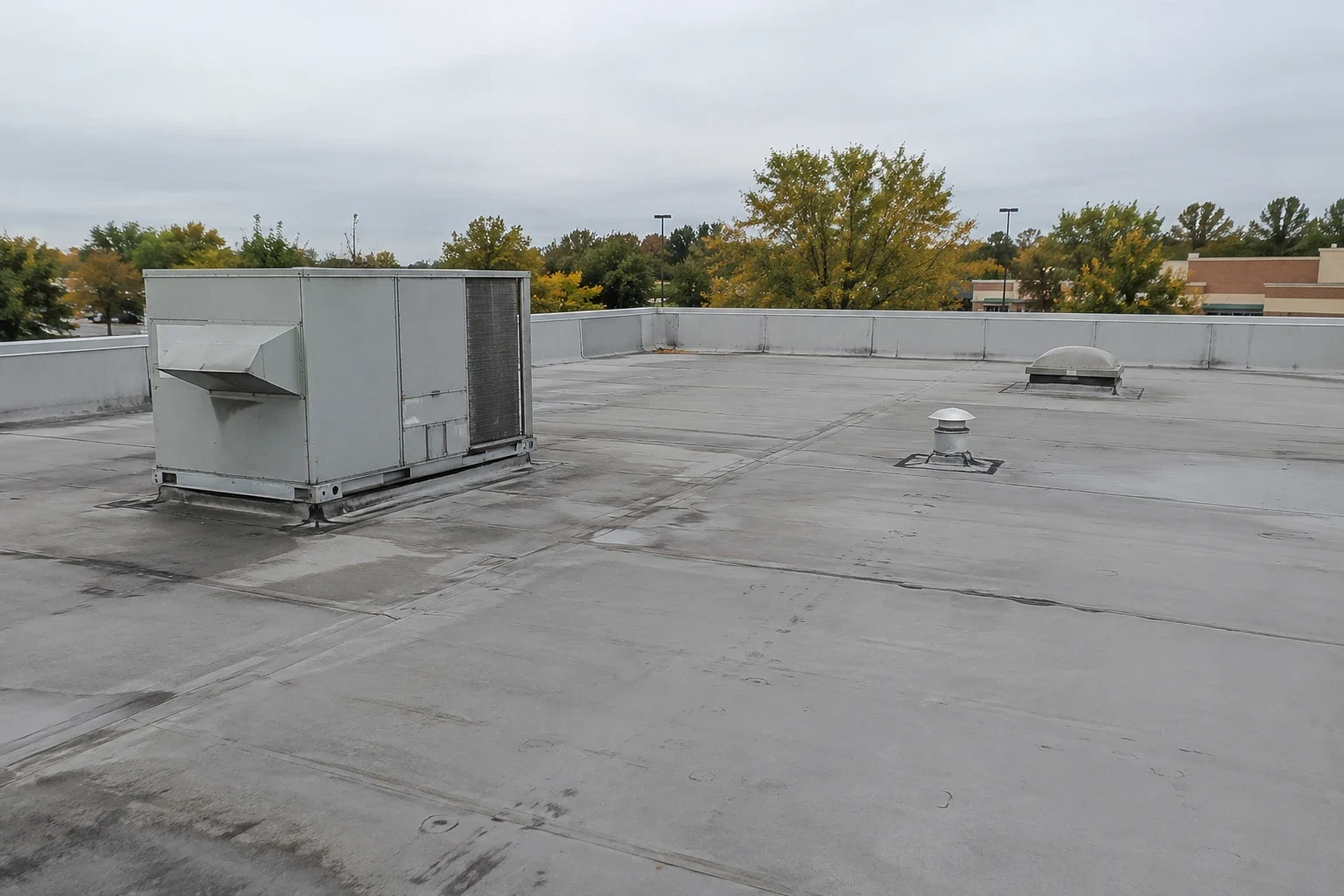
At each address, we identify visible membrane or metal, roof sections, drains, overflows, parapets, equipment curbs, penetrations, and prior repairs. A tenant’s interior report directs the walk but does not locate the opening by itself. We compare it with roof slope and details above, then mark where moisture testing or a selected opening could confirm concealed conditions. Photos use a consistent building and section reference so a portfolio manager can find the same detail later without relying on a single site employee.
Kendall Square combines life-science and technology facilities with housing, hotels, retail, and restaurants. Those uses can create different access windows across a portfolio, but they do not establish what happens in a particular property. A roof condition survey can document the assembly and observations at one asset. A roof asset record can keep those findings with the portfolio file. When the issue follows an outlet, a drainage review records the primary and overflow paths.
How do you prioritize repairs across several buildings?
We sort findings by evidence and consequence: active water, open flashing, wet insulation, blocked drainage, aging surfaces, and maintenance items do not carry the same response. The record identifies which areas were inspected, which need a test, and what remains unverified. A repair priority is not a prediction that another roof will fail. It is a way to compare current conditions and decide where to schedule a return visit, obtain a proposal, or keep an item on routine maintenance.
A real-estate portfolio may need capital planning across different ownership groups, while a retail portfolio may require tenant and opening-hour coordination. We separate those needs by asset. A multi-site inspection program can standardize labels and follow-up fields without treating every building alike. For a larger repair, a recover assessment compares existing layers, moisture, attachment, and clearances before the manager weighs recover against replacement.
How can work proceed while tenants remain in place?
The property manager provides tenant hours, entrances, roof access, loading rules, air-intake restrictions, and contacts who can approve temporary closures. We use those details to set the work area, lift route, barriers, and daily dry-in point. If the crew finds a concealed condition beyond the planned section, we document it and confirm the revised boundary before expanding. A clear sequence keeps repair work tied to the asset and helps the manager provide notice without promising that a tenant’s operations will be unaffected.
CambridgeSide is an East Cambridge retail and dining center, while the Alewife area has its own roadway and transit connections. Delivery timing may differ by property, so the manager confirms the actual route and service entrance. An occupied-building sequence can define work windows and daily closure points. At a Cambridge Crossing property, we coordinate with the building contact on staging and access rather than infer it from the district map.
What turns inspection findings into a usable roof plan?
A maintenance plan connects each finding to an action, responsible contact, and review date. We can document debris removal, drain checks, seam monitoring, flashing repair, test openings, or a future condition survey. The plan also distinguishes temporary stabilization from completed permanent work. If a roof section is not accessible or a drawing conflicts with field conditions, that limit stays in the record so the next visit can resolve it directly.
Cambridge winter guidance describes more thaw-freeze variation, heavier precipitation, and more frequent flooding. We include outlets and overflow paths in maintenance notes because those details carry water away, but citywide conditions do not prove a local defect. A manager can compare later photos with the baseline and see what changed. When a leak needs immediate response, our emergency crew can coordinate service at any hour, including holidays, with the property contact.
Managers can use the report to separate a contractor’s confirmed repair scope from an operating task assigned to site staff. We identify whether an outlet needs clearing, a seam needs a repair visit, or a moisture question needs testing. The manager can then set an owner, date, and access window for each action. When those items are reviewed later, the roof map shows the exact detail rather than a broad property-level status.
What should the owner receive after the inspection?
The handoff identifies the property, roof section, materials observed, photos, repair limits, test locations, areas not accessed, and follow-up items. If a temporary cover remains, its location and status are explicit. We keep each building’s notes separate so the condition at one Cambridge asset does not migrate into another’s record. A portfolio summary can then compare the documented work without confusing roof area, tenant report, or repair history across addresses.
For a manager working across Cambridge’s commercial districts, the useful file is one that links a roof photo to a location, finding, and next action. It supports maintenance budgeting and vendor coordination while keeping uncertainty visible. A roof condition report can retain the field record; a new inspection later can confirm whether an earlier concern changed or was resolved.
For assets with a recent transaction or a change in management, the handoff can also list available warranties, prior repair records, and unresolved questions supplied by the owner. We do not treat paperwork as proof of current condition. A new walk verifies the roof, documents differences, and gives the incoming manager an updated baseline for service planning.
The owner handoff should make the next decision clear without requiring a second reading of every photograph. We group items by immediate water entry, confirmed repair, preventive maintenance, and further investigation. Each item names its building, roof section, evidence, and proposed next step. Cost allowances for hidden conditions stay separate from quantities measured in the field. If a tenant report led to the inspection, we record the reported date and interior location but keep private tenant details out of the roof file. This format lets the manager answer which work is authorized, what remains open, and which access window is needed to continue.
Commercial Roofing Questions
Can one inspection cover every building in our portfolio?
We can schedule multiple addresses, but each building and roof section needs its own findings. Access, assembly, drainage, and condition are confirmed at the property rather than inferred from another site.
How do you rank repair needs across sites?
We compare documented conditions such as active leaks, open flashing, drainage issues, moisture findings, and maintenance items. The record explains why a return visit or repair is recommended without predicting conditions at uninspected roofs.
What should our property team send before scheduling?
Provide addresses, roof plans or system records, reported conditions, tenant or loading restrictions, access contacts, and available work windows. Those details help assign the correct inspection route.
Can repair work be coordinated around tenants?
The manager sets tenant notices, access, and operating limits. We plan barriers, staging, and daily closure around those directions when weather and the roof condition allow the sequence.
How are temporary repairs tracked?
The report labels temporary stabilization separately, identifies its roof section, and lists follow-up needed for permanent work. That keeps an emergency response from appearing as a completed repair.
Related Roofing Work
More Industries We Serve
Browse every page in Industries We Serve, or request a roof assessment and we will walk the roof with you.
Build a roof record for each Cambridge property
Send the address list, roof plans or system records, reported conditions, tenant and access contacts, and preferred work windows. We will inspect each asset and return section-level findings.