Warehouse Roofing in Cambridge, MA
Inspect, repair, or replace Cambridge warehouse roofs with attention to drains, rooftop equipment, loading operations, and weather-tight work phases.
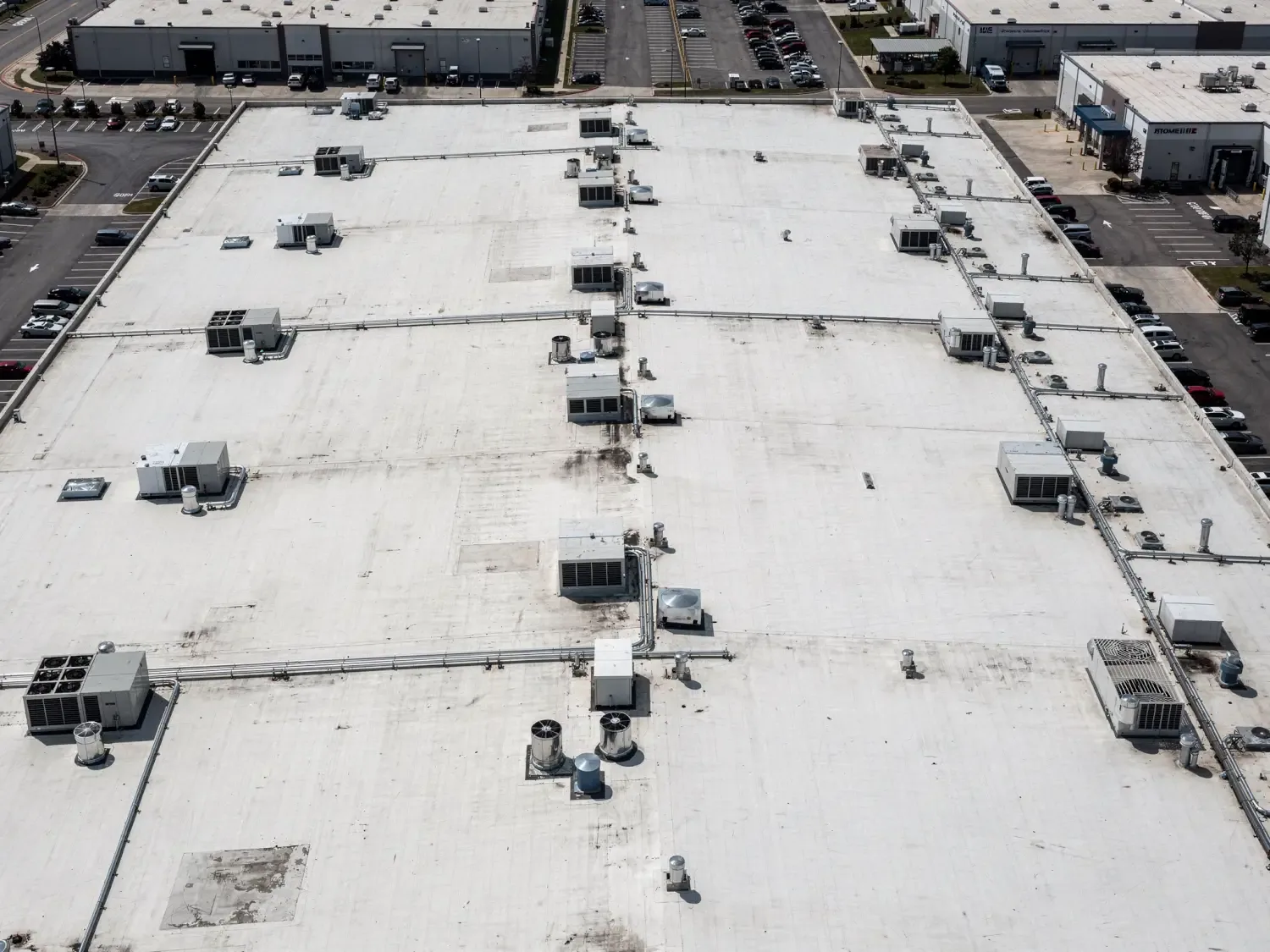
A pallet bay drain that backs up changes the inspection route across a Cambridge warehouse roof. We trace water from the low point toward the membrane, equipment curbs, and perimeter before assigning the interior symptom to one detail. The City notes that winter flooding is becoming more frequent in Cambridge; our field sheet maps every outlet and overflow point to its roof section. North Cambridge includes office and industrial uses near Cambridgepark Drive, while the Alewife district combines light manufacturing, retail, and other businesses. Those locations help frame access and service routes, not the roof assembly at a warehouse. We inspect the building's actual system, coordinate around loading operations, and document which areas can be repaired or need broader work.
What should we check above the storage bays?
Roof walks over storage areas start with drains, scuppers, and the low paths that carry water away from each section. We inspect membrane seams, penetrations, curbs, and edge metal, then compare them with interior reports and maintenance records. A stain near racking can help point us toward a roof area, but water may travel before it appears indoors. We mark the reported location and the roof detail above it, then note whether the evidence is an open seam, damaged flashing, ponding, or a condition that needs testing.
Forklift exhausts, conveyor supports, and vents each create different transitions, so we record the component rather than describe a warehouse roof as one uninterrupted field. The inspection record identifies roof sections and photos that a facility manager can revisit. If water collects beside a drain, a drainage review checks the bowl, strainer, overflow, and discharge route. Where the condition extends beyond the outlet, a ponding-water assessment can separate a blocked drain from a settled area or membrane issue.
How can a roof issue affect stored goods?
A roof opening above inventory creates a different response priority from coating wear in an isolated service zone. We locate the water path, identify vulnerable storage areas reported by the facility, and document whether the roof needs a temporary dry-in or a permanent repair. Our emergency crew is available day and night through the week, including holidays, when an opening needs prompt attention. The first visit still records what is visible and what needs follow-up; a temporary patch does not establish that hidden insulation or deck is dry.
North Cambridge connects office and industrial uses with Massachusetts Avenue retail and transit, while Alewife Brook Parkway links the district to regional roads and transit. Those details can inform how deliveries and lift access are coordinated for a property, but the site contact confirms the route and loading rules. If an existing roof has repeated repairs or uncertain layers, a recover evaluation can compare test openings, attachment, and moisture findings with a tear-off option. We record the basis for the decision so maintenance staff can schedule work without relying on an interior stain alone.
Does a warehouse need a recover or full replacement?
Condition, assembly layers, attachment, moisture, deck, and roof height all affect the choice. A localized seam or curb failure may support repair when surrounding materials are stable. A recover adds another layer only when existing construction and design requirements allow it, including clearances at drains and rooftop equipment. Removal gives the crew access to concealed layers but adds tear-off, debris handling, and dry-in sequencing. We document test results and open questions before comparing the options.
A distribution center may have a different dock and shift pattern from a cold-storage building, but neither use identifies the roof system. For each property, we compare the membrane or metal already installed, the deck and insulation conditions, water path, equipment, and schedule. A replacement proposal can state the tear-off limits and substrate allowances, while a recover scope lists the layers being retained and tests used to support that choice.
How do repairs fit around receiving and shipping?
Before work starts, we confirm dock hours, truck movement, roof access, material staging, and the area that must remain available for receiving. A repair can often be isolated by roof section, but a larger installation needs a daily open-and-close plan. We locate air intakes, exits, and pedestrian paths below the work zone. Weather, wet substrate, and concealed deck conditions can change the planned boundary, so the crew records what was closed before leaving the roof.
The property contact sets operating restrictions, and the contractor maps the work to that window. A phased warehouse work plan can sequence tear-off and dry-in around active shipping without promising that every operation can continue unchanged. We note notice periods, equipment lifts, debris routes, and which doors need clear egress. At a Cambridge property near North Cambridge, route planning should identify the specific entrance and loading area rather than treat the neighborhood as a shared service yard.
What belongs in the warehouse roof file?
Closeout should show what was repaired or installed, the affected roof sections, drainage details, equipment flashings, and any test openings or deck work. Photos need a location label and enough surrounding context to find the detail again. We list areas that were inaccessible and changes to the original scope. A facility manager can pair that record with interior leak logs or inventory-protection procedures to see whether the same roof section needs another inspection.
A condition report can preserve repair photos, observations, and recommended follow-up for maintenance planning. The record distinguishes a temporary weather closure from completed permanent work and identifies materials where confirmed. Cambridge's guidance on heavier precipitation makes the drain and overflow notes useful during later service calls. The next walk can compare seam edges, outlets, and curb transitions with the repair baseline rather than restart the investigation from a ceiling mark.
The warehouse file should connect roof sections with the storage bays, loading doors, equipment lines, or office areas below them. We mark where inventory needed protection and record the daily weather-tight boundary before the crew leaves. If a roof plan uses different labels from the facility's inventory map, we cross-reference them so managers can locate the repair without assuming one bay equals one roof area. Closeout notes include materials, test results, access limits, and deferred work. A future inspection can then compare the same drain, seam, or penetration and determine whether a new stain follows the old path or points to another part of the assembly.
Commercial Roofing Questions
Can you repair a warehouse roof while shipments continue?
We can plan work by section around the dock and property rules, subject to weather and the condition found. The sequence identifies lift access, pedestrian controls, and daily weather-tight boundaries. The building contact confirms which operations must stay clear.
How quickly can a leak above inventory be addressed?
Our emergency response runs around the clock, including weekends and holidays. We first locate and protect the active opening, then document what needs permanent repair. Concealed moisture or deck damage may require a separate approved scope.
Does a warehouse roof need a coating?
The existing material, adhesion, moisture, drainage, and product requirements guide that decision. We inspect and test the surface before proposing a coating. A coating will not correct a failed deck, open flashing, or blocked outlet by itself.
How do you investigate a leak that appears far from the roof opening?
We compare the interior report with roof slope, seams, drains, curbs, and wall transitions above it. Water can move laterally before it becomes visible. The report separates the observed entry point from areas that still need testing.
What information helps plan warehouse roof work?
Send the Cambridge address, roof plan or records, reported condition, dock schedule, access contact, and work window. Photos of affected storage areas can help locate the inspection zone, while the roof walk establishes the repair boundary.
Related Roofing Work
More Property Types We Roof
Browse every page in Property Types We Roof, or request a roof assessment and we will walk the roof with you.
Map the roof issue to the warehouse operation
Send the Cambridge address, roof plan or system records, reported condition, loading schedule, access contact, and work window. We will inspect the affected sections and document repair or replacement steps.