
Built-Up Roofing in Cambridge, MA

Inspect or replace built-up roofing in Cambridge with review of plies, surfacing, flashing, drainage, and concealed moisture by roof section.
A loose strip of gravel beside a drain can uncover a weak spot in built-up roofing in Cambridge, MA. We trace the surfacing and visible plies into nearby flashings, curbs, and outlets before calling for a patch. The City's winter guidance records heavier precipitation and more frequent flooding, so the field sheet includes the overflow route and any obstruction. Central Square's mix of offices, civic uses, retail, and transit creates varied access conditions, but it does not tell us how a particular roof was built. We identify the existing layers from records and field evidence, then explain whether the assembly needs targeted repair, moisture testing, or replacement.
What do the plies show at a damaged area?
Built-up roofing uses multiple bitumen and reinforcing-fabric layers, often finished with gravel or a cap sheet. At an exposed edge, we look for separation between plies, saturated reinforcement, cracks, open laps, and a loss of surfacing. A crack at the surface does not by itself reveal how far the condition extends. We map the visible area and inspect its relationship to drains, base flashings, equipment supports, and previous repair material. If the layers cannot be judged from the surface, we discuss a test opening and identify what the opening is intended to confirm.
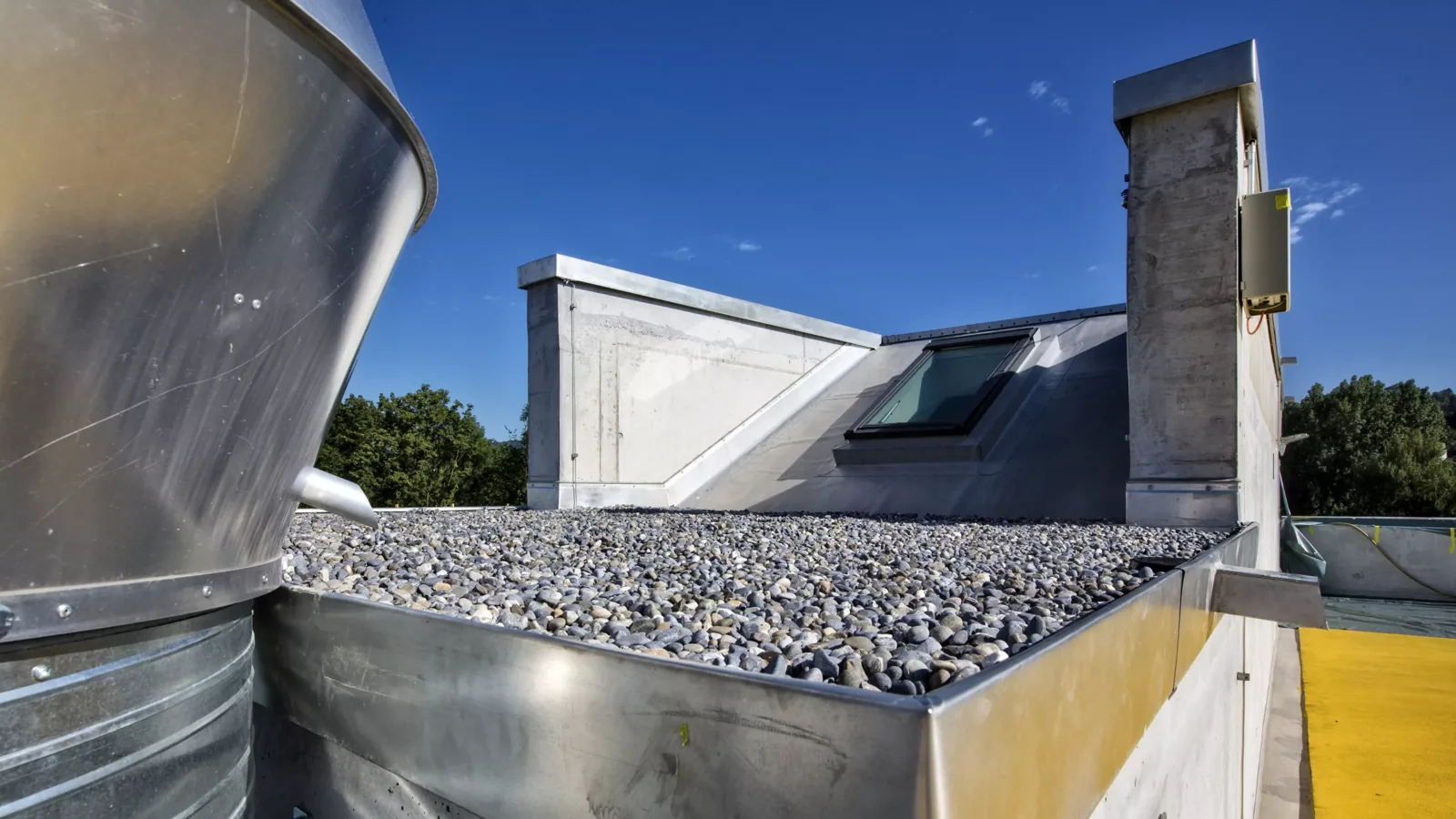
Loose aggregate may expose the bitumen to sunlight and foot traffic, while displaced gravel can also collect at strainers and slow drainage. We photograph the area before moving material, note the depth and distribution, and check whether the roof has a defined path to an outlet. A roof inspection can record those conditions with section labels. Where moisture is suspected below the surface, an infrared survey may help target confirmation, provided the assembly and weather produce readings that can be interpreted.
How do you tell surface wear from wet layers?
Surface appearance is one part of the diagnosis. We compare cracks, blisters, exposed felt, and gravel movement with interior reports, drainage, prior repairs, and any moisture test. A stain inside can guide the inspection route, but water may travel laterally before it appears indoors. We follow the roof slope and connected transitions, then mark areas where the evidence is conclusive or where a test opening is still needed. The report keeps observed damage separate from hidden conditions that have not been verified.
Cambridge climate planning includes heavier precipitation and coastal-surge flooding among citywide risks, with Alewife identified in resilience work as an area of relatively higher flood exposure. Those facts inform drainage planning, not the diagnosis of an individual roof. At any property, we inspect actual drain bowls, scuppers, overflow openings, and low points. If water is not leaving the roof as intended, a drainage correction may be part of the scope. A separate ponding-water repair review can document whether the cause is a blocked outlet, settled area, or another condition requiring design direction.
When is another layer a poor fit?
A recover is considered only after we know the number and condition of existing layers, attachment, substrate, and moisture findings. Adding a roof layer can increase dead load and alter heights at curbs, parapets, drains, and roof-mounted equipment. It can also leave a concealed wet area in place. We record these constraints before comparing recover and tear-off options. A built-up roof with localized damage may support a repair; widespread deterioration or confirmed wet insulation can require a different project boundary.
For a new assembly, the design team may compare modified bitumen with a TPO membrane or another specified system. We describe how each option meets the documented deck, drainage, access, and project requirements rather than treating a material as a universal replacement. A recover evaluation lists the known roof layers and tests; a replacement scope identifies tear-off, substrate preparation, and new flashing transitions if removal is selected.
What controls a built-up roof replacement?
Replacement sequencing depends on the assembly design, access, staging, weather, and how the building remains protected each day. Before opening a section, we establish a dry-in limit, locate temporary tie-ins, and confirm material delivery and debris routes. Built-up systems may use hot asphalt or other specified bitumen application methods; project controls determine the allowable process and work area. The crew checks each layer and flashing transition as work advances, and the daily report marks areas that are complete, temporarily closed, or awaiting substrate direction.
Harvard Square combines university, retail, arts, and entertainment activity, and each property sets its own delivery and access rules. We confirm those rules with the site contact rather than assume a shared district schedule. For occupied properties, a phased work plan identifies noise windows, pedestrian protection, air-intake coordination, and the daily weather-tight line. A Harvard Square project still needs building-specific roof plans and a named access contact before staging can be set.
What belongs in the built-up roof record?
The closeout file records the layers installed or repaired, surfacing, flashing details, drain connections, test locations, and any substrate work. Photographs should show representative plies, laps, base flashing, edge metal, and the closed work boundary with roof-section labels. We identify areas that were inaccessible or left outside the scope. If the original roof composition could not be confirmed, the record states that limitation instead of treating an estimate as a verified assembly. Those details let the property team connect future service calls to the same part of the roof.
For sites with several uses and entrances, a marked roof plan keeps each image attached to the correct area. A roof condition report can carry those photos into the maintenance file. Later walks can compare gravel displacement, exposed bitumen, lap condition, and drain performance with the installation record. Cambridge's reported increase in winter flooding makes outlet documentation useful, while the next repair still depends on what the field inspection finds at that time.
A built-up roof record should identify where the observed surface is aggregate, cap sheet, flashing, or a later repair. We note whether a test opening exposed the ply count, insulation, cover board, or deck, and keep each observation tied to its sample location. If moisture appears in one core, that result does not define the entire roof without additional evidence. The report also records how penetrations and edge transitions were rebuilt after work. When heat or adhesive methods are specified, the work plan includes the preparation and fire-safety controls required for that project. Dated photos help maintenance staff distinguish surface wear from a later patch or resurfacing.
Commercial Roofing Questions
Can a built-up roof be repaired without removing the gravel?
We inspect the surfacing, damage depth, and plies below before selecting a repair method. The crew may move aggregate in a controlled way to expose a lap or flashing. The scope records how the surfacing is restored around the repair.
How do you confirm moisture in a built-up roof?
We combine visible evidence, interior reports, roof history, and suitable moisture testing. A test opening can confirm the actual layers at a selected location. Infrared readings alone do not identify the material or prove that the entire roof is wet.
Can another roof layer go over a BUR assembly?
A recover review checks existing layer count, attachment, moisture findings, structural limits, and edge heights. We document those conditions before including another layer in a proposal. Wet or unstable material can call for removal.
Why does gravel move toward a drain?
Slope, wind, foot traffic, and water flow can redistribute surfacing. We check the drain strainer and nearby low area, then identify whether the gravel movement is isolated or accompanies damage to the membrane or flashing.
What should I provide before a built-up roof inspection?
Send the Cambridge property address, any roof plan or system records, the reported symptom, access contact, and work window. Interior photos or prior repair notes help us choose inspection points, while field conditions establish the repair limit.
Related Roofing Work
More Roof Systems
Browse every page in Roof Systems, or request a roof assessment and we will walk the roof with you.
Map the built-up roof layers
Send the Cambridge address, roof records or plan, reported condition, access contact, and work window. We will inspect the surfacing, plies, drainage, and transitions and document the supported next step.