
Cold Storage Roofing in Cambridge, MA

Inspect Cambridge cold-storage roofs for condensation, insulation, penetrations, drainage, and repairs sequenced around temperature-controlled operations.
A frost line at a freezer-room ceiling changes the roof inspection route, but it does not identify the source by itself. For Cambridge cold-storage roofing, we trace the condition through the roof assembly, refrigeration penetrations, and drainage before drawing a repair limit. Cambridge winters are trending toward heavier precipitation and more freeze-thaw swings; inside the building, temperature control adds its own assembly considerations. Kendall Square combines research and life-science facilities with hotels, housing, dining, and retail, while Cambridge Crossing has commercial and residential uses. Those market facts help us plan access; only the building records and field inspection establish how its roof is constructed.
What do we inspect above a freezer room?
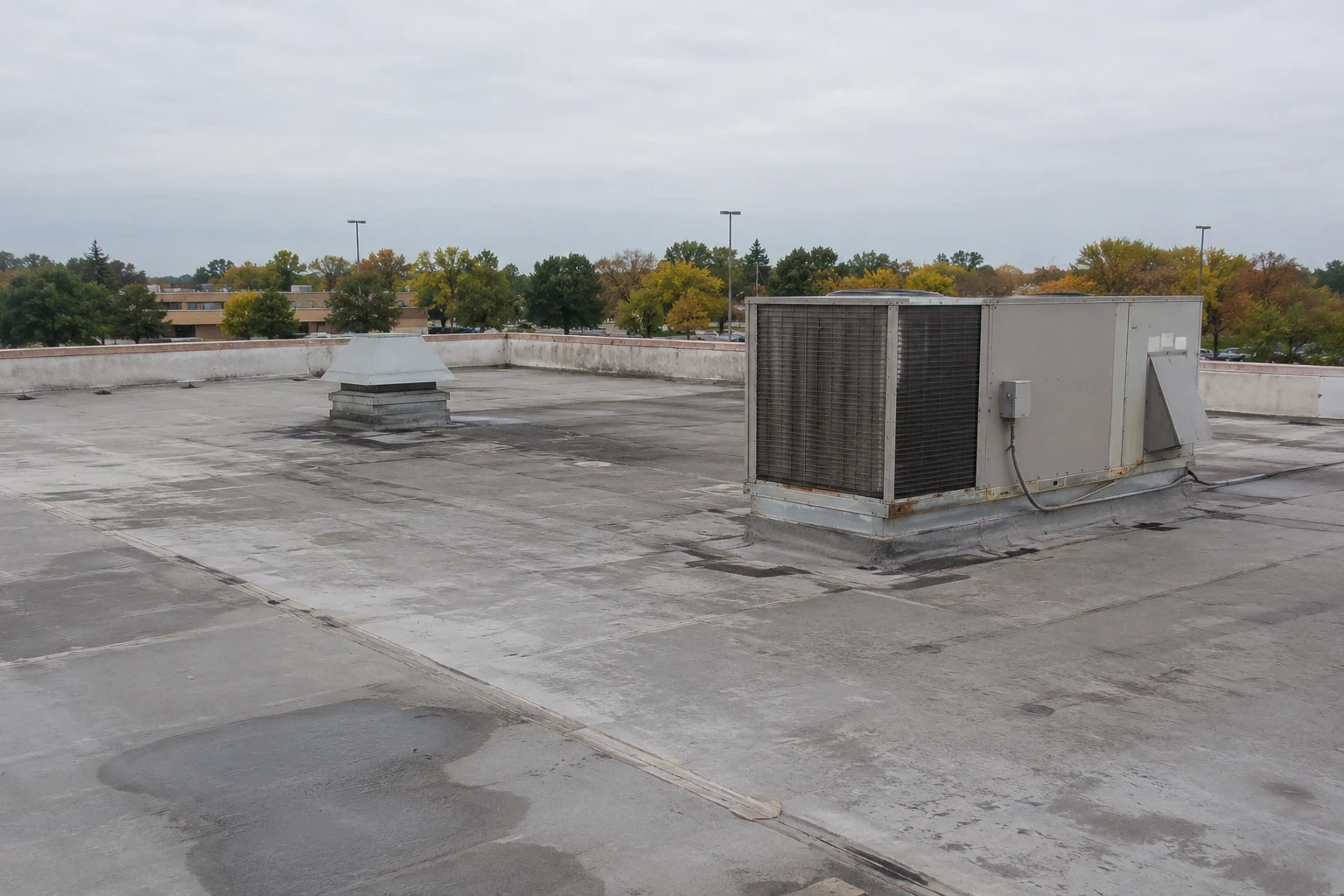
We map roof areas above the reported frost, condensation, or leak, then inspect insulation, membrane, air and vapor control details where visible, and connections at walls and penetrations. Refrigeration lines, vents, equipment curbs, and electrical conduits can create transitions that need separate documentation. We check for open flashing, punctures, wet insulation evidence, and pathways around supports. A ceiling condition may relate to air leakage or thermal bridging as well as a roof opening, so our notes distinguish visible roof damage from an interior observation that requires further diagnosis.
At each drain, we inspect the bowl, strainer, overflow, and nearby low areas. Cold-weather conditions can complicate access and water movement, so we record what is observed during the visit and do not assume that a frozen or wet surface reveals the full cause. A roof inspection can tie photos to the affected section. If rooftop piping or equipment supports are involved, a curb and support review can trace how those components meet the membrane.
Is the moisture coming through the roof?
Water at a ceiling joint is a symptom, not a map of the roof opening. We compare the reported time and location with roof slope, insulation changes, vapor-control layers, penetrations, and drain paths. In a temperature-controlled space, warm moist air moving through a discontinuity can condense on a colder surface; roof-side water entry can produce a similar interior report. We identify which evidence supports each possibility and whether an opening or moisture test is needed to distinguish them. The maintenance contact can share when the symptom appears, recent temperature changes, and any equipment service notes; that timing helps guide the inspection without deciding the cause in advance.
Cambridge's climate assessment identifies intense storms, precipitation, and coastal-surge flooding as local risks, while the City also reports more frequent winter flooding. Those facts support attention to drainage and perimeter details, but they do not diagnose an individual cold-storage roof. We inspect the actual outlet and overflow path and note whether water is trapped, blocked, or moving as intended. An infrared survey may help locate a test area if conditions and assembly type support useful readings. A flashing review can isolate a confirmed opening at a wall, curb, or line support.
Which repair keeps temperature control in view?
A localized flashing repair may be appropriate when the surrounding membrane and insulation are dry and secure. If moisture or damaged insulation extends beyond one penetration, the scope needs to include those layers and the approved vapor-control detail. A coating or patch cannot correct an unrelated air leak inside the envelope. We document the layer sequence from records and any test opening, then coordinate the roof-side repair with the facility contact so work does not create an uncontrolled opening over temperature-sensitive operations.
A warehouse roof may share drains and low-slope details with a manufacturing plant, but cold-storage work adds temperature and moisture considerations that need project-specific review. We confirm the installed membrane, insulation, deck, and operating conditions before comparing repair, recover, and replacement. A roof insulation review can record thickness and cover-board needs, while a replacement scope identifies how the new assembly handles the building's documented control layers.
How can inspections avoid the busiest work window?
We schedule roof access with the facility contact and identify areas where a hatch, ladder, or service route crosses controlled operations. If the interior must remain at a set temperature, the plan distinguishes roof work from any interior opening or test. We confirm which refrigeration lines and air intakes must remain clear, where materials can be staged, and how temporary dry-in will be checked. A planned walk can document drains and equipment curbs before a larger repair is scheduled.
Cambridge Crossing is a mixed-use development with commercial space, residences, dining, and retail. The property context can affect deliveries and access coordination, but the specific facility determines its work rules. A phased occupied-building plan can set roof sections, notification windows, and daily closure points. For a Cambridge Crossing property, we confirm the exact building and service entrance with the site contact rather than assuming the development has one shared access protocol.
What should the cold-storage roof record preserve?
The closeout file identifies roof layers where verified, insulation and cover-board work, penetration and curb repairs, drain conditions, tests, and any area that remains inaccessible. Photographs should show the affected detail with a roof-section label and a nearby reference point. We note whether interior observations were confirmed from the roof side or left as a separate building-envelope question. This prevents a later maintenance visit from treating condensation and a membrane leak as interchangeable findings.
A condition report can keep temperature-sensitive areas, repair limits, and follow-up tests together for operations and maintenance. The file also records the temporary closure and return-to-service check after work. Cambridge winter guidance tracks heavier precipitation and freeze-thaw changes, so outlet and edge observations can be reviewed alongside later inspections. The next visit can compare the same curb, drain, and insulation test point with dated images rather than relying on memory of the prior event.
For a cold room, the roof report should distinguish the membrane and insulation above it from vapor-control layers and interior refrigeration equipment. We note where a roof test opening stops and avoid extending its result into areas that were not sampled. If water appears near a cooler line, the facilities contact may need to check condensation or a drain separately while the roofing inspection follows the exterior water path. During a repair, we identify the work boundary and weather-tight stop point before removing material. The closeout lists the insulation or cover board replaced, where those layers were confirmed, and any temperature or production condition that changed the access plan.
Commercial Roofing Questions
Does frost on a freezer-room ceiling prove the roof is leaking?
No. Moisture can enter through a roof opening or form through air leakage and condensation. We compare interior reports with the roof assembly and penetrations, then identify testing needed to distinguish those conditions.
Can you repair a cold-storage roof without opening the room?
Many roof-side repairs can be completed from above, but the facility's assembly and access controls determine the method. We coordinate any test opening, temporary closure, and work area with the property contact before disturbing the roof.
Why inspect insulation during a roof leak?
Wet or compressed insulation can affect thermal performance and change the repair boundary. We look for evidence and use selected testing where appropriate, then document whether removal and replacement are included in the approved scope.
Can a new roof retain the existing vapor barrier?
We review available drawings, test openings, material condition, and the design for the new assembly. If the control-layer detail remains uncertain, we record that item and coordinate with the design team before it is covered.
What information helps schedule cold-storage roof work?
Send the Cambridge address, roof and refrigeration records, reported condition, temperature-control constraints, access contact, and work window. Those details help us coordinate the roof visit without assuming which interior operations can pause.
Related Roofing Work
More Property Types We Roof
Browse every page in Property Types We Roof, or request a roof assessment and we will walk the roof with you.
Trace moisture before setting the repair limit
Send the Cambridge property address, roof and refrigeration records, reported condition, operating constraints, access contact, and work window. We will inspect the roof-side assembly and document testing or repair needs.