Data Center Roofing in Cambridge, MA
Plan Cambridge data-center roof inspections and repairs around cooling equipment, penetrations, drainage, and documented operational access windows.
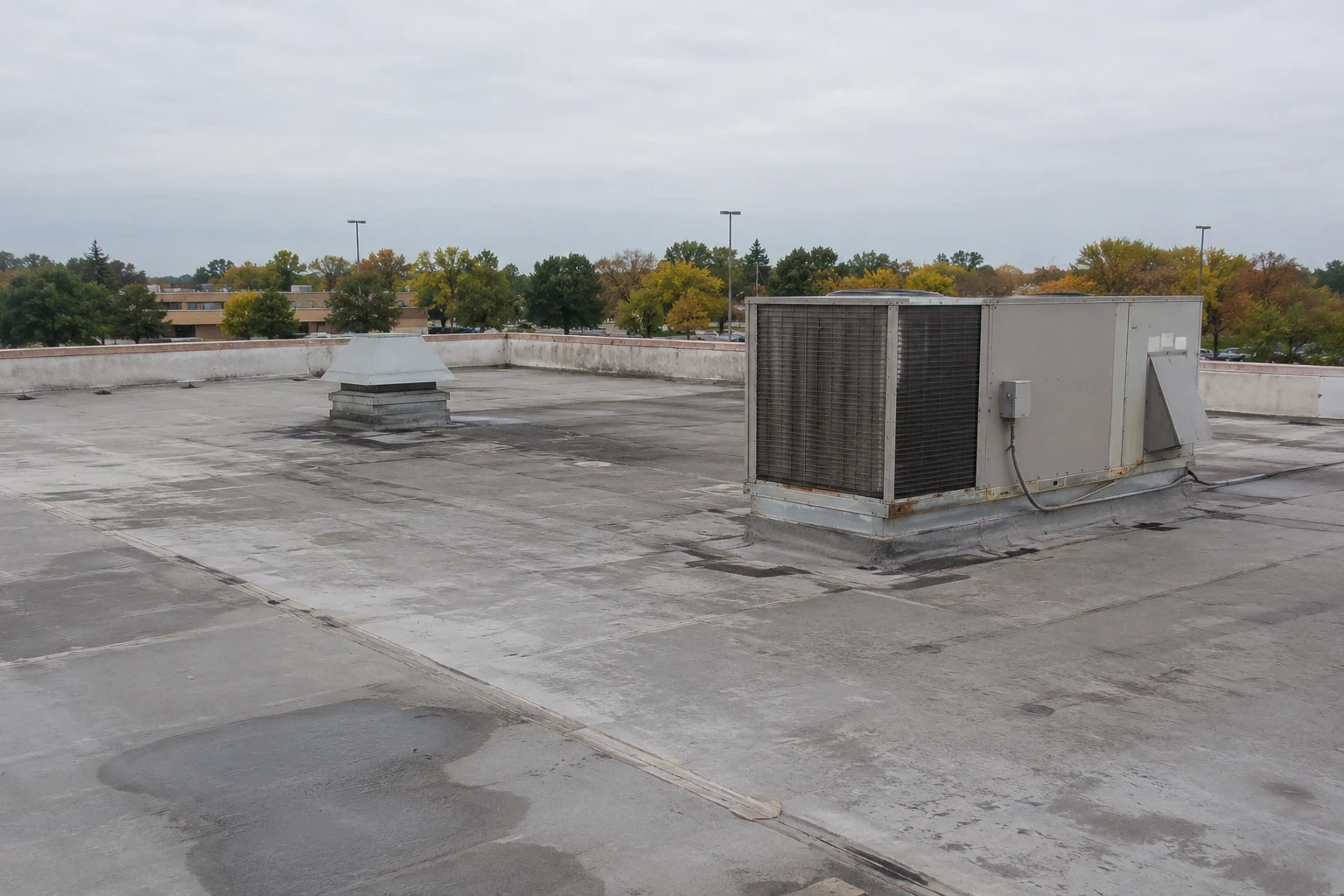
An intake curb beside a cable tray changes the inspection route above a Cambridge data center. We check the flashing, support, nearby seams, and drainage before deciding whether the reported condition affects a roof area or a single transition. Kendall Square is a biotechnology and research-innovation district with commercial and institutional uses; MIT's Cambridge campus includes specialized labs and testing facilities. MIT's Cambridge campus also includes specialized research and testing spaces. These facts describe local activity, not a count of data centers or the roof system at a particular building; we confirm equipment routes and access rules for the facility under review. We review the facility's actual roof records, coordinate access with operations, and document each finding so a repair can be scheduled against a defined work area.
How do we separate a roof leak from a cooling issue?
A ceiling mark near a mechanical room can come from roof water, condensate, a pipe connection, or another interior source. We compare the reported timing and location with the roof plan, pipe routes, curb flashing, drains, and visible membrane conditions. A roof inspection can identify an opening or wet area, while equipment staff may need to confirm the condition of a condensate line. We keep those findings separate until there is evidence connecting them, then define any testing needed before permanent repair.
Cambridge climate planning identifies heavier precipitation and storm exposure among local risks. We use that context to check drain bowls, overflow routes, wall interfaces, and penetrations; it does not establish that a particular data center has storm damage. A roof condition inspection can map the observed conditions by section. If water appears at a pipe support or cable penetration, a roof-equipment detail review can trace the transition without assigning responsibility for the mechanical component itself.
Which roof details sit under cooling equipment?
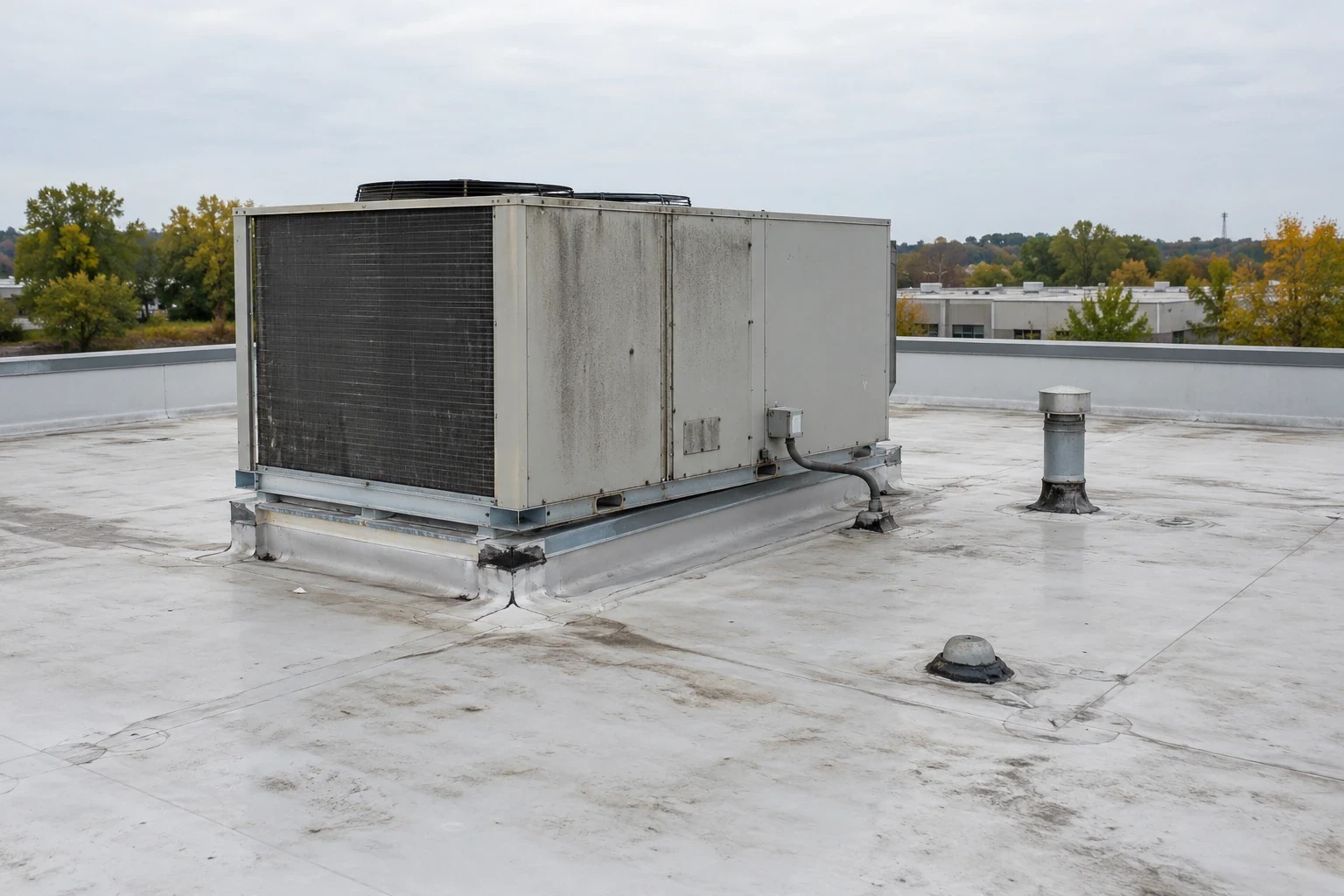
Cooling equipment, exhausts, intakes, conduits, and control lines may create closely spaced penetrations. We inspect each curb, support, and pipe boot, checking the flashing termination and the membrane between components. The roof plan should identify equipment that cannot be moved during service; if it does not, the facility contact can confirm what is active and where clearances are required. We record access limits, corrosion or movement observed at a support, and any sealant or membrane repair separately.
At drains, we verify that strainers remain accessible and that discharge can reach the intended path. Cambridge winters are trending toward heavier precipitation and more frequent flooding, making outlet condition worth recording during roof work. A drainage inspection can capture bowls, overflow openings, and areas where equipment or conduit affects access. If the field membrane has been punctured, a membrane repair assessment should confirm the material and establish a compatible patch boundary.
How can repairs fit critical access rules?
Before mobilization, we confirm credentialing, escort, tool, roof-hatch, and work-hour rules with the facility contact. We also map air intakes, equipment clearances, temporary power needs if applicable, and the route for materials. Where a facility uses multiple security zones, the work plan separates escorted areas from general roof access and lists the contact who can approve a route change. A roof opening must have a defined closure plan before work begins, with the exposed area limited to what the crew can protect that shift. We document who can authorize a change if hidden deck or insulation conditions alter the work boundary.
Cambridge Crossing has a large mix of commercial and residential space, while Kendall Square combines research, housing, hotels, and retail. At a data center, access and tenant controls still come from the individual facility rather than the surrounding district. A phased access plan can define work sections, notice periods, and closeout checkpoints. A commercial office building may share some low-slope roof details, but its operating controls should not be substituted for a data center's site rules.
Should the owner repair, recover, or replace?
A contained curb leak may support a localized repair if adjacent membrane and substrate remain sound. Multiple wet areas, recurring seam failure, or an uncertain assembly can justify more investigation. Recover and replacement options require review of layers, attachment, deck condition, drainage, edge heights, and equipment clearances. We document those conditions before recommending a scope. If a section needs opening, the owner should know how it will be protected and returned to service before the work proceeds.
For a manufacturing facility, penetrations and operating controls can also affect roof access, but system selection must follow each building's design and records. A recover study compares retained layers and test results; replacement can expose concealed construction for correction. At a Kendall Square property, mixed-use context informs delivery coordination, while the facility survey determines the roof plan and equipment route.
What should the data-center roof handoff record?
The handoff identifies the roof section, membrane or metal system where confirmed, penetrations inspected, drain and overflow condition, repair materials, and test results. Photos should show each curb, support, and patch with an identifying reference. We list access restrictions, areas that could not be inspected, and any work left pending owner direction. If equipment remained active or a clearance limited the inspection, that note stays attached to the affected section rather than appearing as a general limitation.
A condition report can retain those observations for future maintenance and capital planning. The facility can compare a new service call with the previous seam or penetration record, then schedule a focused visit. Cambridge's changing precipitation patterns make drainage photos useful between inspections; they do not set an automatic replacement date. The next scope should use current field evidence and the operating window provided by the site contact.
A data-center roof file should separate a roof observation from an equipment alarm or cooling-system report. We identify the affected building section, nearby air intakes, raised equipment supports, cable or conduit penetrations, and the route that remained available to site staff. If a test opening is needed, the facilities contact should approve its location and the closure method before membrane is cut. The closeout records whether the assembly was returned to weather-tight condition and which controls remain in force for a later visit. A leak report over one room does not establish a risk to every server hall, so the scope follows the confirmed path and its boundary.
Commercial Roofing Questions
Can roof repairs be done without interrupting servers?
The facility defines its access, safety, and operating controls. We plan a bounded roof section, agree on the daily closure, and coordinate equipment clearances before work. Any required shutdown or system response belongs to the facility's operations plan.
What if water appears near a cooling unit?
We inspect the roof curb, nearby penetrations, drain path, and membrane, then compare them with the reported location. Condensate or piping issues may require the mechanical team to inspect its own equipment. The repair report keeps confirmed roof findings distinct.
How do you protect an open roof section?
Before removal starts, we identify the work limit and the temporary weather-tight closure for that shift. The crew records the closure and checks it before leaving. If weather or hidden damage changes the plan, the boundary is revised with the site contact.
Can a data-center roof be recovered over the existing membrane?
Existing layers, moisture, attachment, deck, drainage, and equipment clearances need review. We document test results and design questions before retaining a roof layer. A recover should not conceal an unresolved opening or saturated insulation.
What should be ready before an inspection?
Share the Cambridge address, roof plan, system records, access and escort rules, reported condition, and work window. Equipment locations and clearance requirements help us route the walk, while field inspection confirms the roof details.
Related Roofing Work
More Property Types We Roof
Browse every page in Property Types We Roof, or request a roof assessment and we will walk the roof with you.
Set the roof review around facility operations
Send the Cambridge address, roof plan and system records, reported condition, equipment-clearance and escort rules, and work window. We will map the affected sections and document repair or project needs.