
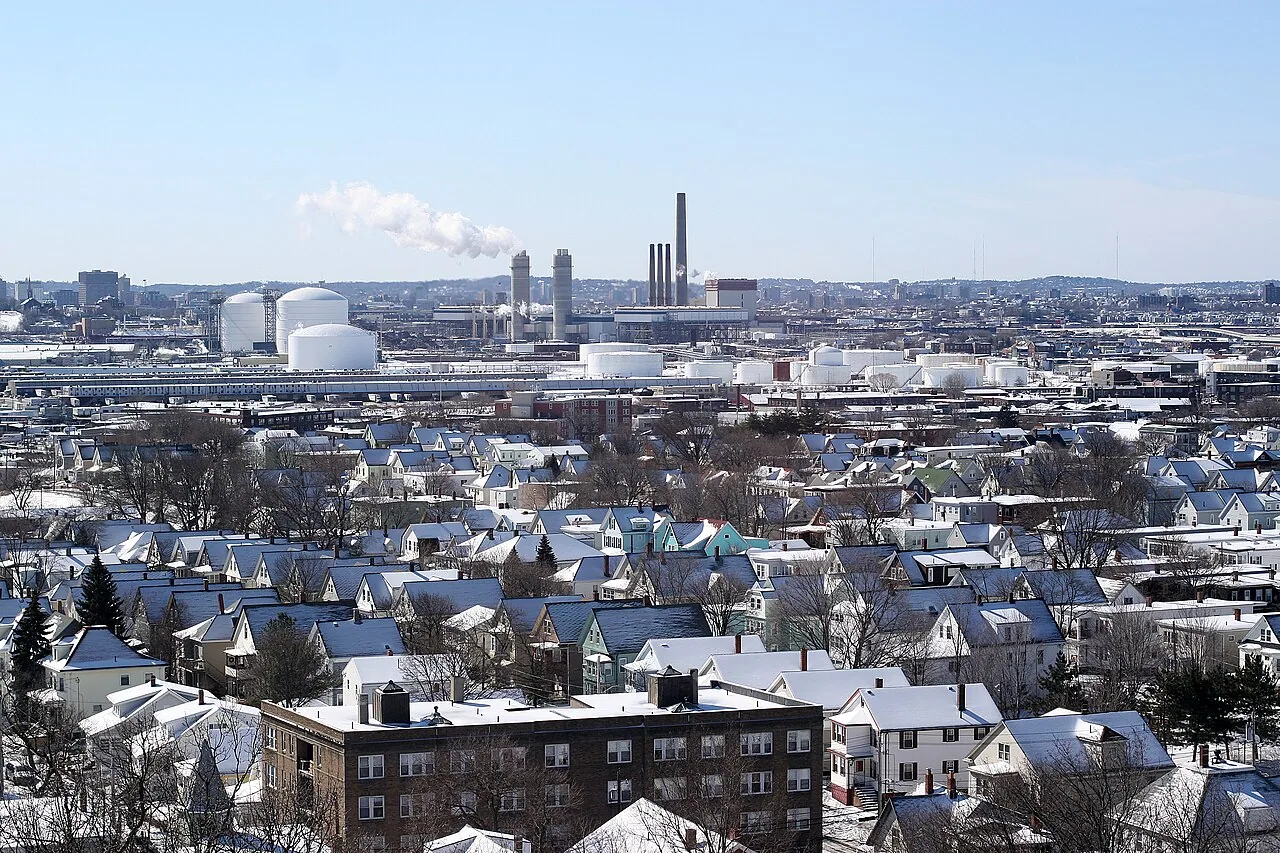
Commercial Roofing in Everett, MA
Inspect Everett commercial roofs with leak tracing, drainage checks, and repair scopes coordinated around property access and operations.
A split at a curb or a loose termination can send water behind the visible stain, so the first field pass follows the detail rather than the ceiling mark. In Everett, MA, commercial properties span established working areas and active redevelopment along Lower Broadway and the Mystic River. The Lower Broadway-Alford corridor links Everett with the surrounding north Boston street network, while the city’s Docklands area is moving through a major redevelopment phase. With development changing access and staging around the riverfront, current building records and a roof walk help set a reliable repair boundary. We confirm the address, assembly records, roof access, and operating contact, then map drains, edges, curbs, and penetrations by roof section. That gives the property manager a usable repair boundary before a patch or larger scope is priced.
Which roof transition controls the first inspection?
At a parapet, pipe boot, or equipment curb, we look for a break in the path that keeps water outside the assembly. A stain at an Everett office or industrial property may sit several feet from the opening that admits water. We compare the reported room with the roof plan, check the surface and nearby seams, and trace the slope toward the drain bowl and overflow. The field sheet separates what is visible from what needs a test opening; a photograph alone cannot confirm hidden insulation or deck condition. Along Lower Broadway, public work is improving bus, walking, and bicycle movement through the corridor, so active street or loading conditions can affect the safe staging route at a particular building. We verify the property contact’s access window and lifting plan before moving material. A commercial roof inspection records the detail reached, the area blocked by equipment, and the next check that can settle the repair limit.
How do drainage and edges change the repair boundary?
A drain that holds water after a storm can point to a low area, blocked bowl, crushed leader, or insulation that has changed shape. We clear the visible path, inspect the strainer and bowl, then check whether the overflow sits below the finished roof height. At a wall, coping splice or termination bar, movement may have opened a separate route that needs its own repair. These observations matter on commercial roofs near busy Everett corridors because roof work must fit the building’s access and operation plan, not disrupt an assumed schedule. We mark the drain, low point, and suspected entry detail on the same roof sketch so the property manager can compare them at return visits. A drainage review can also identify when water is being held by debris rather than a membrane failure. If the surface is dry and the condition is confined, a measured membrane repair may be enough; wet layers or several connected failures call for a broader scope.
When does a local repair make sense?
A repair is defensible when the surrounding sheet is sound, the substrate holds fasteners, and a new tie-in can be made to the installed membrane. We identify the system from records or field evidence, then test the suspected seam or flashing instead of assuming one material from the building’s use. If a test opening shows wet insulation, soft deck, or multiple separated leak paths, the scope needs to include the affected layers and the drainage or edge detail that allowed the problem to continue. The 105-acre Docklands redevelopment illustrates how much Everett’s land use can change over time, but a planned district or nearby construction does not determine the condition of an occupied roof. We inspect the specific building and keep planned work separate from existing conditions. A recover assessment checks load, attachment, drainage height, and perimeter transitions; a replacement scope identifies removal, protection, and weather closure by section. The written estimate lists confirmed quantities apart from conditions that still require opening or approval.
How can work fit an active Everett property?
Before mobilization, we confirm the roof hatch or ladder, approved route, material staging point, air intakes, equipment shutdowns, and the person who can release each work area. On a busy corridor, deliveries and temporary street conditions can change the practical sequence, but those details must be checked at the property rather than inferred from a city project map. We split a larger job into roof sections and set a secure temporary termination before the crew leaves for the day. If work is near a public entrance or loading route, the site contact helps coordinate pedestrian protection and material movement. We also confirm where a lift can be set, how emergency egress remains open, and whether a delivery window limits roof access. A documented replacement scope can separate these logistics from the membrane quantity, so a staging change does not erase the roof boundary or the planned daily dry-in. An occupied-building sequence can show which section is open, which is watertight, and where another trade must finish before roofing resumes. For a roof near the broader Cambridgeport service area, we keep its address-specific report separate; neighboring properties do not share roof records merely because they use the same street corridor.
What belongs in the roof record after the visit?
Keep the roof plan, system submittal, drain map, previous repair photographs, equipment changes, and warranty documents with the property record. Each observation should name the roof section, date, inspection method, and whether the condition was repaired, tested, or left for a later access window. That record is useful when a building changes hands or a construction project adds curbs and penetrations. Lower Broadway improvements and Docklands redevelopment make current access plans and field measurements useful when coordinating roof work. We compare repeated photographs at the same point, note any new ponding or open seams, and make the next maintenance action explicit. A roof condition report can carry forward the open items, while a property manager coordinating across Everett and Newton’s commercial corridors should keep separate section labels and access contacts for each address. This prevents an old repair note from being mistaken for current evidence.
What should the property contact send first?
Send the Everett building address, roof plan or system records, a description of the leak or damage, the interior room involved, access contact, and available work window. Add known equipment restrictions, recent trade work, and the location of drains or overflows if those records are available. We will inspect the connected roof details, photograph findings by section, and state whether the next step is a repair, test opening, or broader assessment. For active water entry, our emergency crew can limit exposure at any hour; permanent work follows when the surface and weather support a sound installation. The closeout identifies work completed, any temporary protection left in place, and the evidence still needed before an unresolved condition can be closed.
Commercial Roofing Questions
Can a leak at a Lower Broadway property be traced from the ceiling stain alone?
No. We match the interior report to roof details above and beside it, then inspect the connected seams, curbs, and drainage path before naming the repair boundary.
Does redevelopment near the Docklands change the roof scope?
It may affect access or coordination at a nearby property, but the roof scope follows the building’s own plans and field findings. We confirm staging and current construction limits with the site contact.
When should a test opening be included?
When surface readings and visible conditions cannot answer whether insulation or deck is wet, an opening can confirm the layer condition at that point. We document its location and closure.
Can an occupied commercial building stay open during repairs?
Often, with a section-by-section sequence, interior protection, and a secure end-of-shift termination. The property contact confirms operating limits and access windows before work begins.
Related Roofing Work
More Service Areas
Browse every page in Service Areas, or request a roof assessment and we will walk the roof with you.
Plan a roof visit in Everett
Send the Everett property address, roof plan or system records, reported condition, access contact, and work window. We will document findings and the repair boundary by roof section.