Big-Box Retail Roofing in Cambridge, MA
Inspect Cambridge big-box retail roofs for drains, skylights, equipment curbs, and repair sequencing that protects customer and loading routes.
Near a roll-up door, a drip can threaten stored merchandise before it reaches the sales floor. We trace the report from the receiving area across the Cambridge retail roof to the nearest seam, curb, and drain. The City reports heavier precipitation and more frequent winter flooding, so the inspection includes outlet bowls and overflow paths. CambridgeSide currently has two levels of shops and restaurants, while Harvard Square serves as a regional shopping district; those facts describe local retail settings, not a particular big-box roof. We confirm the store's actual assembly and operating rules, then document work by roof section and keep customer routes in the plan.
What can leak above a wide sales area?
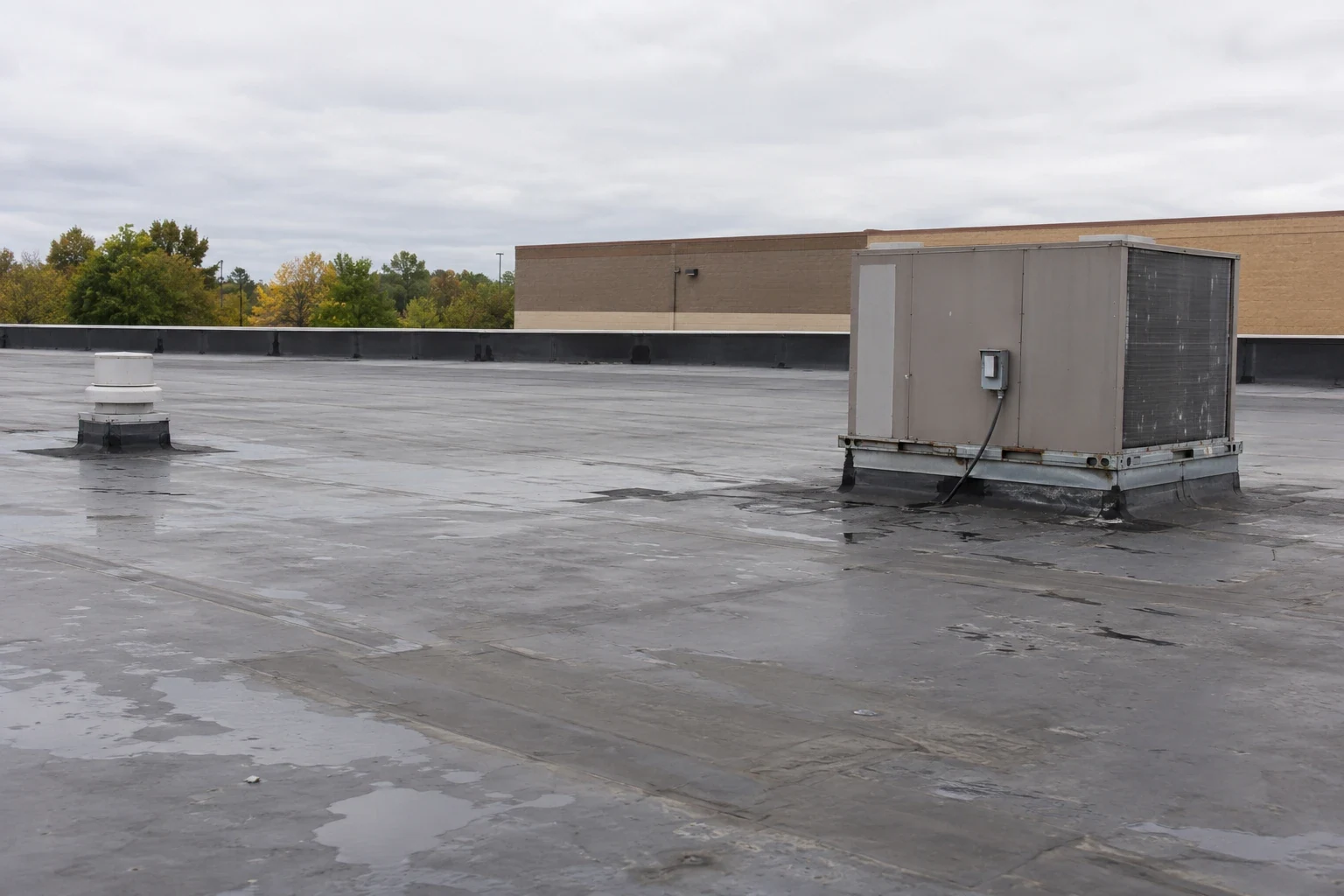
A broad sales floor may have multiple roof sections, skylights, HVAC curbs, exhausts, and service penetrations. We start with the store's interior report, identify the roof area above it, and inspect nearby seams, flashing, fasteners, and drainage. A ceiling mark can be offset from the entry point, so we follow slope and transitions rather than rely on a straight line upward. The report identifies which items were accessible, which were tested, and where an opening remains unconfirmed.
At a skylight or exhaust, we check curb flashing, corners, and the membrane termination. At the perimeter, we inspect coping and gutter connections that direct water away from the wall. A retail roof inspection can label each photo to match the store plan. If the leak follows equipment or ductwork, a curb and support inspection documents that transition. A drain review notes whether the bowl and overflow opening remain clear of debris.
How do we respond when merchandise is at risk?
When water reaches a stockroom, electrical area, or customer path, the first task is to locate the active opening and protect the affected space under the store's procedures. Our emergency response is available around the clock, through weekends and holidays. We record the temporary closure and explain which roof detail needs permanent work. A short-term patch does not verify insulation or deck condition, so the final scope may require a test opening or a return inspection after the building is protected.
Cambridge's winter pattern includes more freeze-thaw swings and heavier precipitation. After a report, we check the actual outlet route, not just the visible ceiling area. If a roof section shows standing water, a ponding-water assessment can map the low point, drain, and membrane condition. A repair scope can then distinguish an opening at a seam from a blockage at the drain. We note the customer-area boundaries provided by the manager so the crew's access plan matches store operations.
How do we keep receiving and customer access clear?
Before materials arrive, we confirm delivery timing, dock availability, lift placement, roof access, and the walkway below the planned work area. The manager sets any restrictions for customer entry, cart paths, accessible routes, and overnight receiving. We mark the roof sections to open each shift and establish a temporary weather-tight boundary before removal begins. A changed condition in the deck or insulation can alter the work area, so the crew records the revised limit and obtains direction before extending the scope.
Alewife Brook Parkway serves a commercial district with retail, offices, and transit connections. That local setting can inform route planning, but the specific store controls truck access and staging. A phased retail work plan identifies pedestrian protection, noise windows, and the route for debris removal. At a CambridgeSide property, the particular building and service entrance still need confirmation before crew mobilization; district-level retail facts do not substitute for the facility's rules.
Should a big-box roof be recoated or replaced?
A repair may work when a seam, curb, or puncture is isolated and surrounding material remains sound. Coating is considered only after checking substrate, adhesion, moisture, and product compatibility. A recover depends on the existing layer count, attachment, drainage, and curb heights. Replacement may be needed when the system has broader deterioration or concealed damage. We use records and test results to compare those paths, then describe tear-off, substrate work, and temporary tie-ins separately.
A shopping-center roof shares tenant and delivery coordination with big-box work, while a warehouse roof may emphasize storage and dock access. Neither property label determines the assembly. We inspect membrane or metal details, rooftop equipment, drains, and the supporting deck before recommending work. A replacement evaluation can document the actual sections included and the conditions that would change the final scope.
What should the store's roof record preserve?
The closeout identifies the store, roof section, repairs completed, system layers where confirmed, test openings, drain work, and excluded areas. Photos need labels that connect them to the store plan and interior report. We separate emergency stabilization from permanent repair and note any area where customer or equipment restrictions prevented access. The manager can keep this record with the store's maintenance log and compare future leak reports with the same seam or curb. We include the date of each test and the limits of any temporary repair so a new service request can start with the correct roof history.
A condition report can keep dated observations and repair photos together for future capital review. Harvard Square's retail mix includes shops and regional visitor uses; the local setting helps explain why access coordination matters, but each building's requirements come from its site contact. The report should identify the material and detail observed, not make a district-wide statement about roofing. At follow-up, we can compare outlet condition, flashing, and surface wear with the documented baseline.
A large retail roof should be divided into sections that store management and the roofing crew can identify from a plan. The record distinguishes the sales floor, receiving area, refrigeration or mechanical zones, and any part of the roof that was blocked by equipment. We note drain locations and perimeter transitions because a leak over merchandise may follow a long path from its entry point. A repair log records the temporary protection, permanent work, and remaining tests separately. If a lift or debris route affects customers or deliveries, the closeout names the restriction and its release time. That keeps a broad building from becoming one vague repair entry.
Commercial Roofing Questions
Can you work on a big-box roof after closing?
The store's access rules, delivery schedule, weather, and repair scope set the workable window. We plan lifts, barriers, and a daily closure with the site contact and document any work that must continue into another shift.
How do you inspect a leak above a large sales floor?
We match the report to the roof plan, then follow nearby drains, curbs, seams, and wall transitions. Water may travel before reaching the ceiling. The Diligence Notes mark tested locations and separate confirmed openings from suspected paths.
Can a coating repair stop water above inventory?
We inspect the substrate, seam or penetration, moisture, and coating compatibility first. If the membrane or flashing is open, that detail may need repair before a coating is considered. The proposal identifies which condition each work item addresses.
How do you keep the dock available during reroofing?
The property contact confirms truck hours, receiving doors, and any lift route that crosses the service yard. We can phase sections and schedule material handling around those windows, with a revised plan if weather or concealed conditions change the boundary.
What should a store send before a roof estimate?
Provide the Cambridge address, roof plan, system and repair records, leak locations, dock schedule, access contact, and work window. Those details help us prepare; the inspection confirms the actual roof layers and work limits.

Related Roofing Work
More Property Types We Roof
Browse every page in Property Types We Roof, or request a roof assessment and we will walk the roof with you.
Plan the retail roof around store access
Send the Cambridge store address, roof plan and records, leak locations, dock hours, access contact, and work window. We will inspect affected sections and document the repair or replacement scope.