Duro-Last Commercial Roofing in Cambridge, MA
Inspect Duro-Last commercial PVC roofs in Cambridge with checks for custom-fabricated sheets, factory seams, transitions, attachment, and repair boundaries.
A factory seam that reaches a field curb still needs a sound tie-in at the curb base. We inspect Duro-Last PVC by following its custom-fabricated sheets, site seams, edge details, and drainage into the roof section. Cambridge's climate plans identify intense storms and coastal flood exposure, so we record the outlets and overflow route alongside the membrane. Around Harvard Square, commercial and retail activity shares a corridor with Harvard University and transit. That context affects access planning; it does not establish the roof system. We confirm the installed sheet and attachment from the building file and field evidence before setting a repair limit.
What does custom fabrication change on site?
Duro-Last describes a PVC system that can include custom-fabricated deck sheets and accessories with factory-controlled seams. That can reduce the amount of field seaming in some assemblies, but field conditions still determine whether each transition is watertight. We inspect factory seams, field joints, pipe boots, curb wraps, roof drains, and edge metal. A PVC roof review confirms the sheet and compatible detail; a perimeter inspection follows the membrane termination and metal edge. We identify any installed products from labels, project records, or visible construction rather than assuming every accessory is factory-fabricated.
Where can a leak enter a fabricated assembly?
Leaks may appear at a field seam, penetration, curb corner, termination, or repair patch even where factory-fabricated panels remain intact. We trace the water report to the roof and inspect adjacent areas before naming a source. The location of an interior stain does not establish which seam failed, so we note the roof path, test results, and any inaccessible detail. A flashing review checks vertical surfaces and corner transitions; seam inspection tests an accessible joint. If moisture is suspected under the membrane, a separate survey or test opening can help define the affected zone.
How is the roof attached?
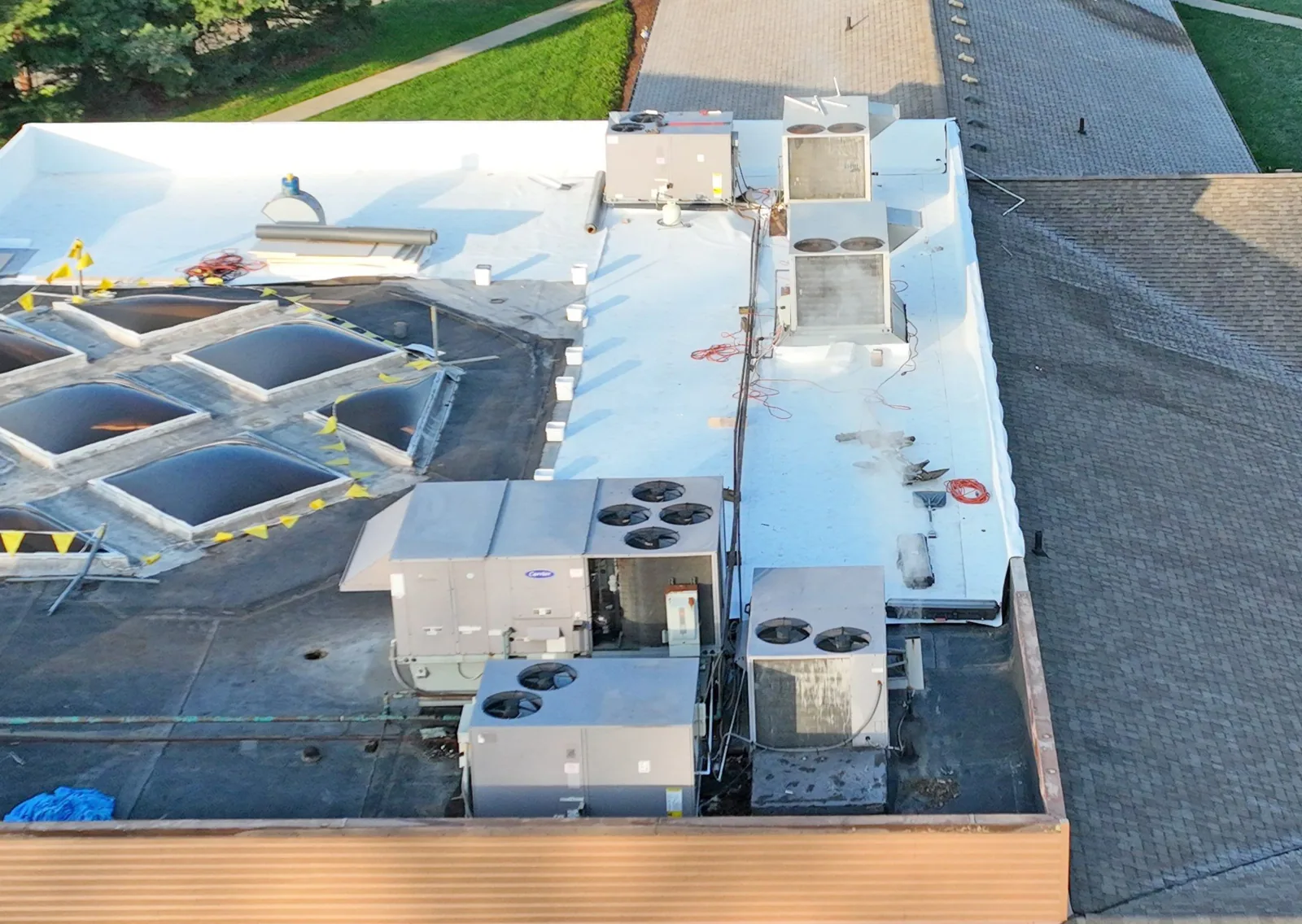
Duro-Last publishes mechanically fastened, adhered, and induction-welded system options. The installed attachment affects repair work at laps, edge zones, and penetrations, and it cannot be determined by membrane color. We review submittals, fastener locations, plates, adhesives, and visible detail conditions before planning a recover or replacement. Drain heights, curb clearances, insulation condition, and layer count remain part of that review. A replacement evaluation documents the assembly and tie-in; a recover proposal also needs substrate and structural suitability confirmed for the specific building. We compare field conditions with the available submittal, including deck type, fastener pattern or adhesive approach, insulation layers, and the documented membrane version. A drawing may describe the approved assembly while later repairs or equipment work changed the roof; we photograph visible plates, patches, and transitions and record gaps between the file and the field. If the attachment cannot be confirmed without a test, that uncertainty stays explicit in the scope. The chosen repair must remain compatible with the verified sheet and must not conceal wet insulation, a weak deck, or an unresolved drainage issue.
Can a damaged panel be repaired in place?
A localized opening may be repairable when the PVC around it remains clean, sound, and compatible with the patch method. We inspect factory seams as well as field connections so the repair does not bridge a damaged section or leave a weak termination. A hole or cut at a sheet joint needs a different boundary than a puncture in the field. We clean and prepare the area according to the verified PVC detail, then check that the patch transitions onto sound material. If the opening crosses a factory weld or contains moisture underneath, we may need to remove a larger area and restore the layered assembly rather than apply an isolated surface patch. If water has reached insulation or deck, the scope may need to open the assembly and replace affected material. Cambridge's winter guidance notes heavier precipitation and more freeze-thaw changes; we include weather protection and temporary dry-in when staging a repair. Emergency response can stabilize active entry while a permanent detail waits for safe preparation conditions.
What should maintenance examine?
Routine service checks walk pads, seams, fabricated flashings, drains, gutters, and any area changed by rooftop equipment or service traffic. Duro-Last's broader system line includes compatible accessories and drainage components, but the installed product list should be checked for each building. Near Cambridge Crossing, commercial, residential, dining, and retail uses may affect deliveries and roof access. A maintenance visit can document those conditions and flag repairs; a roof condition report tracks location and photo evidence by section. The maintenance record should distinguish a housekeeping item from a membrane defect. We note the roof area, observed condition, photo reference, and whether a follow-up test or repair is recommended; we do not describe a visual check as proof of watertightness. Around drains, scuppers, and equipment supports, the crew records debris, standing water, loose edge metal, open sealant, or movement that needs a closer look. A return visit can verify that a completed repair remains intact and that the drainage path is clear after weather changes. Keep findings by roof section so the owner can compare observations over time.
What belongs in a Duro-Last repair record?
The record names the verified membrane, attachment evidence, repair boundary, material and seam method, photos, and any remaining test or design question. It distinguishes factory-fabricated details from field work so future maintenance can follow each connection. Compare the existing assembly with Carlisle SynTec PVC options or Holcim Elevate membranes when an owner is assessing alternatives; the current roof still needs its own inspection. For work near Harvard Square, send the plan, Duro-Last submittal, leak report, service history, access contact, and work window. We will document the condition and the next decision. The handoff should also state what was not opened or tested, any temporary protection installed, and the condition required before permanent work can proceed. If product identification is incomplete, label it unconfirmed and request the original submittal or a safe field inspection. This keeps the repair boundary clear for the next contractor and prevents a small localized finding from being presented as a full roof assessment.
A prefabricated sheet layout can reduce some field fabrication, but penetrations, wall returns, drains, and later equipment changes still need inspection on the actual roof. We identify whether a leak follows a factory-fabricated seam, a field-welded tie-in, or a transition created during later work. Repair preparation must reach clean, compatible material and restore the joint without leaving a narrow open edge. If a curb was added after installation, we record how the new flashing ties into the existing membrane and whether access to the full perimeter was available. The record should distinguish original fabrication from field modification.
Commercial Roofing Questions
Does Duro-Last use factory-fabricated roof sheets?
Duro-Last describes custom-fabricated deck sheets and accessories as part of its PVC roofing system. We confirm what was installed on the property and inspect both factory and field connections.
Can you repair a Duro-Last PVC seam?
We identify the membrane and inspect the seam, adjacent sheet, and substrate. A compatible repair can address a localized failure when the surface can be properly prepared and the surrounding material remains sound.
Does factory fabrication eliminate field details?
No. Roof openings, curbs, transitions, and terminations still require field inspection and compatible detailing. We document those connections and distinguish them from the prefabricated sheet layout.
Can Duro-Last roofing be installed over an existing roof?
Attachment, layer count, wet insulation, drain elevations, curbs, and structural capacity all affect a recover decision. We inspect those conditions before recommending another layer.
What should I provide before a Duro-Last roof visit?
Send the Cambridge address, system submittal, roof plan, previous service records, reported leak area, access contact, and available work window. We will compare documents with the assembly and repair details in the field.
Related Roofing Work
More Roofing Manufacturers
Browse every page in Roofing Manufacturers, or request a roof assessment and we will walk the roof with you.
Review a Duro-Last roof assembly
Share the Cambridge address, roof plan, Duro-Last product records, repair history, reported condition, access contact, and available work period. We will identify the assembly and document the section under review.