Holcim Elevate Commercial Roofing in Cambridge, MA
Inspect Holcim Elevate commercial roofs in Cambridge by RubberGard EPDM, UltraPly TPO, PVC, system attachment, drainage, and repair condition.
A seam repair on RubberGard EPDM starts with the splice detail, while an UltraPly TPO opening calls for a heat-weld review. We identify the Holcim Elevate product and installed assembly from records and field clues, then follow it through drains, curbs, and perimeter transitions. Cambridge's winter conditions include heavier precipitation and more thaw-freeze changes, so water paths belong in the same inspection as membrane condition. Around East Cambridge, retail, hotels, apartments, and high-tech businesses create varied access needs; the district does not tell us which product family is installed above a particular building. We confirm that from system documents, field markings, and the seam or flashing construction.
Which Holcim membrane is on the roof?
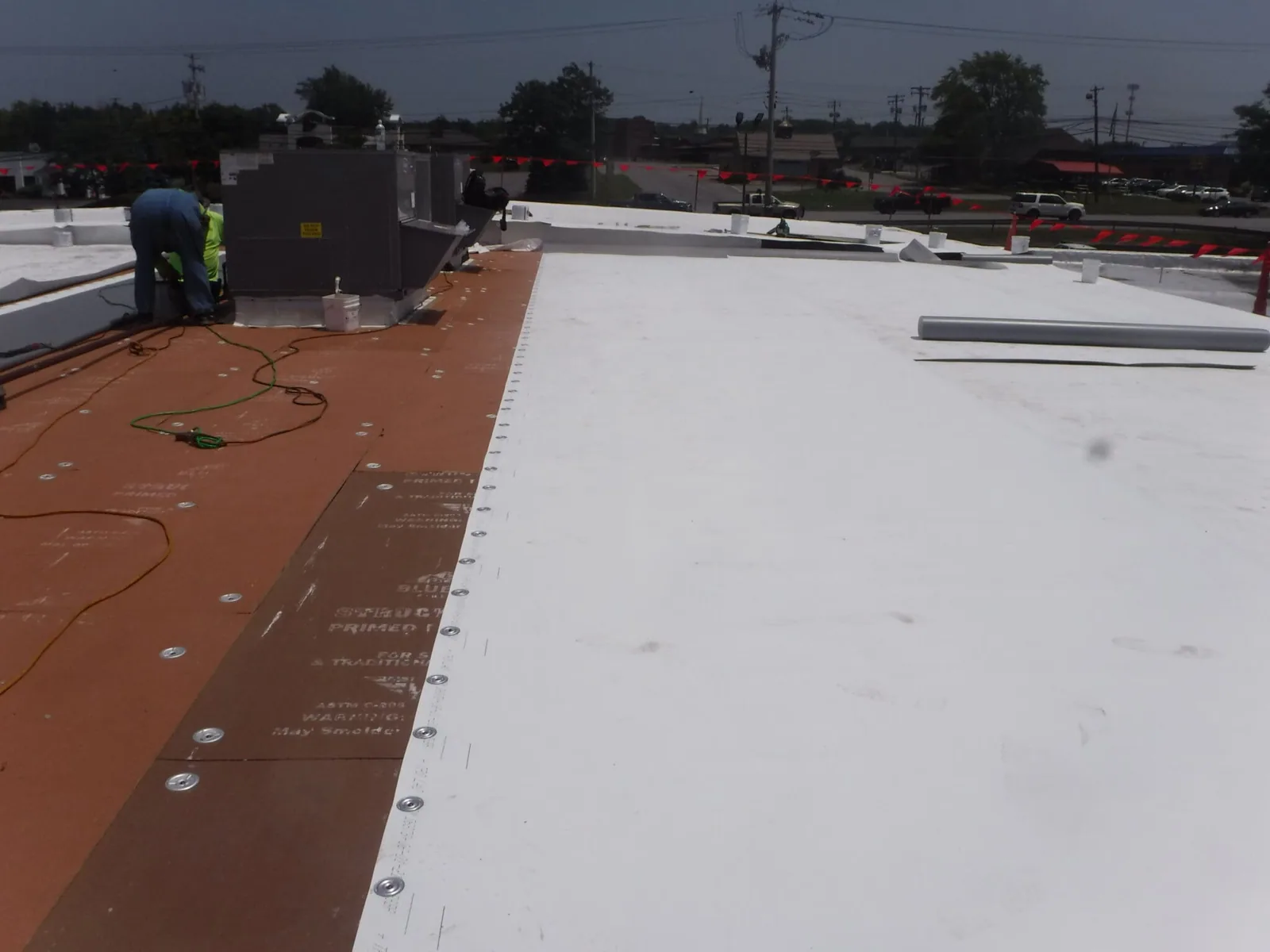
Holcim's commercial portfolio includes RubberGard EPDM, UltraPly TPO, PVC and PVC KEE, asphaltic, and metal systems. The repair method depends on the actual product family and attachment. We check labels, project submittals, seam construction, field sheet, and accessory details before specifying a patch. The EPDM review follows splice and termination condition, while TPO inspection checks heat-weld continuity and thermoplastic details. PVC and PVC KEE have their own compatible cleaners, primers, flashing, and seam procedures. We keep a system question open until records or a test confirms it. We also note whether an existing repair uses a different membrane family or a field-fabricated transition. That distinction affects how an adjoining sheet can be joined and which primer or flashing detail is appropriate. If product identification remains uncertain, we document the evidence and request the submittal rather than select a patch based on a similar-looking sample. If a field label is unavailable, we compare seam construction, exposed backing, attachment plates, and accessory shape with submitted product information. We note the roof section and sample location so the property team can request the missing record from its project archive.
How do attachment and detail affect a repair?
Holcim product literature lists adhered, mechanically attached, self-adhered, and induction-welded options in its TPO range. A field repair must respect how the existing sheet is held and how wind loads are addressed at the perimeter. We inspect fastener lines where visible, termination bars, parapet details, curb flashings, and any movement around equipment supports. At a transition, a loose edge can admit water even when the membrane field appears intact. We follow the termination and drainage line, then check vertical surfaces and corners separately. Holcim also lists PVC KEE products for demanding exposures, but exhaust, chemical contact, and the installed membrane must be verified before selecting that family. We document known rooftop exhaust or process discharge and check for visible residue near the affected sheet. That observation informs product selection without assuming a contaminant or making a warranty claim.
Is coating or recover appropriate?
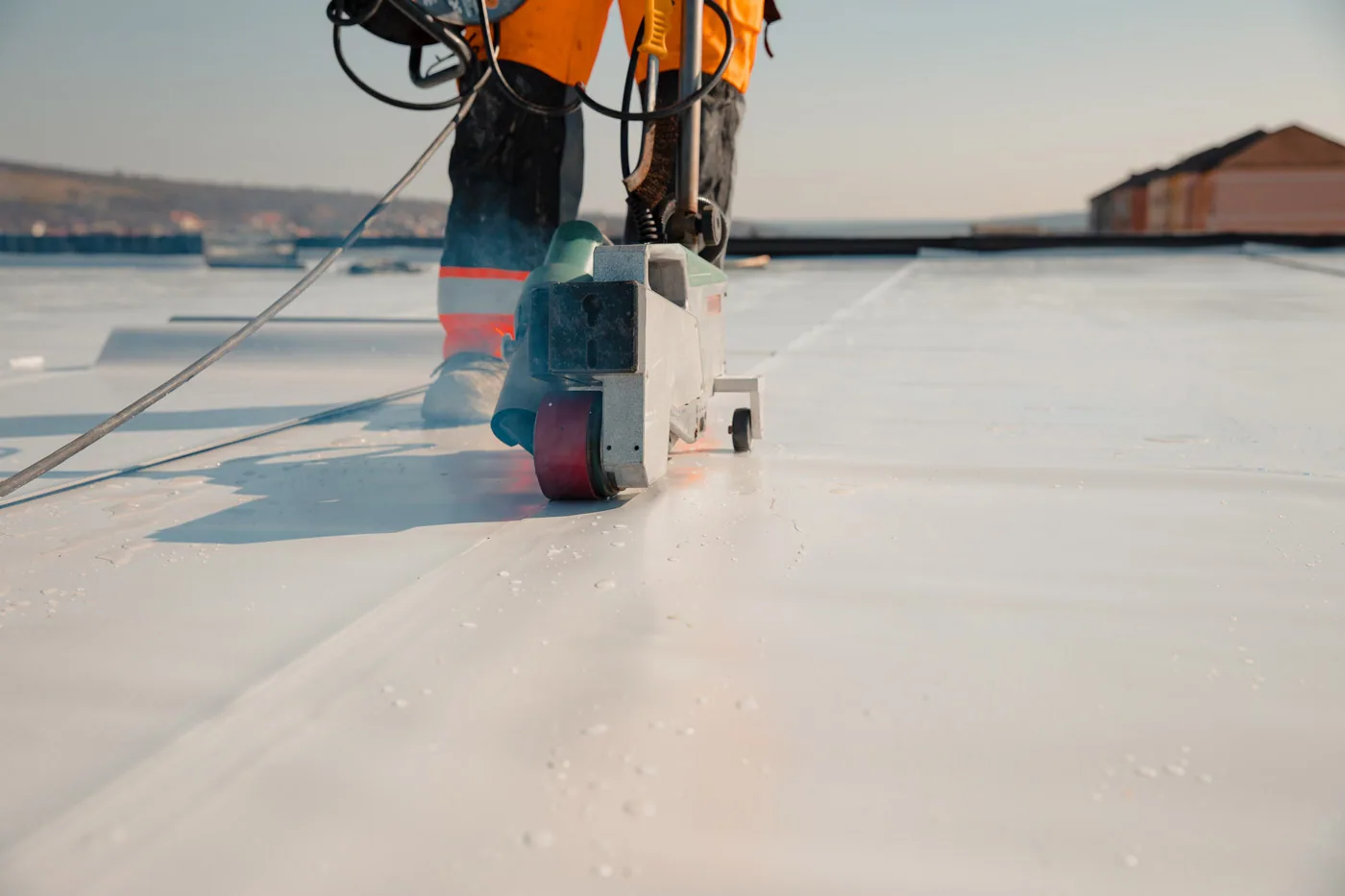
Holcim offers system components and coatings, but an existing roof must be dry enough, compatible, and structurally appropriate for the next layer. We check wet insulation, surface adhesion, layer count, drain height, curb clearances, and the state of existing details. A new sheet does not correct an unresolved leak source or low outlet. A restoration assessment tests the existing surface and substrate; a recover evaluation identifies height and attachment limits. If the roof needs tear-off, we separate membrane removal, deck repairs, insulation, and new-system work in the scope.
What should a leak investigation include?
We connect the room report with the roof section above it, examine likely transitions, and record drains and overflow paths before closing on an entry point. If moisture testing is needed, the record identifies the test area, method, and limits. Cambridge's resilience planning identifies intense storms and flood exposure; that context prompts us to check drainage and low roof details without assuming a given property was damaged. A commercial inspection can document the condition, and emergency roof service can stabilize an active opening at any hour, seven days a week, holidays included.
How can repair records support service later?
We identify the product name when confirmed, material used, repair location, seam method, photos, test results, and any open work. That record helps the next technician locate the same curb or lap and determine whether a repair remained intact. Cambridge's office and life-science activity in Kendall Square may require coordinating with property teams on access, air intakes, and equipment routes. A maintenance visit can check drains, terminations, and walk paths, while a condition report preserves observations and follow-up items by roof section. The closeout also identifies any material removed from the roof and whether a sample or product label was retained for the building file. A record of the completed detail can help a later inspector distinguish the factory sheet from a repair patch. Where maintenance reveals a new opening, the report references the prior repair and states whether the scope addresses a different cause or location. If a sample cannot be taken safely, the report identifies that limit and records the nearest visible reference. This helps the owner request technical guidance with a precise location and avoids relying on a broad roof-wide description.
What belongs in an Holcim closeout?
The closeout names the verified roof assembly, repair boundary, preparation, compatible materials, attachment detail if known, and photographs. It separates field observation from warranty eligibility, which depends on the document and its administrator. Property teams comparing manufacturer families can review Johns Manville systems or Carlisle SynTec products, but the existing roof still needs independent identification. For work near East Cambridge, share the property address, Holcim records, plans, reported issue, access contact, and work window. We will document the roof section and the scope the evidence supports. The final record also lists a return date if weather or access limits the first visit. It names the affected contact and roof access point. for the next crew. and manager. to use.
A closeout should say whether the inspected roof is a thermoplastic sheet, EPDM, asphaltic assembly, metal system, or a combination, and which detail was repaired. We record how a seam or flashing was prepared and whether the work tied into the existing field or a replacement section. A coating or recover proposal requires a separate review of the substrate, moisture, attachment, and roof height at drains and curbs. If an older system name appears in a file, we check the actual assembly before treating that label as current. The next maintenance visit can then use the repair map without assuming the entire roof has identical materials.
Commercial Roofing Questions
Can you repair a RubberGard EPDM seam?
We verify the EPDM product and inspect the splice, adjacent sheet, and substrate. A compatible seam repair may fit a localized failure when the surrounding membrane is sound and preparation conditions are suitable.
How is UltraPly TPO different from RubberGard?
UltraPly is Holcim's TPO membrane family, while RubberGard is EPDM. The seam and flashing methods differ, so we identify the roof before selecting materials or describing the repair approach.
Does Holcim make PVC KEE roofing?
Yes. Holcim lists PVC and PVC KEE products. We confirm the product and exact assembly from submittals or field details before proposing a repair or replacement system.
Can an Holcim roof be coated instead of replaced?
That depends on existing layer condition, moisture, adhesion, drainage height, and compatibility. We document each factor and explain whether restoration is supportable or a different scope is needed.
What should I send before an Holcim inspection?
Provide the Cambridge property address, roof plan, Holcim product or warranty records, repair history, leak location, access contact, and work window. We will compare the record with the roof section we inspect.
Related Roofing Work
More Roofing Manufacturers
Browse every page in Roofing Manufacturers, or request a roof assessment and we will walk the roof with you.
Inspect a Holcim Elevate roof
Send the Cambridge address, roof plan, Holcim system records, reported condition, repair history, access contact, and available work window. We will identify the assembly and document the affected section.