Johns Manville Commercial Roofing in Cambridge, MA
Assess Johns Manville commercial roof systems in Cambridge with inspections of TPO, EPDM, PVC, bituminous layers, details, and repair records.
A blister at a modified-bitumen lap needs a different repair check than an open TPO weld. We identify the Johns Manville system from field evidence and project records, then inspect the connected seams, flashing, drains, and edge transitions. Cambridge's life-science and institutional properties around Kendall Square can have sensitive equipment and controlled access, so the work window belongs in the scope. We do not infer the roof assembly from the neighborhood or a product label alone. Our report ties the observed condition to a specific roof section and separates visible wear from moisture or substrate findings.
Which JM system is installed?
Johns Manville lists commercial TPO, EPDM, PVC, SBS, APP, built-up, and liquid-applied systems. Their installation and repair methods differ: thermoplastic seams are welded, EPDM uses its specified seam materials, and bituminous systems depend on compatible plies and flashing. We compare submittals, rolls, exposed sheet edges, fastening, and repair history before describing the assembly. A TPO system review checks welds and perimeter details; EPDM inspection follows splices and terminations; a modified-bitumen survey looks at plies, cap surface, laps, and base flashing.
What do JM TPO welds and EPDM splices show?
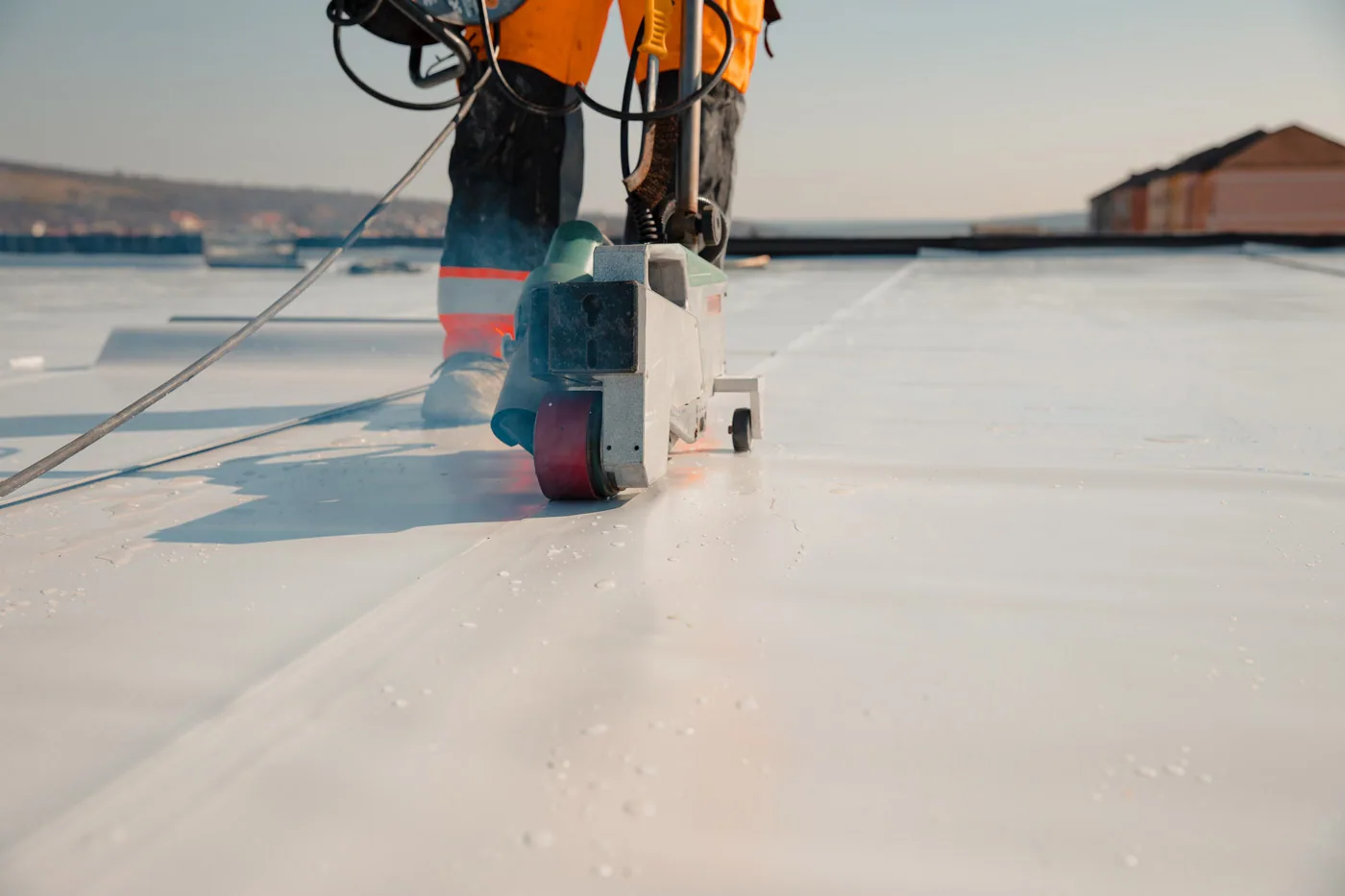
On TPO, we inspect the weld path and nearby flashing, looking for an edge that lifts under a probe, contamination, or a detail that stops short of a curb. JM TPO product information describes reinforced membranes and heat-weldable seams; field results still depend on preparation and installation. On EPDM, we look at splice tape or adhesive, primer condition where visible, corners, and terminations. A seam failure visit traces the opening into adjacent sheet and checks whether moisture or movement continues past the apparent break. We document the method and limits rather than treating a brand as proof of condition. We also inspect welds at wall flashing, pipe boots, drain rings, and metal transitions because a field seam alone cannot explain every reported drip. Where the membrane changes direction, we inspect the corner build-up and termination. The record notes which tests were possible and whether the sheet stayed stable beyond the opening. This evidence helps determine whether the repair can remain local or needs a larger section reviewed.
How should a recover or coating be evaluated?
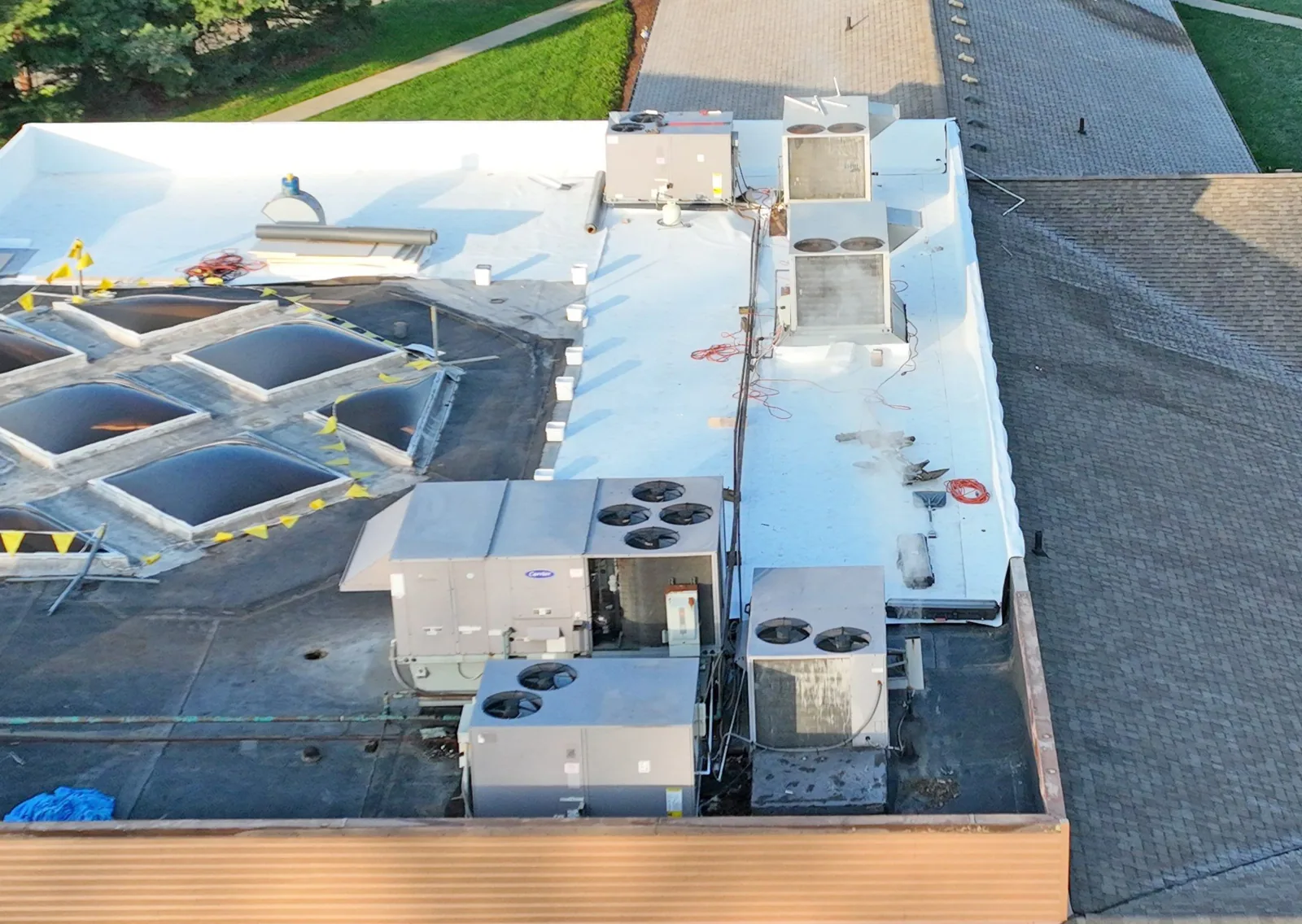
JM offers a range of cover boards, insulation, adhesives, and coating products, but compatibility depends on the existing membrane, substrate, and condition. We inspect for wet insulation, drainage height, attachment, surface adhesion, and repeated repair areas. A coating may restore a compatible surface; it will not correct trapped moisture or a failed drain. A coating assessment checks adhesion and detail continuity, while a recover review considers layers, fasteners, curb height, and load questions. Any unverified assembly detail remains an open item until records or a test opening resolves it. The site may contain more than one generation of roofing where a later addition or equipment curb changed the roof plan. We map those interfaces and confirm whether the membrane continues beneath a curb or meets a separate flashing. That matters when comparing a recover with tear-off, since the new assembly must connect to sound edges and preserve drain function. We identify what is visible and whether a test opening or design review should precede construction.
How do weather and access change the repair?
Cambridge winter guidance notes heavier precipitation and more thaw-freeze swings. We inspect the drain bowl, overflow, seams, and edge details as a connected path, then record weather and roof condition at the visit. At Central Square, subway and regional bus connections serve the traditional downtown and government seat; that activity may affect deliveries or service access, not membrane selection. We schedule repair work around temperature, surface dryness, heat-welding or adhesive requirements, tenant operations, and equipment. An inspection record helps the manager decide whether immediate stabilization or a suitable-weather return fits the evidence.
Can repair history guide the next inspection?
Yes, when prior tickets identify where work occurred and what material was used. We compare dated photos, patch edges, seams, and nearby details to see whether a repair remains bonded or a new path has appeared. If the roof plan or warranty file shows a specific JM assembly, we keep that reference with the field observations. A condition report tracks tested locations and unresolved questions, and preventive maintenance can check drains, exposed laps, and penetrations on a planned schedule. For a portfolio, the same file format can record inspection date, roof system, open repair, access constraint, and next action, while every property retains its own material and maintenance requirements. A Cambridge facility near a university or research district may have a controlled hatch or tenant escort; we record that site procedure and coordinate through the property contact. These details help schedule service while the recommendation stays within our field scope. Near Central Square, access notes can include the property contact and permitted work hours.
What should the JM roof file contain?
We return the verified system description, repair boundary, materials and method, moisture or test results, photos, and remaining scope questions. If a warranty instrument is available, we record its covered area and notice requirements without deciding coverage for the issuer. Compare a specific JM roof with GAF membrane families or Carlisle SynTec assemblies only when the owner is weighing alternatives; the existing roof must still be identified independently. Share Cambridge plans, JM records, prior repairs, a reported leak location, access contact, and work window. We will document what the field condition supports and what still needs confirmation. We can return photos with roof-area references so maintenance staff can locate each tested or repaired detail on a future visit. That record can then be compared with the written warranty or project submittal. with the current system description. and last repair date. when available. in the file. for reference. on site.
The roof file should separate membrane repair from work on insulation, cover board, flashing, and edge components. We verify the system family and seam type before choosing preparation steps, because a heat-welded thermoplastic lap does not receive the same treatment as an EPDM splice or a modified-bitumen lap. At a transition, the inspection follows the assembly through the termination and records any layer that could not be confirmed. If a coating or recover is considered, the proposal lists compatibility checks and the condition evidence supporting that option. The closeout preserves test results and photographs so later service does not rely on an assumed product from an old label.
Commercial Roofing Questions
Can a Johns Manville TPO seam be repaired?
We confirm the membrane, inspect the weld and surrounding sheet, and check substrate condition. A compatible heat-welded repair may be suitable for a localized opening when preparation and surface conditions allow it.
Does JM make only single-ply roofing?
No. Its commercial system range also includes SBS and APP modified bitumen, built-up roofing, and liquid-applied products. The installed system determines the inspection and repair method.
Can JM coating products go over an older roof?
That requires system and substrate checks. We evaluate adhesion, moisture, drains, seams, and surface condition before recommending a coating, and identify when a different repair or replacement scope is needed.
Will your report tell me whether a JM warranty applies?
We can document the roof condition, system area, repair work, and relevant paperwork. The warranty issuer or administrator interprets the terms and makes any coverage decision.
What records should I gather before a JM roof visit?
Send Cambridge roof plans, JM submittals, product labels, warranty papers, prior service reports, current leak information, access contacts, and the work window. We will compare the records with field details.
Related Roofing Work
More Roofing Manufacturers
Browse every page in Roofing Manufacturers, or request a roof assessment and we will walk the roof with you.
Schedule a Johns Manville system review
Provide the Cambridge address, roof plan, JM product records, reported condition, prior repairs, access contact, and work window. We will identify the system and document the relevant roof section.