
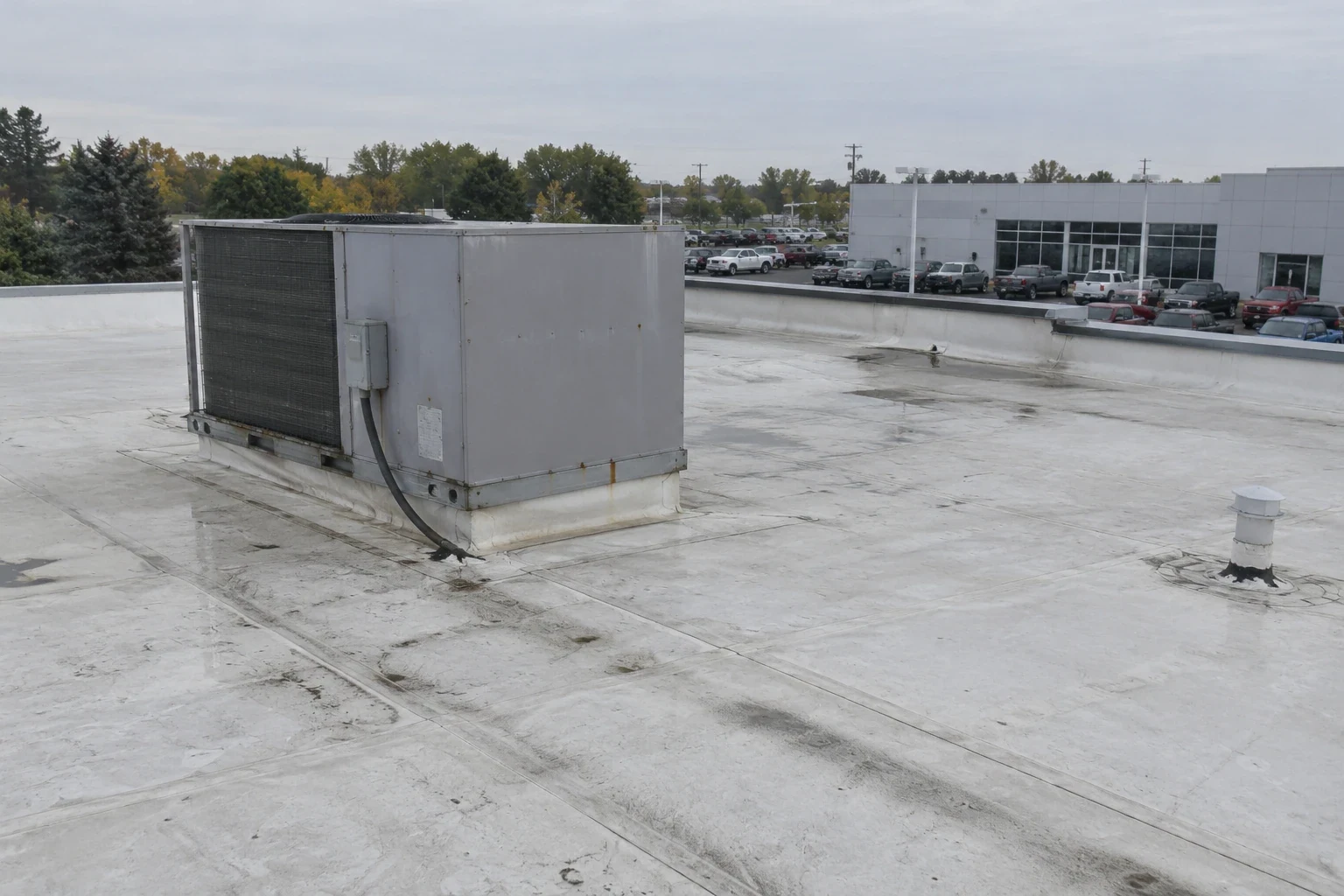
Auto Dealership Roofing in Cambridge, MA
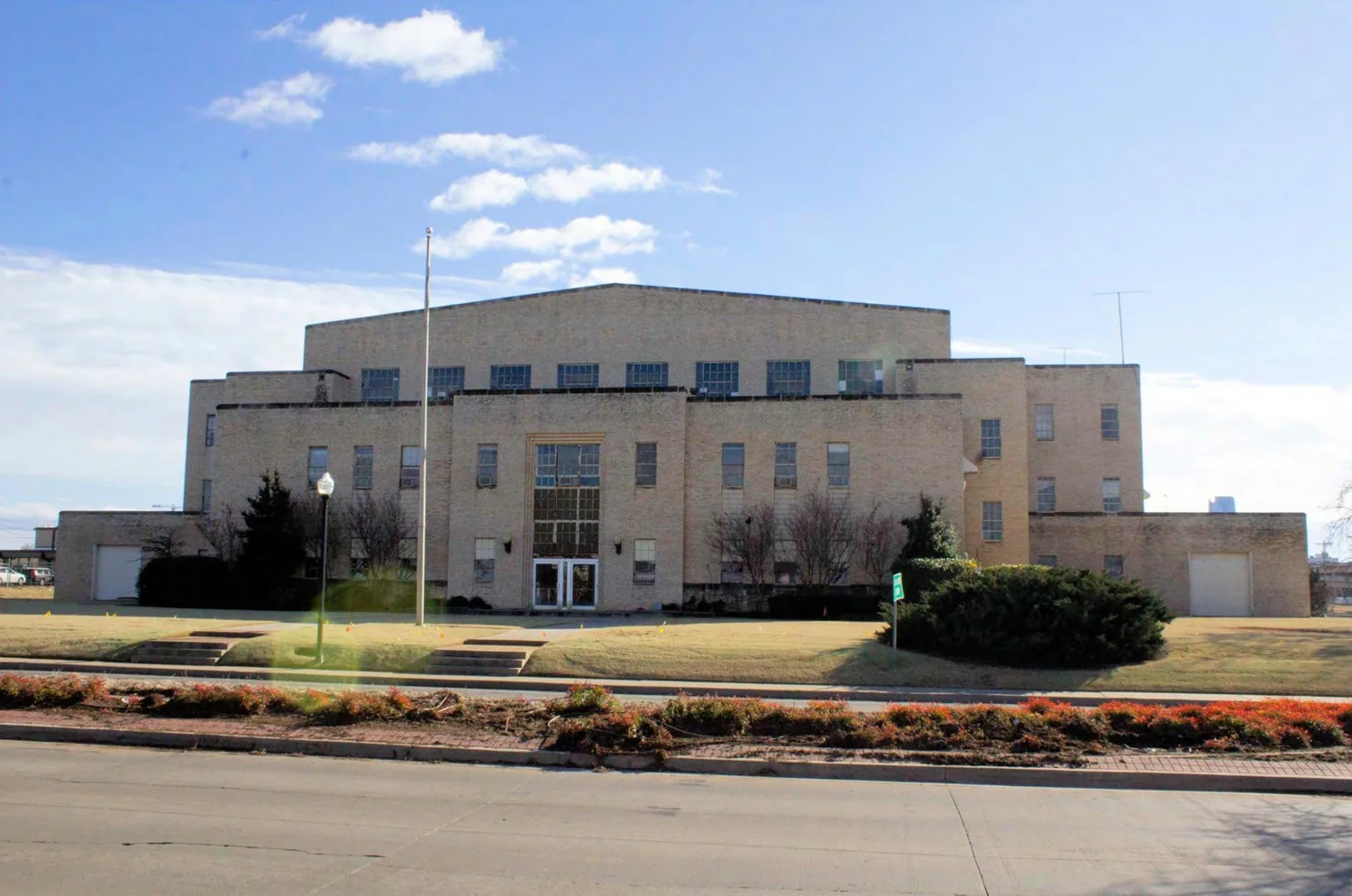
Inspect Cambridge dealership roofs for showroom, service-bay, drainage, and equipment transitions, with work phased around customer and vehicle access.
A separation at the service-bay exhaust curb can send water under the membrane long before a vehicle lane shows a drip. At a Cambridge dealership, we check the curb flashing, adjacent seam, drain route, and any showroom-to-shop transition before assigning a repair area. The City lists auto-related businesses among the Alewife Commercial District’s mix of light manufacturing, offices, retail, apartments, and hotels. CambridgeSide in East Cambridge is another retail and dining setting in the city. These district facts can help frame delivery routes, but they do not identify a dealership’s roof assembly or condition. We start from the actual roof plan and field evidence, then coordinate around service operations, inventory, and customer entrances.
Which roof transitions sit above the showroom and shop?
A showroom may have a different roof plane and edge detail from a service bay or parts area. We map the reported leak, compare it with the roof plan, and inspect seams, drains, parapets, skylights, and equipment curbs above the affected zone. Where a high wall meets a low-slope roof, the termination and counterflashing deserve a separate note. We photograph the visible condition and identify where a test opening or moisture survey could confirm what is beneath the membrane.
Service equipment can add exhausts, pipes, and supports; each penetration is checked for curb height, attachment, flashing, and nearby seam condition. A curb and equipment review can map those interfaces. If the concern is along the perimeter, an edge and coping inspection records the metal transition and drainage path. A roof condition survey can label the showroom, shop, and parts-area sections separately so the finding does not expand beyond the inspected evidence.
How do we keep service and customer routes open?
The site contact identifies repair appointments, vehicle delivery lanes, customer parking, service doors, parts receiving, roof access, and areas below the active work. We place barriers and equipment lifts so the planned section can be opened and closed without blocking a required route. The daily sequence names the weather-tight limit and the condition that would pause work. If concealed deck damage extends beyond that line, we document it and confirm the next limit before continuing.
Alewife Brook Parkway serves a commercial district with auto-related businesses and regional transit, including the Red Line terminal and bus connections. That access network does not determine which driveway a crew should use. We confirm the property’s loading route and customer hours with management. An occupied-site work sequence can phase activity around showroom hours and repair bays. At a Cambridge property in Alewife, we still identify the exact service entrance, staging area, and vehicle movement plan before material delivery.
What changes after a storm or an active leak?
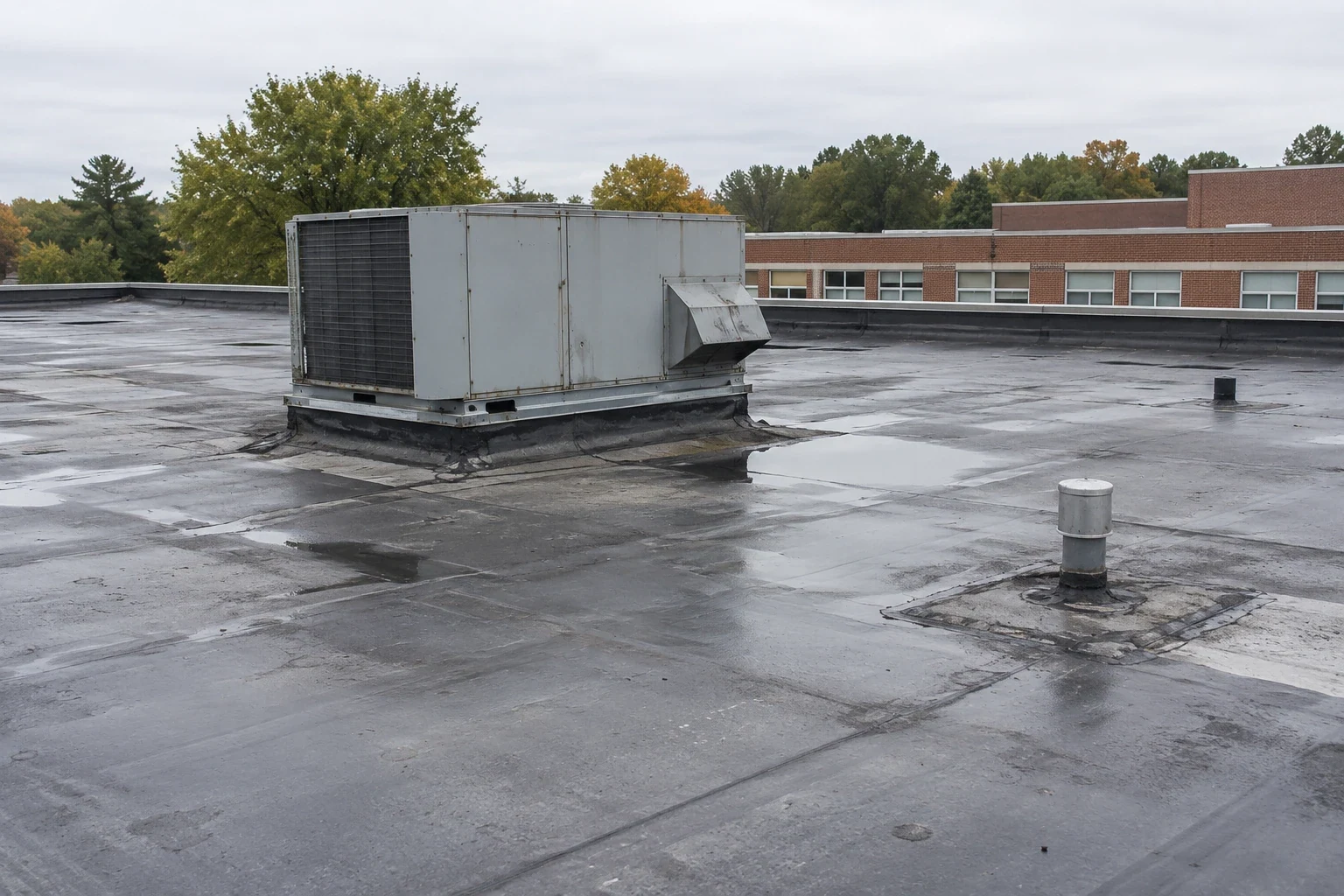
Cambridge’s winter guidance describes more freeze-thaw swings, heavier precipitation, and more frequent flooding. We inspect drain bowls, overflows, seams, curb flashings, and edge transitions after a reported event, then compare those observations with maintenance records. Water at a service-bay ceiling can move from a different part of the roof, so the interior location guides the walk but does not prove the opening. A leak outside the normal workday can be reported for round-the-clock response, including holiday coverage. We locate the entry point and stabilize the roof when weather and access permit; a later inspection defines permanent repairs.
The initial visit records whether the action was a temporary closure or a permanent repair. We do not treat a temporary patch as proof that insulation or deck has dried. If roof testing is needed, we label the location and explain what it can establish. A flashing failure inspection can help distinguish a curb defect from an adjacent membrane problem; repair limits follow the finding rather than the vehicle area beneath it.
Can the roof be repaired without replacing the whole building envelope?
A local seam, curb, or edge defect may be repaired when nearby materials remain sound. Coating or recover work depends on adhesion, moisture, existing layers, drainage, curb heights, and manufacturer requirements for the installed system. Replacement allows inspection of concealed construction, but it also brings tear-off, disposal, dry-in, and customer-protection work. We compare those paths using the assembly confirmed on site. If the showroom uses glazing or a separate sloped section, that interface is documented apart from the low-slope shop roof.
A warehouse and a manufacturing plant may have similar equipment curbs, yet a dealership has its own vehicle and customer circulation needs. Building use alone does not set material or repair scope. A coating assessment checks the existing surface and substrate; a replacement proposal identifies removal and new flashing transitions where supported by the field record.
Showroom glazing and service-bay exhausts create separate interfaces that should remain visible in the scope. We note whether the repair touches a metal edge, low-slope membrane, curb, or wall transition, then identify any adjoining detail left in place. This helps the manager coordinate the roofer with mechanical staff without treating a vehicle-service issue as a roof repair or the reverse.
Which findings should the service manager keep?
The closeout file identifies each roof section, repair location, material where verified, drain and overflow details, test opening, and any access restriction. Photos need a reference point that maintenance staff can match to the showroom, shop, or receiving roof. We list temporary protection separately from permanent work and note any follow-up needed after an equipment adjustment. If a roof area above inventory was not accessed, the report says so rather than implying the whole building was checked.
A dated condition record gives the next service manager a starting point for later walks. Cambridge’s reported increase in winter precipitation makes the outlet and overflow notes practical maintenance references. Staff can compare the next inspection with prior seam, curb, and perimeter photos and see whether the same detail has changed. A roof condition report can keep those findings organized by section and follow-up action.
The service manager should have a roof plan marked with the work area above the showroom, offices, parts storage, and repair bays. We keep customer-facing areas distinct from shop zones where exhaust, equipment, or vehicle movement may change the access plan. A repair photo shows the detail and a nearby reference point, while the written note identifies the material and preparation used. If the service department must move vehicles or close a bay, the work order records the affected window and who confirmed reopening. Future inspection can then distinguish a repaired roof curb above a service lane from a separate issue over the sales floor.
Commercial Roofing Questions
Can roof work continue while service bays are operating?
The property contact sets vehicle routes, bay hours, and access limits. We phase work by roof section and coordinate barriers and lifts around those routes when conditions allow.
Can a showroom leak come from a service-bay roof?
Water can travel along a deck or transition before it appears inside. We compare the interior report with the adjoining roof sections, seams, and wall details, then test where needed.
What do you do if a leak starts during the night?
Our emergency crew is available around the clock, including holidays. We locate the opening, protect the affected area where conditions permit, and record temporary work for permanent repair follow-up.
Does a roof coating work over every dealership roof?
The existing membrane, adhesion, moisture, drainage, and flashing condition determine whether coating is suitable. We inspect the assembly and confirm substrate readiness before recommending that option.
What should the manager provide before the roof walk?
Send the Cambridge address, roof plan or records, reported area, equipment details, customer and service hours, access contact, and planned work window. The inspection confirms the actual assembly.
Related Roofing Work
More Property Types We Roof
Browse every page in Property Types We Roof, or request a roof assessment and we will walk the roof with you.
Coordinate roof work with dealership operations
Send the Cambridge address, roof plan or system records, reported condition, equipment and vehicle access needs, service schedule, and on-site contact. We will document the affected section and repair options.