
Commercial Roofing in Arlington, MA
Commercial roof inspections, repairs, and replacement in Arlington, MA. We trace the water path, document the tested roof section, and plan around access.
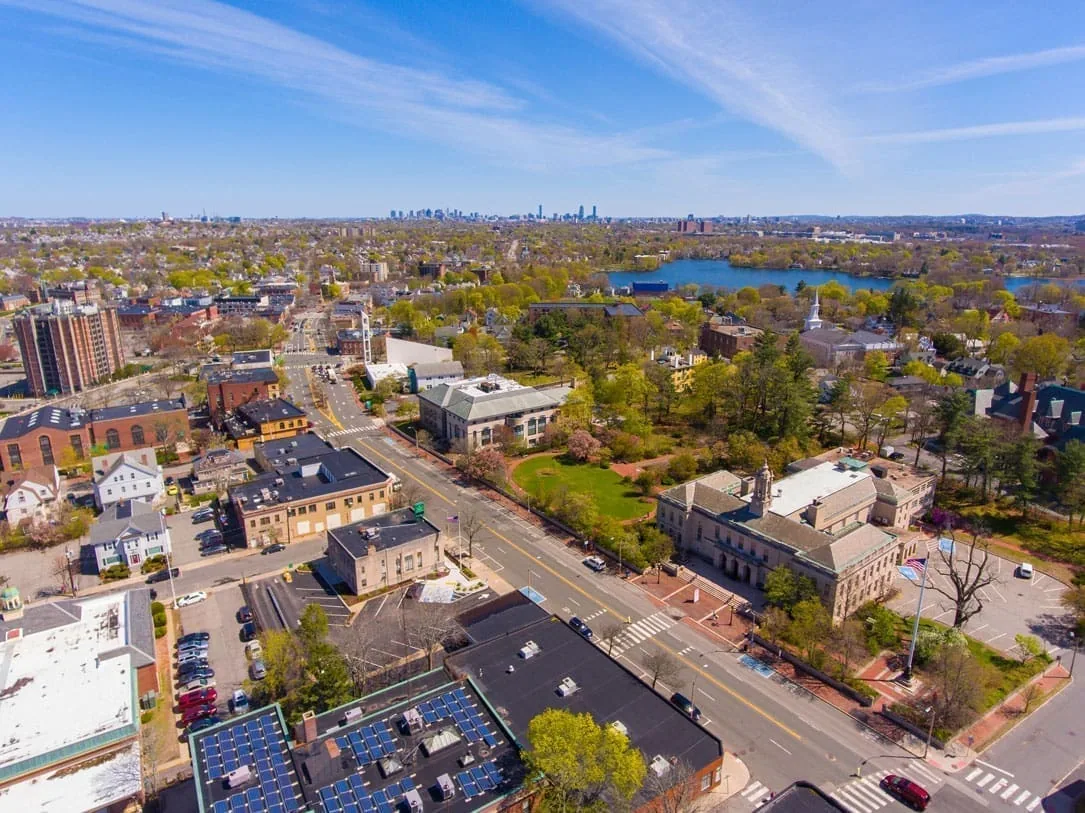
A roof edge above an Arlington Center storefront can send water behind the fascia before a ceiling stain appears. We follow the edge, wall flashing, and drainage path, then record what is open and what remains dry. Arlington borders Cambridge and has three business districts along Massachusetts Avenue and the Battle Road Byway. That mix calls for a property-specific inspection, whether the roof covers retail, service space, or a mixed-use building. The commercial roof inspection starts with the assembly, access route, and roof details, not assumptions about the space below.
Which transition changes the first inspection?
A parapet corner, roof-to-wall joint, or metal edge can redirect water across a low-slope roof. We check the membrane, then trace laps and flashing at walls and raised sections. A leak over an entrance also needs a safe path for customers below and a defined work boundary above. We mark the drain bowl, overflow, curb, and visible separation so the owner can compare roof findings with the room report. Arlington Center is the town’s central business district; Arlington Heights and East Arlington are separate business areas. Along Massachusetts Avenue, we confirm the deck, membrane, attachment, edge metal, and prior patches before choosing a repair. Kendall Square and Cambridge Crossing have their own access needs, but every inspection still follows the property’s roof and operating limits. The Kendall Square commercial district is another dense urban setting where those details guide the visit.
How do you separate a leak clue from the repair limit?
A ceiling mark starts the investigation; it does not set the work limit. Water may travel under the membrane or deck before showing inside. We compare the room with seams, penetrations, wall flashing, and drains above it. If moisture readings or a controlled test find a larger affected area, we map that separately from visible damage. We open the roof only where a test could change the repair boundary and agree on the closure method first. Cambridge has a growing winter pattern of thaw-freeze shifts, heavier precipitation, and flooding. For Arlington properties, that regional context makes the outlet and overflow check worth documenting; the roof inspection establishes what is actually happening at the address. We check outlets, overflow paths, and any low area that holds water after drains clear. Evidence of a failed lap or flashing may support a focused commercial roof repair; the stain alone does not justify a wider scope.
Which scope fits a retail or mixed-use roof?
A repair fits when damage has a defined boundary and surrounding material can perform. We isolate the open seam, flashing, puncture, or drain connection, check adjacent areas, and price from measured dimensions. Restoration requires a sound surface and an assembly compatible with the selected method. Replacement may be the stronger scope if testing finds widespread moisture, repeated failures, or details that cannot be restored. Photos should identify each condition instead of turning a few observations into a whole-roof conclusion. Arlington’s neighborhood business areas include retail and service uses, and some districts allow mixed-use structures. That context does not identify a roof assembly. We confirm the membrane, insulation, deck, drainage, and edge details before comparing repair, recover, and replacement. A roof recover assessment can establish whether another system is suitable; TPO roofing is one option when the specification and substrate support it. The owner receives the evidence behind each scope.
How can work continue beside an active business?
A roof opening above an occupied shop needs a dry-in plan before tear-off. We agree on the work zone, staging area, material path, and temporary protection with the property contact. If a lift or barrier could affect an entrance, we confirm that route before arriving. On a mixed-use building, the contact may need separate hours for retail, service, and upper-floor occupants. Daily records identify the area opened, the closure used, and the condition left for the next shift. Arlington Center, Arlington Heights, and East Arlington each have different combinations of businesses and cultural uses. We ask which entrances must stay clear, whether deliveries use the same side of the building, and which rooms sit below the roof section. A phased occupied-building reroof plan can define daily boundaries and closeout. The Cambridge Crossing district is a different mixed-use setting; its work plan still follows each roof and access rule.
What should the roof record keep?
Closeout should name the roof section, repair dimensions, material installed, and details left outside the work. We attach photos to a roof plan, record test results, and distinguish confirmed water entry from a reported stain. If equipment, a locked hatch, or unsafe conditions blocked inspection, the file marks that limit. This lets a property manager compare later reports against a known area. Drain and edge photos help track Cambridge’s winter pattern of thaw, freeze, and heavier precipitation. We can show a clear drain bowl, repaired overflow, or separated termination without predicting the season from one visit. A maintenance interval follows the roof’s condition and available records. The preventive roof maintenance visit carries that record forward; a roof condition report keeps findings and limitations tied to the inspected property.
What should I send before the visit?
Send the Arlington property address, affected room or roof section, and when water first appeared. A roof plan, repair records, leak photos, and membrane records help us prepare, while field conditions determine the scope. Tell us which entrance to use, whether the hatch needs a key or escort, and when the business can release the area. We can assign the inspection and bring a closure method for any test opening. If the concern followed wind or heavy rain, include the date and whether water is still entering. We separate temporary containment from permanent repair and document both decisions. The next step may be a confirmed detail repair, a bounded test, or a broader scope supported by the findings.
Commercial Roofing Questions
Can you inspect a storefront roof while the business remains open?
Yes, after the property contact confirms the roof route, staging point, and entrances that must remain clear. We can separate a small inspection zone from customer paths and identify any noisy or disruptive test before starting. If access passes through occupied space, that route goes into the work plan. The inspection report then records what we could reach and any area that needs a separate access window.
Does a stain below a parapet mean the wall flashing has failed?
The stain alone does not set the repair boundary. We inspect the coping, wall flashing, membrane termination, and drain path, then compare those observations with the room report. If moisture testing changes the apparent extent, we record that result separately. A visible opening may support a focused repair, while hidden wet material can require a larger defined area.
What makes a recover suitable for a mixed-use property?
The existing assembly has to be dry enough, attached well enough, and compatible with the specified recovery system. We inspect the roof surface, insulation, deck where accessible, perimeter details, and load implications before pricing a recover. If testing finds broad moisture or the edge details cannot accept another system, replacement may be the clearer option. The report lays out the finding behind that choice.
How do Cambridge winter conditions affect Arlington roof inspections?
Cambridge’s climate planning reports heavier precipitation, more thaw-freeze swings, and more frequent winter flooding. We use that Cambridge context to check drains, overflows, seams, and edges on the Arlington roof, without assigning Cambridge measurements to the neighboring town. A clear outlet and a photographed termination make the follow-up comparison more useful after another wet or freezing period.
What should the closeout file show after a leak repair?
Keep the roof section, repair detail, dimensions, materials, test result, and dated photos together. We also mark any area that was inaccessible or not included in the work. If water appeared in a second room, that location should remain a separate investigation unless testing connects it to the completed repair. A concise record gives the next inspection a defined starting point.
Related Roofing Work
More Service Areas
Browse every page in Service Areas, or request a roof assessment and we will walk the roof with you.
Schedule an Arlington roof inspection
Send the property address, reported condition, roof plan or system records, access contact, and a suitable work window. We will identify the right roof section to inspect and return a written record of the findings.